




அகநானூறு 370
பாடல் · The poem
Tap a word to see where else it occurs.
பொருள் · Meaning in TamilAI
"மாலை அணிந்து வளையல் பூண்ட சிறுமியர் மணல்வீடு கட்டி முடித்து, இளையோர் வீட்டுக்குச் செல்கின்றனர். பகலும் முடிந்தது. அகன்ற இலையுடைய புன்னையின் குற்றமற்ற நிழலில் பகலில் என்னோடு விளையாடுகிறாய். இரவில் உப்பங்கழியருகே உள்ள உன் நல்ல வீட்டில் காதல்நோயோடு கிடந்தால், உன் தந்தையின் கடுங்காவலில் நான் அகப்படுவேன்" என்று சொல்கிறாய். "நீ போகாதே" என்று சொல்லவும் உன்னால் முடியவில்லை; ஆனால் "நீ போனால் நான் உயிர் வாழமாட்டேன்" என்கிறாய். அப்படியானால், வண்டுகள் மொய்க்கும் ஞாழல் கண்ணியும், குளிர்ந்த அரும்புகளாலான நெய்தல் மாலையும் அசைய, மாலைப்பொழுதில் கடல்தெய்வம் கரையில் நிற்பது போல நீ கானலில் தனியே நிற்க, நான் மணம் கமழும் பாவை போலப் பொலிந்த என் அணிகளைக் களைந்துவிட்டு, ஆட்டம் முடிந்த ஆடல்மகள் போல வீட்டுக்குத் திரும்ப மாட்டேன். இந்த ஊர் அலர் பேசட்டும்!
இது நெய்தல்திணை; மாலையில் கானலில் பிரியும் நேரத்தில் தலைவி தலைவனிடம் கூறுகிறாள். பிரிய மனமில்லாத தலைவனின் சொற்களைக் கேட்டு, அலரைப் பொருட்படுத்தாமல் அவனோடு இருப்பதாக அவள் துணிகிறாள். கண்ணியும் தாரும் ஆடவர் அணிவன என்பதால், கடல்தெய்வ உவமை தலைவனைக் குறிப்பதாகக் கொள்ளப்பட்டது; அது தலைவியைக் குறிக்கவும் கூடும். "காயல் வேய்ந்த" என்ற தொடரின் பொருள் உறுதியாகத் தெரியவில்லை.
ஆங்கிலம் · English translationAI
Translation
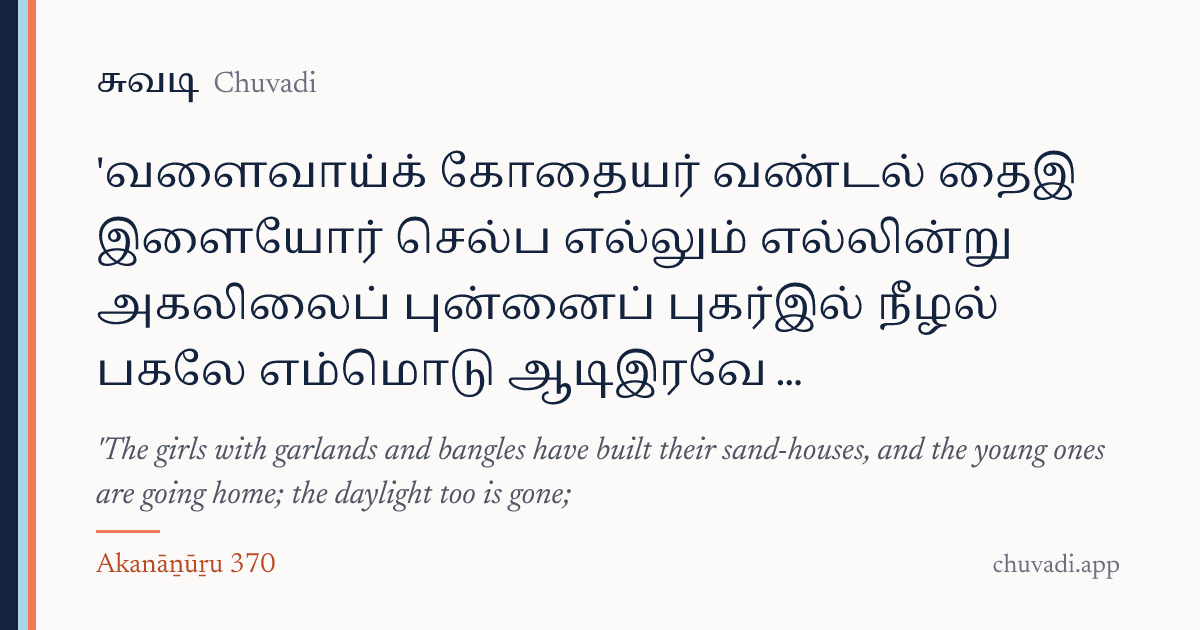
- 'The girls with garlands and bangles have built their sand-houses,
- and the young ones are going home; the daylight too is gone;
- in the flawless shade of the broad-leaved puṉṉai
- you play with me by day; but at night,
- in your good, unworn house beside the backwater,
- if you lie there sick with love, then your father's
- strict watch is what I shall run into,' you say; and 'You
- must not go' — that you cannot bring yourself to say; yet 'If you go,
- I will not live,' you say. If that is so — with your ñāḻal
- head-garland thick with bees, and your neytal
- fresh chest-garland of cool buds swaying, as at dusk
- the goddess of the sea stands upon the shore,
- you stay behind in the seaside grove, while I,
- casting off my finery that shone like a fragrant painted doll,
- like a dancing woman going home —
- that I cannot do. Let this town gossip!
What the poem says
The heroine speaks to her lover in the seaside grove at the end of the day. She first repeats what he has said: the other girls have finished their sand-houses and are leaving; by day he plays with her under the puṉṉai, but if she goes home and lies lovesick at night, he cannot come to her because her father keeps strict watch. He cannot quite tell her not to go, yet he says he will not live if she goes.
Her answer is a decision. If that is how it is, she will not leave him standing there in the grove, garlanded with ñāḻal and neytal and as splendid as the goddess of the sea standing on the shore at dusk, while she strips off her finery and walks home like a dancer after a performance. Let the town gossip. In neytal poems the sea-shore meeting at dusk is the moment of parting and pining; here the heroine refuses to part.
The ornaments in lines 9–11 (a head-garland, kaṇṇi, and a chest-garland, tār) are men's wear in these poems, so they are taken to describe him; the comparison with the sea-goddess could also be read as applying to her.
The poem is uncertain in places. 'Kāyal vēynta' in line 5 is read as 'beside the backwater', but the phrase is unclear. The structure of the quoted speeches in lines 1–9 can be divided in more than one way, and this reading is tentative. This edition names no poet.