




அகநானூறு 372
பாடல் · The poem
Tap a word to see where else it occurs.
பொருள் · Meaning in TamilAI
எவராலும் வெல்ல முடியாத கடுமையான தெய்வம் காவல் காக்க, பெரிய தேனடைகள் தொங்கும், நாட்டைக் காணும்படி உயர்ந்த அகன்ற இடத்தில், அச்சம் தரும் எல்லையுடைய பாழியில், பழைய வேளிர் தம் பெரிய நகரில் மறைத்து வைத்த அரிய அணிகலச் செல்வத்தைவிடப் பெறுவதற்கு அரியவள் அவள். அவள் இயல்புகளை நினைத்து நாம் வருந்தினோம்; நான் அதைச் சொன்னாலும் நீ ஏற்கவில்லை. பெரிய கிளையில் கட்டிய, பலர் ஆடும் ஊஞ்சலின் கயிறு ஏறி இறங்குவது போல, போவதும் வருவதுமாக வருந்தினாய். நீண்ட வழியில் குதிரைவீரரின் கூரிய வேலுக்கு அஞ்சி, கடுமையான எல்லைப்புறத்தைக் கொள்ளையடித்த வளைந்த வில்லுடைய வீரர்கள், வெற்றி ஆரவாரத்தில் ஓங்கி அடிக்கும் பெரிய துடிப்பறையின் வார் இறுகியும் தளர்ந்தும் இருப்பது போல இருக்கிறாய். இரை தேட உதவும் மணியை இழந்த பாம்பு போல நீ மிகவும் வாடினாய், என் நெஞ்சே, நீ வாழ்க! வேந்தரின் தாக்குதலைத் தடுக்கும், காவல் மிகுந்த கோட்டையைப் போல, நம்மை வருத்துபவள் இங்கே அடைவதற்கு மிகவும் அரியவள்.
இது குறிஞ்சித்திணை; அடைய அரிய தலைவியை எண்ணி வருந்தும் தன் நெஞ்சோடு தலைவன் பேசுகிறான். மறைத்த செல்வம், ஊஞ்சல் கயிறு, பறைவார், மணியிழந்த பாம்பு, காவல் கோட்டை ஆகிய உவமைகள் அவளை அடைவதன் அருமையையும் நெஞ்சின் அலைச்சலையும் காட்டுகின்றன. "கோண்தணி எயில்" என்பதன் பொருள் உறுதியாகத் தெரியவில்லை; "நாடுகாண்" என்பது ஓர் இடப்பெயராகவும் இருக்கலாம்.
ஆங்கிலம் · English translationAI
Translation
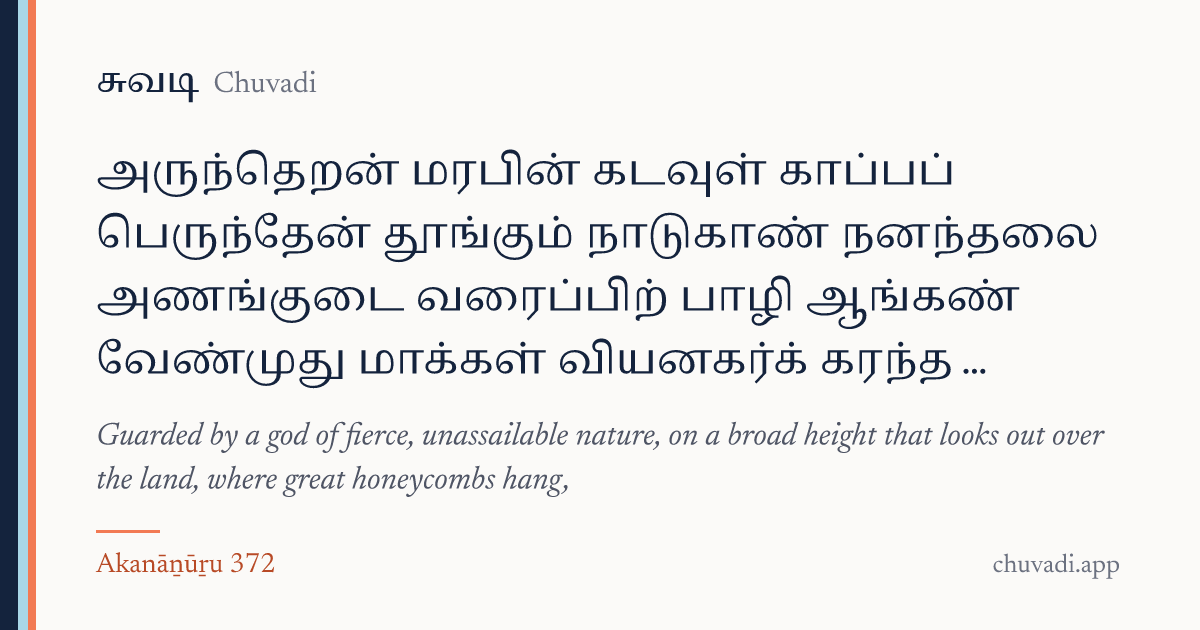
- Guarded by a god of fierce, unassailable nature,
- on a broad height that looks out over the land, where great honeycombs hang,
- in Pāḻi, within its haunted bounds,
- in their wide city the ancient Vēḷ folk hid
- a wealth of rare jewels — harder to win than that is she; thinking of her ways,
- we suffered, alas; and though I said so, you would not accept it;
- like the rope of a swing tied to a great bough, on which many play,
- climbing and falling, you suffered, going and coming;
- fearing the sharp spears of horsemen on the long road,
- men with curved bows who raided a fierce frontier
- beat loudly in the uproar of victory
- the strap of a great tuṭi drum, swelling and slackening — like that you are;
- like a snake that has lost the gem by which it feeds, you
- have wasted away greatly — long may you live, my heart! — like a fort
- that defies the kings' assault, closely guarded,
- she who torments us is hard indeed to reach here.
What the poem says
The hero speaks to his heart. He has fallen in love with a girl who is out of reach, and his heart keeps swinging between hope and despair.
He piles up images of difficulty. She is harder to win than the treasure of rare jewels hidden by the ancient Vēḷ people in their city at Pāḻi, a haunted place guarded by a fierce god on a height where great honeycombs hang. His heart goes back and forth like the rope of a swing that many children ride; it tightens and slackens like the strap of a great tuṭi drum beaten by bowmen celebrating a raid; it pines like a snake that has lost the gem by whose light it feeds. Finally she is guarded like a king's fortress that no assault can take.
The image of the serpent's jewel is a common Indian tradition and is used here simply as a figure for losing what one lives by. Pāḻi and the Vēḷ folk are named in other poems of the anthology as well; this poem says only that treasure was hidden there under a god's guard.
Line 15 ('kōṇ taṇi eyil') is difficult; it is taken here as a fortress that checks the attack of kings. 'Nāṭukāṇ' in line 2 may be a place name rather than 'overlooking the land'. Lines 9–12 are hard to construe; the drum-strap is read as an image of the heart's tightening and easing. This edition names no poet.