




அகநானூறு 376
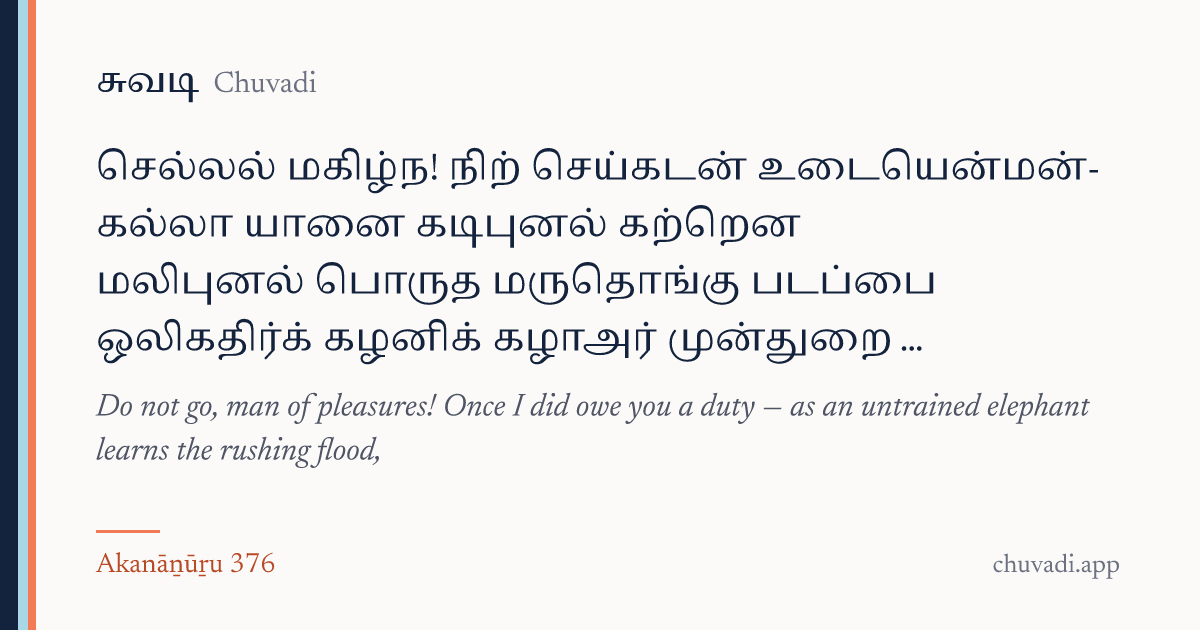
பாடல் · The poem
Tap a word to see where else it occurs.
பொருள் · Meaning in TamilAI
மகிழ்நனே, போகாதே! முன்பு உனக்குச் செய்ய வேண்டிய கடமை எனக்கு இருந்தது; இப்போது அது இல்லை. பயிலாத யானை வேகமான வெள்ளத்தைப் பழகியது போல, நிறைந்த நீர் மோதும், உயர்ந்த மருதமரங்கள் நிற்கும் தோட்டங்களும், ஒலிக்கும் கதிர்களையுடைய வயல்களும் உள்ள கழார் என்ற ஊரின் முன்துறையில், ஆரவாரமான சுற்றத்தோடு கரிகாலன் பார்த்துக் கொண்டிருக்க, குளிர்ந்த புதுவெள்ளக் காலத்தில், இனிய இசை ஓய்ந்த நேரத்தில், ஒளிவீசும் புள்ளிகளுடைய கழல் சிவந்த அடிகளில் புரள, கருங்கச்சு கட்டிய அழகிய வயிற்றில் பெரிய பொன்வட்டங்கள் மணிகளோடு ஒலிக்க, நீரை விரும்பி ஆடிய அத்தியின் அழகை விரும்பி, காவிரி அவனைக் கொண்டுபோய் மறைத்தது போல, என் அழகையும் நீ கொண்டுபோனாய். உன்னோடு நான் ஊடமாட்டேன்; என் நெற்றி பசந்துவிட்டதைப் பார். சேற்றில் அழகிய உள்துளையுடைய வள்ளைக்கொடியையும் தீ நிறக் கொடியையும் சிக்கவைத்து, வளமான இலையுடைய நெல்லின் வளைந்த சூல் பிரிய, மென்மயிர்த் தலையுடைய வளைந்த இறால் துள்ளும் அழகிய, வளைந்த பிடரிமயிர்க் குதிரைகளையுடைய குட்டுவனின் மரந்தை நகரைப் போன்ற என் அழகைத் திருப்பித் தந்துவிட்டுப் போ!
இது மருதத்திணை; பரத்தையிடம் சென்று வந்து மீண்டும் செல்ல முயலும் தலைவனிடம் தலைவி கூறுகிறாள். காவிரி அத்தியைக் கொண்டு மறைத்த நிகழ்ச்சி, தலைவன் அவள் அழகைக் கவர்ந்ததற்கு உவமை. இரண்டாம் அடியின் யானை உவமையும், ஆறாம் அடியின் பொருளும் உறுதியாகத் தெரியவில்லை.
ஆங்கிலம் · English translationAI
Translation
- Do not go, man of pleasures! Once I did owe you a duty —
- as an untrained elephant learns the rushing flood,
- in the gardens where tall marutam is beaten by the brimming stream,
- at the front ford of Kaḻār with its fields of rustling grain,
- as Karikāl looked on with his clamorous retinue,
- in the cool flood-season, with sweet music stilled,
- the bright-marked anklet tumbling on his red feet,
- on his handsome belly, bound with a dark sash,
- the great golden discs jingling with their bells,
- Atti, who loved the stream and danced in it — desiring his beauty,
- the Kāviri took him and hid him away; just so, alas!
- I will not sulk with you; on me,
- see, my brow has turned pale. In the ooze,
- tangling the fine hollow-stemmed vaḷḷai with the flame-red creeper,
- so that the bending sheath of rich-leaved paddy bursts open,
- the curled prawn with tufted head springs up: the lovely
- Marantai of Kuṭṭuvaṉ of the horses with curving manes —
- like it is my beauty: give it back and go!
What the poem says
The heroine speaks to her husband, the 'man of pleasures' (makiḻnaṉ) of the marutam poems, who has been with other women. He is about to leave again, and she stops him. She will not quarrel, she says, but he must see what his neglect has done: her brow has turned pale. Before he goes he must give back the beauty he took.
At the centre is a story the poem tells in a few strokes. At the ford of Kaḻār, while the Cōḻa king Karikāl watched with his court, a dancer named Atti, adorned with anklets, a dark sash and jingling gold discs, danced in the river, and the Kāviri, desiring his beauty, carried him off and hid him. The heroine says that her beauty has been taken from her in the same way. The Atti story appears elsewhere in Akanāṉūṟu; here only what the poem says is given.
Her lost beauty is compared at the end to Marantai, the town of Kuṭṭuvaṉ, a Cēra king with horses whose manes curve. The landscape of that town, with vaḷḷai and creepers in the mud, paddy bursting from its sheath and prawns leaping, is typical of the fertile marutam country.
Several lines are obscure. Line 1 ('I did owe you a duty, once') may mean that she was once bound to welcome him. Line 2, about an untrained elephant learning the flood, is unclear: it may describe Atti or the river. Line 6 ('taṇpatam koṇṭu tavirtta iṉṉicai') is translated tentatively. This edition names no poet.