



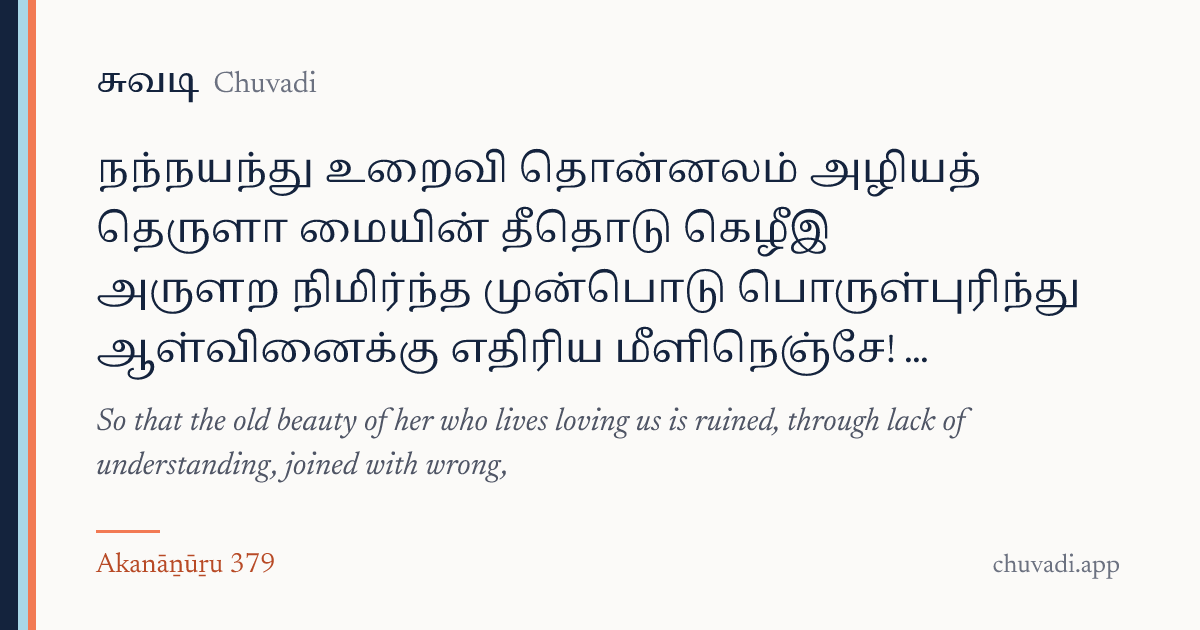

அகநானூறு 379
பாடல் · The poem
Tap a word to see where else it occurs.
பொருள் · Meaning in TamilAI
நம்மை விரும்பி வாழ்பவளின் பழைய அழகு அழியும்படி, தெளிவின்மையால் தீமையோடு கூடி, அருள் இல்லாமல் ஓங்கிய வலிமையோடு பொருளை விரும்பி, ஆண்மைச் செயலுக்கு எழுந்த வீரநெஞ்சே! நீ எண்ணிப் பார்ப்பாயானால் நான் சொல்வதைக் கேள். விரிந்த அலைகளையுடைய கடல் சூழ்ந்த, மண் செறிந்த இந்நிலவுலகம் முழுவதையும், பங்கின்றித் தனியே ஆளும் ஆட்சிச் செல்வம் நனவிலேயே கிடைத்தாலும், அது நீங்குவது இரவில் காணும் கனவைப் போன்றதே. ஆதலால், பலவகை மலர்களைச் செருகி, வண்டுகள் சூழ, பிடரியில் தங்கிய நிலைத்து ஒளிரும் கொண்டையும், பல நறுமணங்கள் கூடி விரும்பிய இடமெல்லாம் இன்பம் தருவதும், செய்வினை அமைந்த ஒளிவீசும் அணிகளால் பொலிந்த தோள்களைச் சேர்ந்து, ஆழ்ந்த உறக்கத்தில் ஒவ்வொரு முறை புரளும்போதும் முறுக்கி, உடல்கள் ஒன்றுக்குள் ஒன்று புகுவது போலக் கைகளால் தழுவும் தழுவலில் நான் இன்னும் நிறைவு காணவில்லை. நீ பெரும்பொருள் ஆசையால் என் சொல்லின் எல்லையை மீறிப் போகவே வற்புறுத்தினால், காற்றோடு பெருந்தீ பரவிய இலையற்ற காட்டில், மானின் புள்ளி முதுகைப் போன்ற நிழலில் இளைப்பாறும் நேரத்தில், ஏக்கம் வந்து, இவளுடைய மறக்க முடியாத பல நற்குணங்கள் உன் உள்ளத்தில் தைக்கும். அப்போது ஒரு முடிவுக்கும் வர முடியாமல் தடுமாறி, தாக்கிய புலியோடு போராடிய வடுப்பட்ட கொம்புடைய களிற்றுக்காகப் பிடியானை எழுப்பிய ஆரவாரத்தில் அடிபட்டுக் குழிந்த, முடிவில்லாத நீண்ட வழியில் தயங்கி நின்று, வலிமை கெட்டு மெலிந்து வருந்தமாட்டாயோ?
இது பாலைத்திணை; பொருள்தேடப் பிரியத் தூண்டும் நெஞ்சுக்குத் தலைவன் மறுத்துக் கூறுகிறான். உலக ஆட்சியும் கனவு போல் நிலையற்றது என்பதும், தலைவியோடு கூடிய இன்பத்தில் இன்னும் நிறைவு காணவில்லை என்பதும் அவன் காரணங்கள். புலியால் புண்பட்ட களிற்றுக்காகக் கதறும் பிடி, துணையின் துயரில் வருந்தும் அன்பைக் காட்டும் இறைச்சி.
ஆங்கிலம் · English translationAI
Translation
- So that the old beauty of her who lives loving us is ruined,
- through lack of understanding, joined with wrong,
- with a strength grown tall that leaves no room for kindness, bent on wealth,
- O bold heart, eager for the labour of a man!
- If you will think, listen to what I say —
- of the earth packed with soil, ringed by the sea of spreading waves,
- the splendour of the wheel of rule, held without any sharer,
- even if it came to one in waking life, at night
- like a dream is its passing; and so —
- with many mingled flowers tucked in, bees circling round,
- the well-set gleaming coil of hair resting on her nape,
- fragrant with many gathered scents, pleasing wherever one wishes,
- pressing to her shoulders, splendid with crafted, bright jewels,
- in the deep sleep we came to, each time I turned, twisting,
- in the clasping embrace as though our bodies entered each other —
- I have not yet had my fill of that. If you, for your
- desire for much wealth, overstep the bounds of my word
- and insist on going, then, where with the wind
- a roaring fire has passed, in the leafless forest,
- in dappled shade like the spotted flank of a deer,
- at the time you rest, longing will come, and her
- many unforgettable virtues will strike you to the core;
- you will not be able to settle on one course; wavering,
- for a lone bull with scarred tusks who struggled with an attacking tiger,
- the cow elephant raised a clamour, and the ground sank under their feet:
- on that endless long road you will hang back,
- and will you not grieve, wasted, your strength gone?
What the poem says
The hero argues with his own heart, which is urging him to leave his wife and go after wealth. He calls it bold and eager for manly effort, but also unwise, ready to destroy her beauty and empty of kindness.
His first argument is philosophical. Even sole rule over the whole sea-girt earth, if one actually had it, would pass away like a dream in the night. Wealth is not worth what it costs. His second argument is personal: he has not yet had enough of her. He recalls her hair coiled at her nape, full of flowers and scents, her jewelled shoulders, and the deep sleep in which they turned and clung as if their bodies entered each other.
Then he predicts what will happen if the heart has its way. Resting in the burned, leafless forest, in shade dappled like a deer's back, it will be struck by longing for her many virtues and will not be able to decide whether to go on or turn back. It will stand wavering on the long road where a she-elephant once trumpeted for her mate wounded by a tiger, and it will waste away.
The elephant pair is a pointed image: even beasts cry out for a suffering partner. This is one of the more reflective pālai poems, setting the transience of wealth against the reality of love. 'Paritiyam celvam' (line 7) is read as the wealth of the ruling wheel, that is, empire. This edition names no poet.