



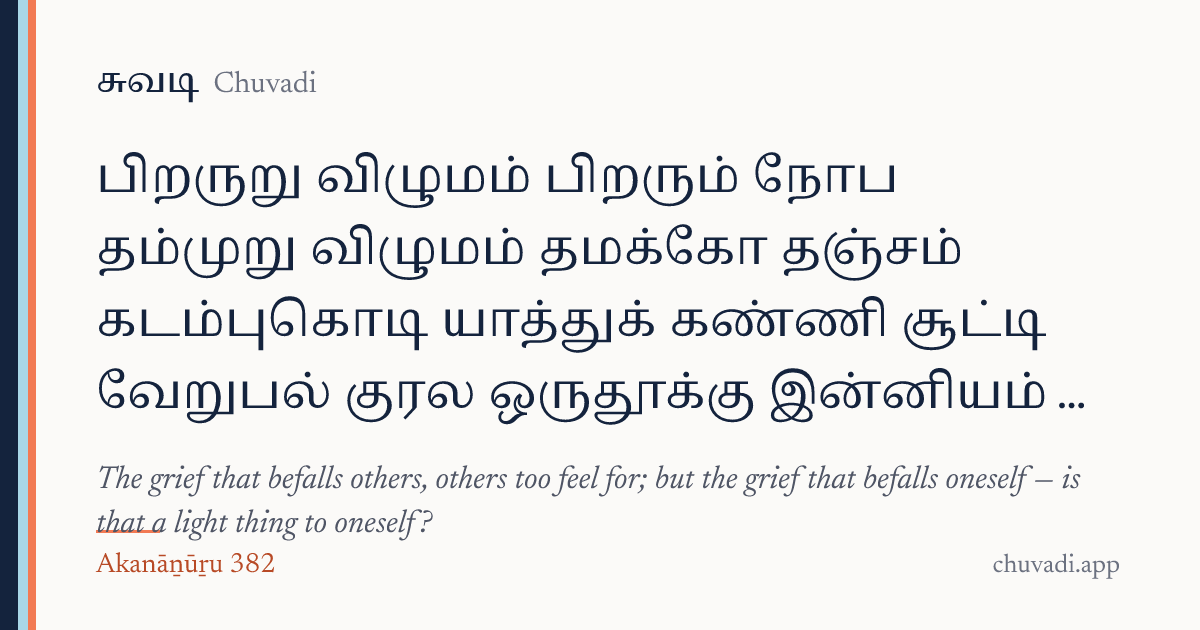

அகநானூறு 382
பாடல் · The poem
Tap a word to see where else it occurs.
பொருள் · Meaning in TamilAI
பிறருக்கு வரும் துன்பத்துக்குப் பிறரும் வருந்துவர்; அப்படியானால் தமக்கே வரும் துன்பம் தமக்கு எளிதானதாகுமா? கடம்பமரத்தில் கொடிகளைக் கட்டி, மாலைகளைச் சூட்டி, வெவ்வேறு ஒலியுடைய பல இனிய இசைக்கருவிகள் ஒரே தாளத்தில் ஒலிக்க, காட்டில் உறையும் நெடுவேளைப் போற்றும் பாடல்களுக்கு ஏற்ப, வெறியாடும் அகன்ற களம் பொலியும்படி நம் வீட்டார் மெல்ல ஆடத் தொடங்கிவிட்டனர் என்பதை அவனுக்குத் தெரியும்படி சொல்ல வேண்டும், தோழி! அருவியில் பாய்ந்த கரிய விரல்களையுடைய பெண்குரங்கு, வளமான கிளைகளையுடைய பலாவின் பழத்தையே தெப்பமாகக் கொண்டு, மலைச்சாரலில் உள்ள பெரிய ஊரின் முன்துறைக்கு மிதந்து வந்து இறங்கும், வறட்சியை அறியாத சோலைகளையுடைய வலிய மலைநாட்டவனின் சொல்லை விரும்பியவளே!
இது குறிஞ்சித்திணை; தலைவியின் நோய்க்குத் தெய்வமே காரணம் என்று வீட்டார் வெறியாட்டு நடத்துவதைத் தலைவனுக்குத் தெரிவிக்க வேண்டும் என்று தோழி தலைவியிடம் கூறுகிறாள். இதைக் கேட்டால் தலைவன் மணம் புரிய விரைவான் என்பது கருத்து. பலாப்பழத் தெப்பத்தில் மிதந்து ஊர்த்துறையை அடையும் மந்தி, அஞ்சத்தக்க செயலும் நலமாக முடியும் என்று குறிப்பதாகக் கொள்ளலாம்; அது உறுதியன்று. "தஞ்சம்" என்ற சொல்லின் பொருள் இங்கு ஐயத்துக்குரியது.
ஆங்கிலம் · English translationAI
Translation
- The grief that befalls others, others too feel for;
- but the grief that befalls oneself — is that a light thing to oneself?
- Tying the kaṭampu with creepers and crowning it with garlands,
- with sweet instruments of many different voices keeping a single beat,
- to the songs in praise of tall Vēḷ who dwells in the forest,
- making the wide ground of the possession rite splendid, slowly
- our people have begun to dance — so to him
- we must tell this, so that he knows, friend —
- where a black-fingered she-monkey who leapt into the waterfall,
- with a ripe fruit of the rich-branched jack as her raft,
- floats down to the front ford of the big village on the slope,
- with its groves that never know drought —
- you who desired the word of the man of that mighty mountain land!
What the poem says
The friend speaks to the heroine. Her family has noticed her lovesickness and has begun the veṟiyāṭṭu, the possession rite to Murukaṉ, here called 'the tall Vēḷ who dwells in the forest'. They have tied creepers and garlands to the kaṭampu tree, sacred to him, and dance slowly to many instruments keeping one beat. They believe the god has seized her, and they do not know that the cause is a man.
The friend says the lover must be told. Her opening lines are a kind of proverb: people feel for others' troubles, so surely a man cannot treat his own beloved's trouble lightly. If he hears that the rite has begun, he will understand the danger of the affair being exposed or of her being given to another, and will act, which in kuṟiñci poems usually means asking for her in marriage.
The final image describes his country. A she-monkey jumps into a waterfall and floats down to the ford of a big hill village, using a ripe jackfruit as her raft. The scene may hint that what seems a risky leap can carry one safely home, though that reading is not certain.
Line 2 is difficult: 'tañcam' normally means 'easy' or 'slight', and the sense is read here as a rhetorical question. This edition names no poet.