



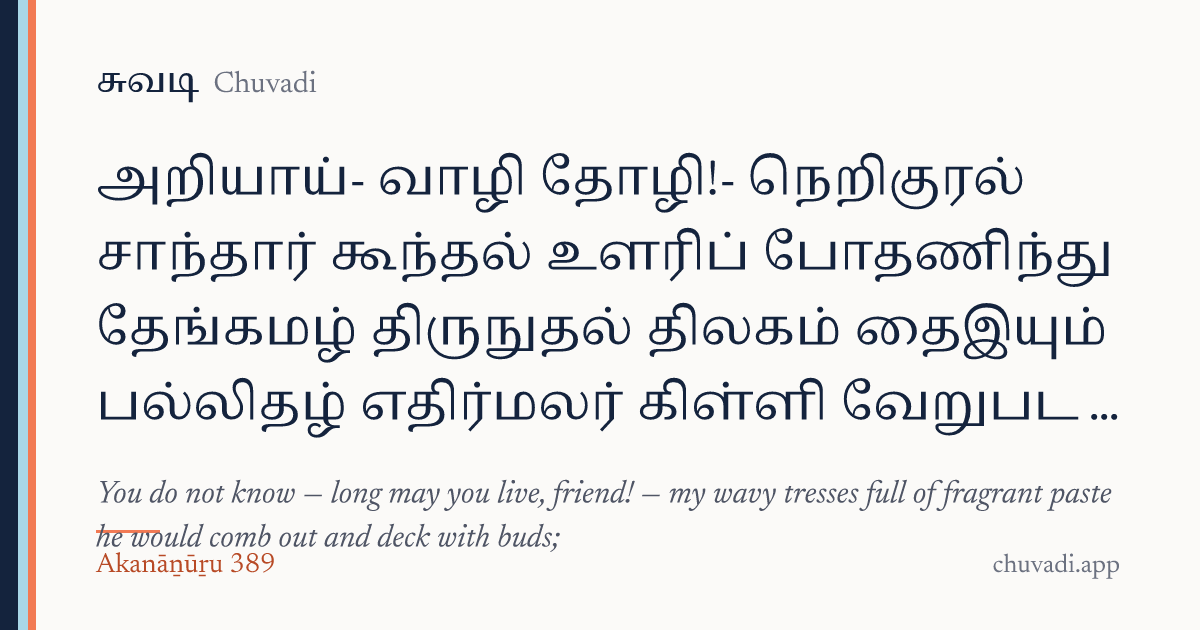

அகநானூறு 389
பாடல் · The poem
Tap a word to see where else it occurs.
பொருள் · Meaning in TamilAI
தோழி, நீ அறியமாட்டாய், நீ வாழ்க! நெளிந்த கொத்தாக, சந்தனம் நிறைந்த என் கூந்தலை அவர் கோதி மலர்களைச் சூட்டுவார். தேன் மணக்கும் என் அழகிய நெற்றியில் திலகம் இடுவார். பல இதழ்களையுடைய புதுமலர்களைக் கிள்ளி, வேறுவேறு வடிவங்களில் என் நல்ல இளம் மார்பகங்களில் பூந்தாதோடு அப்புவார். பெரிய தோள்களில் தொய்யில் கோலம் எழுதுவார். சிறிய கணுக்காலையுடைய அழகிய சிவந்த சிற்றடிகளில் செம்பஞ்சுக்குழம்பு ஊட்டுவார். என்னைப் பேணி, உன்னையும் பாராட்டுவார். பலவகை மலர்ப்படுக்கையில் பகலிலும் நீங்காமல் வீட்டிலேயே இருந்தவர் அவர்; அது முன்பு. இப்போது, இரப்பவர் ஏந்திய கைகள் நிறையக் கொடுத்துப் பேணுபவரும், கவலையற்ற உள்ளத்தோடு புதிய பொருள் கொண்டுவந்து மகிழ்பவருமான அவர், அரிய பொருளைத் தேடுவதை எண்ணி, பகைவரின் இழிந்த சிறுசொற்கள் பயனற்றுப் போகவும், நல்ல புகழைத் தம்மிடம் நிலைநிறுத்தவும் விரைந்து, வலிய வேலுடைய வானவரம்பனின் நல்ல நாட்டுக்கு அப்பால், வேனில் நீடிக்கும் வெப்பமான காட்டின் எல்லையில், வழிச்செல்வோர் சிதறி அலறும்படி கொல்லும் வெறியோடு இடம்விட்டு இடம் திரியும் பெரிய களிற்றைக் கொன்ற கரிய நிறமுடைய ஆண்புலி, செம்மண் நிலத்தில் தன் காலை இழுத்து வைத்து, வெற்றிக்களிப்போடு மலையெல்லாம் எதிரொலிக்க, பெய்யும் மழையின் இடிபோல முழங்கும், நெடிய மரங்கள் நிறைந்த மலைகளைக் கடந்து சென்றுவிட்டார்.
இது பாலைத்திணை; பிரிவைத் தாங்குமாறு கூறிய தோழிக்குத் தலைவி, தலைவன் முன்பு தன்னை அணிசெய்து போற்றியதை நினைத்துக் கூறுகிறாள். இரப்போர்க்கு ஈவதும் புகழ் பெறுவதுமே பொருள் தேடலின் நோக்கமாகக் காட்டப்படுகிறது. அன்போடு அணிசெய்த காட்சிக்கும், களிற்றைக் கொன்று முழங்கும் புலிக்கும் இடையிலான வேறுபாடு பாடலின் மையம். "நிற் பாராட்டி" என்பது தோழியைப் பாராட்டியதாகக் கொள்ளப்பட்டது; அது உறுதியன்று.
ஆங்கிலம் · English translationAI
Translation
- You do not know — long may you live, friend! — my wavy tresses
- full of fragrant paste he would comb out and deck with buds;
- on my sweet-smelling fair brow he would draw the tilakam;
- plucking fresh flowers of many petals, in varied patterns
- he would press them with their pollen on my fine young breasts;
- he would paint toyyil lines on my broad shoulders; on my small-ankled,
- lovely red little feet he would put the red dye;
- cherishing me, he would praise you too;
- on a bed of many flowers he would not leave even by day —
- he who stayed at home, once! Now, in haste,
- those who sustain beggars, filling their outstretched hands,
- who with untroubled hearts rejoice in bringing new things,
- thinking of the hunt for rare wealth — so that their enemies'
- petty, mean words of scorn come to nothing,
- and to set good fame upon themselves — of the strong-speared
- Vāṉavarampaṉ's good land, beyond it,
- at the edge of the hot jungle where summer lingers,
- where travellers on the road scatter and cry out,
- the great tusker that, fierce to kill, moves from its haunt —
- having killed that great tusker, the dark-hued male tiger,
- drawing its paw back on the red earth,
- in triumphant victory, so that the mountain resounds,
- roars like the thunder of pouring rain —
- they have crossed the mountains of tall trees!
What the poem says
The heroine speaks to her friend, who perhaps thinks she should bear the separation more easily. 'You do not know', she begins, and lists what he used to do. He combed her hair and set flowers in it, drew the tilakam on her forehead, pressed pollen-dusted petals on her breasts, painted toyyil patterns on her shoulders and dyed her feet red, and would not leave her bed even by day. That was once.
Now he is gone, in pursuit of wealth. The poem gives the motive in the honourable terms of pālai: men like him go so that they can fill the hands of those who beg, enjoy bringing home new things, silence the scorn of enemies and win fame. The plural 'those who' refers to him with respect.
The land he has crossed lies beyond the country of Vāṉavarampaṉ, a Cēra title, here praised only for his strong spear. There, in a jungle where summer never ends, a dark tiger kills a great elephant that had been terrorising travellers, plants its paw on the red earth and roars like thunder.
The tender, detailed picture of adornment set against the tiger's violent triumph is the poem's main contrast: the hands that painted her feet are now on a road of killing. Line 8 ('niṟ pārāṭṭi') is read as 'praising you', the friend; it may simply mean praising her. This edition names no poet.