




அகநானூறு 396
பாடல் · The poem
Tap a word to see where else it occurs.
பொருள் · Meaning in TamilAI
மகிழ்நனே, உன்னைப் பற்றிக்கொண்டேன்; போகாதே! கொடியுடைய தேரும் பொன்னணியும் உடைய நன்னன் புன்னாட்டைத் தாக்கியபோது, யாழிசை ஒலிக்கும் தெருக்களையுடைய பாழியில், "அஞ்சாதே" என்று உறுதி கூறிய ஆய் எயினன், பகைவரை அழிக்கும் திறனுடைய மிஞிலியோடு போரிட்டுத் தன் உயிரையே கொடுத்தான். நீயோ, சொன்னதில் நிலைக்காமல், அச்சம் தரும் தெய்வத்தின் முன்னே எனக்கு உறுதி கூறி, மெல்லிய மணிக்கட்டுடைய என் முன்கையைப் பற்றிய சொல்லை மீறினாய். என் ஆர்வமுள்ள நெஞ்சு மேலும் மேலும் பெருக, உன் மார்பைத் தர முடியாமல் வேறொருத்திக்கு உரியவன் ஆகிவிட்டாய். இனி நான் உன்னை விடமாட்டேன். மந்தி கண்ணீர் வழிய மிகவும் வருந்தியிருக்க, பெருவலிமையுடைய அத்தியின் ஆடல் அழகை விரும்பி, ஆழ்ந்த நீருடைய காவிரி அவனைக் கொண்டுபோய் மறைத்தது போல, உன் மனைவி உன்னைக் கவர்ந்துகொள்வாளோ என்று அஞ்சுகிறேன். சினந்து ஆரியர் அலறும்படி தாக்கி, பெரும்புகழுடைய பழமையான வடமலையில் வளைந்த வில்லைப் பொறித்து, கடுஞ்சினமுடைய வேந்தர்களைச் சிறைப்படுத்தியவனின் வஞ்சிநகரைப் போன்ற என் அழகைத் திருப்பித் தந்துவிட்டுப் போ!
இது மருதத்திணை; "உன் மனைவி" என்று குறிப்பதால், கூறுபவள் பரத்தை எனத் தெளிவாகிறது. சொன்ன சொல்லுக்காக உயிர் கொடுத்த எயினனோடு, சொல் தவறிய தலைவனை அவள் ஒப்பிடுகிறாள். வில் சேரரின் சின்னம்; வஞ்சி அவர்களின் நகர் என்பது மரபு. ஆறாம் அடியின் "சொல்லியது அமையாது" என்பதை எயினனோடு சேர்த்தும் பொருள் கொள்ளலாம்.
ஆங்கிலம் · English translationAI
Translation
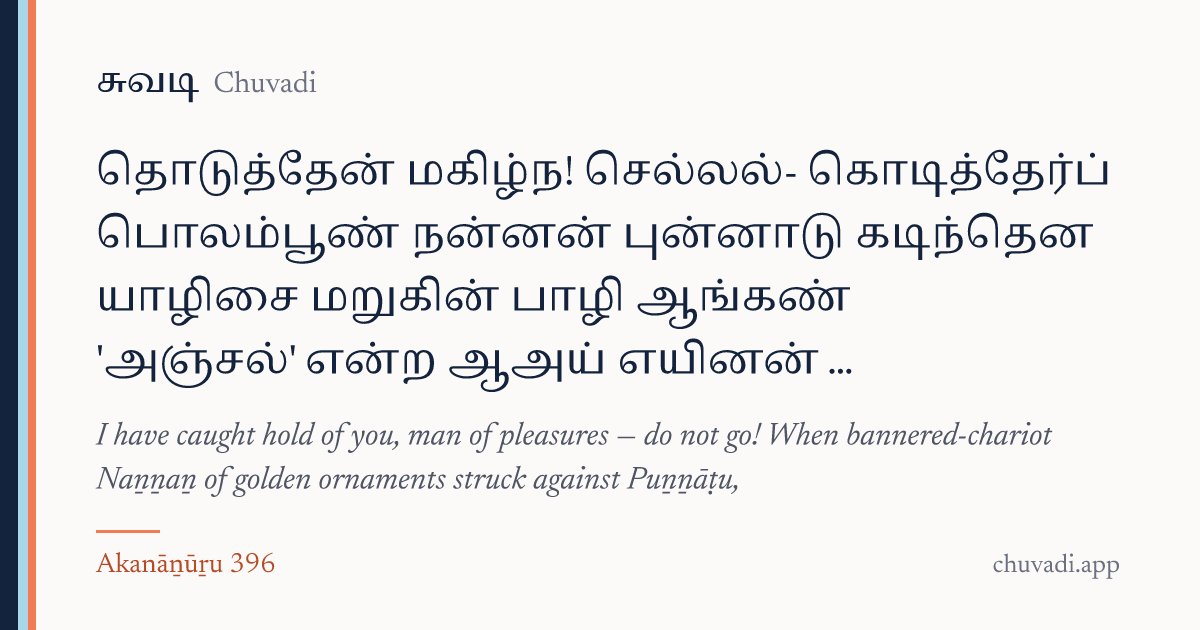
- I have caught hold of you, man of pleasures — do not go! When bannered-chariot
- Naṉṉaṉ of golden ornaments struck against Puṉṉāṭu,
- there at Pāḻi, whose streets ring with the yāḻ,
- Āy Eyiṉaṉ, who had said 'Do not fear,'
- clashed with Miñili, whose skill crushes foes,
- and gave his own life; but you, not standing by what you said,
- after assuring me before a god whose wrath none escapes,
- holding my forearm with its soft wrist, went beyond your word;
- while my eager heart grew more and more,
- unable to give me your chest, you have become another's.
- Now I will not let you go. As, while Manti
- stayed with streaming eyes, in bitter grief,
- desiring the dancing beauty of Atti of great strength,
- the deep-watered Kāviri seized him and hid him away, so your
- wife may snatch you away, I fear. He who, in anger,
- struck so that the Āriyar cried out, and on the great, famous,
- ancient northern mountain carved the bent bow,
- and bound kings of fierce anger —
- like his Vañci is my beauty: give it back and go!
What the poem says
The speaker of this marutam poem is not the wife but the other woman, the courtesan or mistress (parattai), who speaks to the hero. She refers to 'your wife' as a rival who may take him away, which makes her voice clear.
She has caught hold of him and will not let him go. He swore before a god, holding her wrist, and broke his word; he has become a stranger to her. She sets against him the example of Āy Eyiṉaṉ. The poem says that when Naṉṉaṉ struck against Puṉṉāṭu, Eyiṉaṉ, who had promised protection ('Do not fear'), fought Miñili at Pāḻi and gave his life. Eyiṉaṉ kept his word with his life; the hero has not kept his at all.
Her fear is expressed through the story of Atti, also told in poem 376. While Manti wept, the Kāviri, desiring Atti's dancing beauty, carried him off. In the same way, she fears, his wife will snatch him from her. Tradition names Atti's beloved Ātimanti; the poem here calls her Manti.
The last lines demand her beauty back. It is compared to Vañci, the city of a king who made the Āriyar cry out, carved his bow emblem on the northern mountain and bound hostile kings. The bow is the emblem of the Cēras, and Vañci is their city in tradition. Line 6 can also be read as part of Eyiṉaṉ's story ('not stopping at mere words'). This edition names no poet.