




அகநானூறு 398
பாடல் · The poem
Tap a word to see where else it occurs.
பொருள் · Meaning in TamilAI
"அணிகள் நிலைகுலைந்து நெகிழும் துயர் மிகுந்து, நிறைந்த ஏக்கத்தின் வருத்தத்தோடு பலமுறை ஊடித் தளர்ந்து, மென்மையான தோள்கள் மெலிந்து, முற்றிய கொன்றைமலர் போலப் பசலை முழுதும் படர்ந்த உடலைக் கண்டு, நெற்றியும் பசந்து, இந்நிலைக்கு வந்த எம்மிடம் அவன் இரக்கம் காட்டவில்லை. உன்னவன் செய்த கொடுமைக்காக, ஒலியின்றிச் சுழலும் என் குளிர்ந்த கண்களில் தெளிந்த கண்ணீர் நிறைகிறது. இப்படி முழுதும் முதுகு காட்டிப் பிரிந்து செல்வது, உன்னுடைய மலைநாட்டவனுக்கு என்ன பெயரைத் தரும்? கரையை மோதும் வெள்ளமே, சொல்!" என்று உன்னைக் கடிந்துகொண்டேன். பின்னர் உன்னோடு பிணங்க அஞ்சினேன். நீயோ அவன் மலையின் பல மலர்களைப் போர்த்திக்கொண்டு, மிகுந்த நாணத்தோடு ஒடுங்கி, மறைந்து கடந்து செல்கிறாய். உன்னைக் கொண்டுவந்து அனுப்பியவர்கள் அன்பின்றித் துறப்பதில் அவ்வளவு வல்லவர்களோ? அயலார் போல நீ அதைப் பொருட்படுத்தவில்லை. தீ போன்ற கிளைகளுடைய வேங்கையின் நிழலில் நின்று இளைப்பாறி, மழை பேணுவதால் செழித்து, ஆரியரின் பொன் விளையும் நீண்ட மலையைப் போன்ற என் தந்தையின் பலமலர்க் காட்டில் இன்று இங்கே சிறிது தங்கிவிட்டுப் போனால் உனக்கு என்ன கெட்டுவிடும்? வரிப்புலியோடு போரிட்டுப் புண்பட்டு வருந்தும் பிடியைத் தழுவிய, செருக்கழிந்த களிறு வளைந்த மூங்கில் போல முனகும் அவனுடைய உயர்ந்த மலைநாட்டிலிருந்து வரும் ஆறே!
இது குறிஞ்சித்திணை; தலைவனின் மலையிலிருந்து தன் ஊர் வழியே ஓடும் ஆற்றை நோக்கித் தலைவி பேசுகிறாள். நிற்காமல் கடந்து செல்லும் ஆறு, தங்காமல் பிரிந்த தலைவனையே குறிக்கிறது. புண்பட்ட பிடியைத் தழுவும் களிறு, துணையைக் கைவிடாத அன்பைக் காட்டும் இறைச்சி. பன்னிரண்டு முதல் பதினாறு வரையிலான அடிகளில் யார் எதைச் செய்கிறார் என்பது உறுதியாகத் தெரியவில்லை.
ஆங்கிலம் · English translationAI
Translation
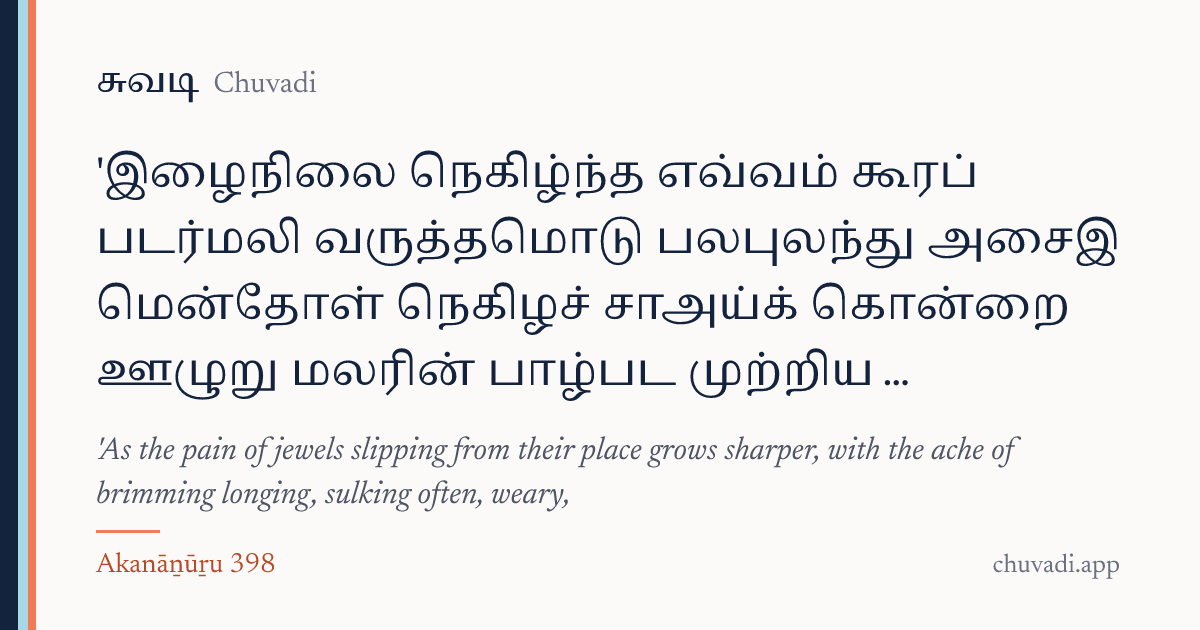
- 'As the pain of jewels slipping from their place grows sharper,
- with the ache of brimming longing, sulking often, weary,
- my soft arms thinning, wasted, like koṉṟai
- flowers past their prime, ruined, fully spread —
- seeing this body covered with pallor, my brow gone pale,
- on us who have come to this, here, he has no pity;
- for the cruelty your man has done, silently
- my restless, rain-dark eyes brim with clear tears;
- to turn his back so fully and go away — for your
- lord of the hill country, what will be said of it?
- Flood that beats your banks! Tell me!' — so I rebuked you,
- then feared to quarrel with you; and with his mountain's
- many flowers as your cover, shrinking deep in shame,
- you slip past, hidden. Bringing you here and sending you on,
- are they so skilled at forsaking without kindness?
- Like strangers you pay it no regard; but
- stopping in the shade of the vēṅkai with fire-bright boughs to rest,
- flourishing as the rains sustain it, like the Āriyar's
- tall, gold-bearing mountain — in my father's
- forest of many flowers, lingering here today,
- if you stayed a while and then went, would anything be lost?
- Where, sore from wounds where a great striped tiger fought her,
- a weary she-elephant is embraced by her bull, his pride broken,
- who groans like a bending bamboo — from his
- high mountain country you come!
What the poem says
The heroine speaks not to a person but to a mountain stream that flows down from her lover's country into her own. The stream is 'yours' to the hero in the sense that it belongs to his land, and she calls him 'your man' (nummōṉ).
She first scolds it. Her bangles slip, her arms are thin, her body is covered with pallor (pacalai) like koṉṟai flowers past their prime, and her eyes overflow; how can the lord of the hills turn his back on her like this? 'Tell me', she says. Then, afraid of quarrelling, she watches the stream slip past covered with flowers from his mountain, as though ashamed and hiding, and asks whether those who sent it are so skilled at abandoning without kindness.
Her request is gentle. Could the stream not pause in the shade of a vēṅkai, in her father's flower-filled forest, which she compares to the gold-bearing mountain of the Āriyar, and stay a little before going on? The stream stands for the hero himself, who passes by without stopping.
The closing image of his land is of a bull elephant, its pride broken, embracing his mate who was wounded by a tiger and groaning like bamboo bending in the wind. Even in his country, it seems, a male stays with a suffering mate. Lines 12–16 are hard to divide between the speaker and the stream, and 'notumalāḷar' (line 16, 'strangers') is read as describing the stream's indifference. This edition names no poet.