



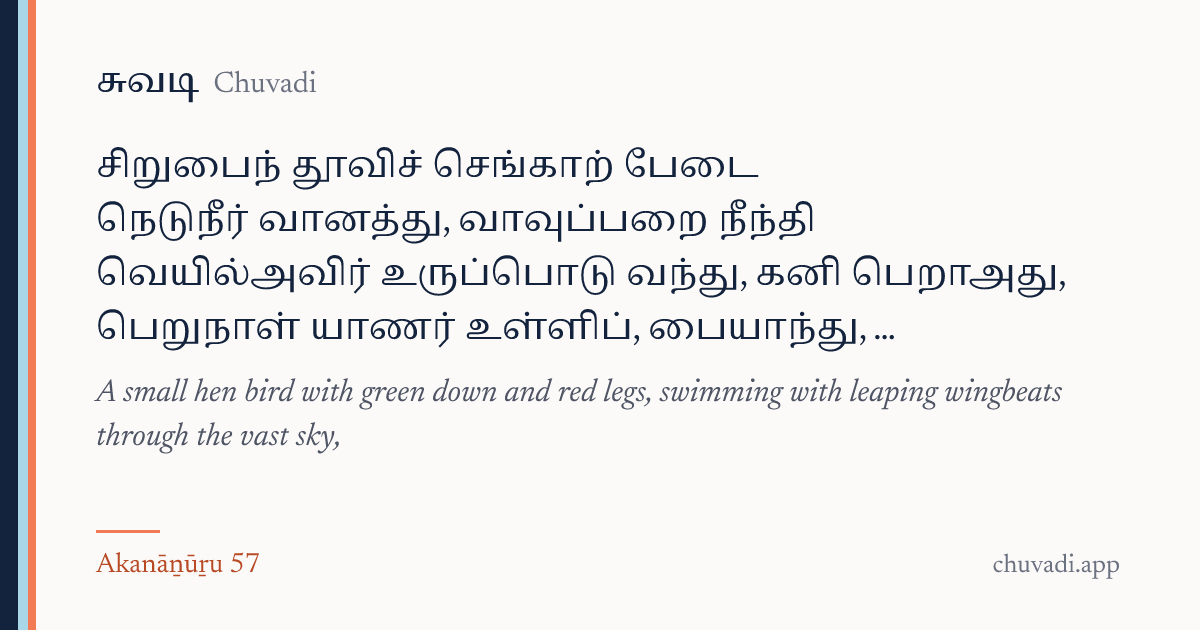

அகநானூறு 57
பாடல் · The poem
Tap a word to see where else it occurs.
பொருள் · Meaning in TamilAI
சிறிய பசுமையான இறகுகளையும் சிவந்த கால்களையும் உடைய பெண்பறவை, அகன்ற வானத்தில் தாவித் தாவிச் சிறகடித்து நீந்திக் கடந்து, ஒளிவீசும் வெப்பத்தினூடே வந்து, பழம் கிடைக்காமல், முன்பு பழங்கள் நிறைந்திருந்த நாள்களை நினைத்து வருந்துகிறது. அது தங்க விரும்பிய புகலிடத்தை இழக்கச் செய்த, பொலிவற்ற, இலையில்லாத, குட்டையான இத்திமரத்தின் வறண்ட உச்சியிலிருந்து தொங்கும் நீண்ட விழுது, பெரிய சொரசொரப்பான பாறையைத் தொட்டு, காற்று மோதும்போது, பெரிய யானையின் உயர்த்திய துதிக்கையைப் போல அசைந்து தொங்குகிறது. குன்றுகள் நிறைந்த அத்தகைய வெப்பமான நீண்ட வழியில் நான் தனியாக இருக்கும்போது, கொய்த பிடரிமயிருடைய குதிரைகளையும் கொடியுடைய தேரையும் உடைய செழியன், ஆழ்ந்த நீருடைய பழைய துறைமுகமுடைய முசிறியை முற்றுகையிட்டு, யானைகள் கொல்லப்பட்ட ஆரவாரமான போரில் கொடிய புண்பட்டவர்களைப் போல வருந்தி, மிகவும் உடைந்து, நள்ளிரவிலும் பகலிலும் ஓயாமல் அழுபவளுடைய சிறிய அழகிய நெற்றி, புதிய ஒளிபரப்பும் பல கதிர்களையுடைய நிலவைப் போன்ற பேரழகை இழந்து, சிறிய பீர்க்கம் பூவின் நிறத்தைப் பெற்றுவிட்டதோ?
இது பாலைத் திணை; பொருள்வயிற் பிரிந்த தலைவன் வழியில் தலைவியை நினைந்து கூறுவது. பழம் தேடி வந்து ஏமாந்த பறவை, அவன் வரவை எதிர்பார்த்து ஏமாறும் தலைவியைக் குறிப்பாகக் காட்டலாம். அப்பறவையின் பெயரைப் பாடல் சொல்லவில்லை.
ஆங்கிலம் · English translationAI
Translation
- A small hen bird with green down and red legs,
- swimming with leaping wingbeats through the vast sky,
- came through the glare of the blazing heat and found no fruit;
- remembering the days of plenty she had known, she grew sad;
- of the bleak, leafless itti that cheated her of the refuge she longed for,
- short-trunked, the long aerial root from its scraggy crown
- brushes the great rough boulder and, as the wind strikes it,
- hangs swinging like the raised trunk of a big elephant:
- on that long hot road through the hill country,
- while I am here alone, has she,
- her great fine beauty like the many-rayed moon spreading fresh light,
- lost it, and has the small pīram's
- lovely flower-colour come over it, I wonder —
- she who, as when Ceḻiyaṉ with his flagged chariot and horses with clipped manes
- besieged Muciṟi at its old harbour of deep water,
- in the clamorous battle where the elephants were slaughtered,
- suffers like those with grievous wounds, much broken,
- and through the midnight dark and through the day
- weeps without end: her small fine brow?
What the poem says
The hero speaks to himself on a journey through dry hill country. The scene he sees is small and exact: a little hen bird with green feathers and red legs has flown a long way through the heat to an itti (fig) tree, hoping for fruit, and found none. She remembers the days when the tree was full and grows sad. The tree itself is bare and stunted; only one long aerial root hangs from it, swaying in the wind against a boulder like the raised trunk of an elephant.
The disappointed bird, coming to a tree that once fed her and finding it empty, may point to the heroine, waiting for the hero who has gone; but the poem does not draw the comparison openly.
His thought then goes home. Alone on the road, he wonders whether her brow, once bright as the full moon, has lost its beauty and turned the yellow of the small pīram flower, the colour of love-sickness. He imagines her weeping night and day, as broken as the wounded men in the battle when the Pāṇṭiya Ceḻiyaṉ, with his chariot of flags and horses with clipped manes, besieged Muciṟi by its ancient harbour and slaughtered the elephants there. The poem gives that siege only as a measure of her suffering.
'Ciṟupaint tūvic ceṅkāl pēṭai' does not name the bird; it is rendered as 'a small hen bird with green down and red legs'.