




அகநானூறு 61
பாடல் · The poem
Tap a word to see where else it occurs.
பொருள் · Meaning in TamilAI
'கூற்றுவன் பற்றிக் கொள்ளும்போது இறவாமல், பிறர் கொள்ள இறந்தவர்களே உறுதியாகத் தவம் செய்தவர்கள்' என்று சொல்லி, தம் முயற்சி வெற்றி பெறும்படி தொலைநாட்டுக்குச் சென்றார் அவர். நாள்களைக் கோடிட்டுக் குறித்த நெடிய சுவரைப் பார்த்து, நோயால் வருந்தி மூழ்கிவிடாதே, தோழி, வாழ்க! தாமதிக்காமல், இடியைப் போல முழங்கும் ஊக்கத்தோடு, பசுமையான பக்கங்களையுடைய வலிய வில்லில் வரிந்த சிறந்த உறுதியான நாணைப் பூட்டி, கடினமான உடலில் ஆழப் பாய்ச்சிய அம்புகளையுடைய பலரோடு சேர்ந்து, பெருமைமிக்க யானைகளின் வெண்தந்தங்களைக் கைப்பற்றி, கள்ளை விற்றுப் பெற்ற நெல்லால் நாள்தோறும் விருந்து கொண்டாடும், வீரக்கழல் அணிந்த அழகிய அடிகளையுடைய கள்வர் தலைவனும், மழவர் நாட்டை அடிபணியச் செய்த பெருங்கொடையாளனுமாகிய புல்லியின் விழாக்கள் நிறைந்த பெரும்புகழுடைய வேங்கட மலையையே பெற்றாலும், அவர் அங்கே தங்கிப் பழகுவது அரிது. முன்பு, முழவைப் போன்ற திண்ணிய தோள்களையுடைய நெடுவேள் ஆவியின் பொன் நிறைந்த பெருநகரமான பொதினியைப் போன்ற, ஒளிரும் அழகிய முலைகளால் பொலிவுபெற்ற, நுண்ணிய அணிகலன்கள் அணிந்த உன் மார்பைத் தழுவுவதை மறந்து அவர் அங்கே இருக்க மாட்டார்!
இது பாலைத் திணை; பொருள்வயிற் பிரிந்த தலைவனுக்காக நாள் எண்ணி வருந்தும் தலைவியைத் தோழி தேற்றுவது. எந்தச் செல்வமும் அவளை மறக்கச் செய்யாது என்பது அவள் வாதம். முதல் இரண்டு அடிகளில் வரும் பழமொழியின் பொருள் உறுதியாகத் தெரியவில்லை.
ஆங்கிலம் · English translationAI
Translation
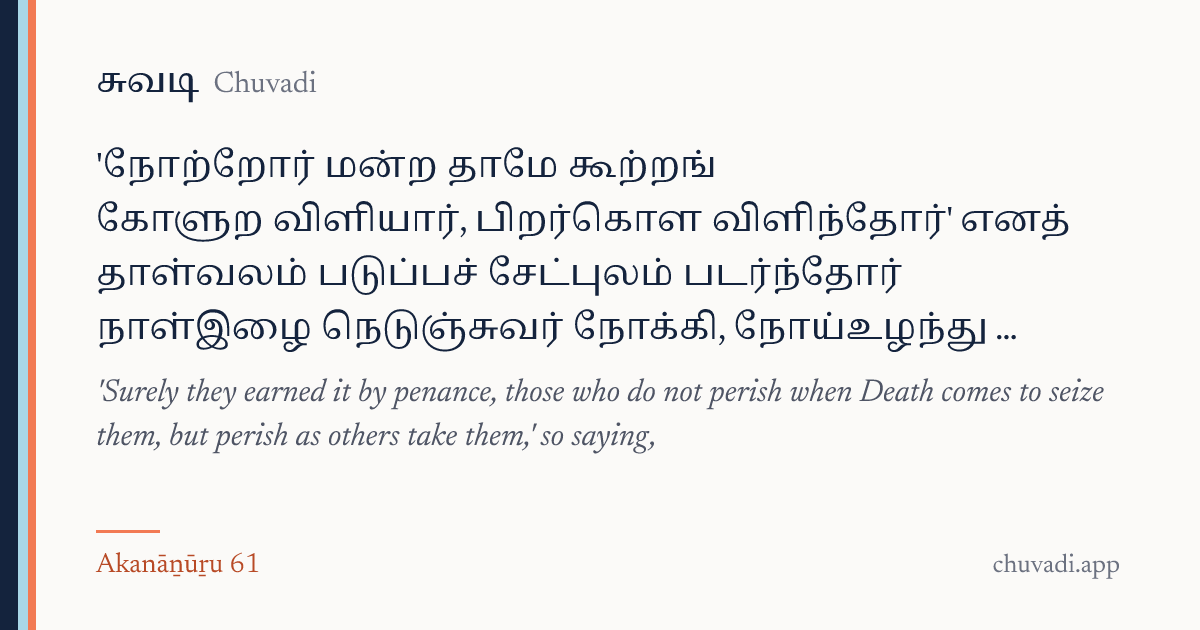
- 'Surely they earned it by penance, those who do not perish
- when Death comes to seize them, but perish as others take them,' so saying,
- so that his effort might bring him success, he set out for a far land;
- looking at the tall wall scored with the days, sick with grief,
- do not sink, long live, friend! Without delay,
- with a zeal that roars like thunder, fitting to the green-sided
- strong bow the striped, fine, sturdy cord,
- with arrows driven deep into the hard flesh, many together,
- they take the white tusks of noble elephants,
- and hold their daily feasts with paddy bartered for toddy:
- the lord of the Kaḷvar, with anklets on well-shaped feet,
- Pulli of great generosity, who bent the Maḻavar lands to his will —
- even if he won that Vēṅkaṭam of festivals and great renown,
- it would be hard for him to settle there. Of old,
- Neṭuvēḷ Āvi, with shoulders firm as drums,
- had Potiṉi, his great town rich in gold; like it, your
- chest, splendid with bright-hued lovely breasts
- and fine jewels — he could not stay, forgetting to embrace it!
What the poem says
The heroine's friend comforts her while the hero is away. The heroine has been counting the days by scoring lines on the wall and staring at them in grief. The friend tells her not to sink into despair.
The hero left with a saying on his lips: those men are truly blessed who do not die when Death comes for them in the ordinary way, but die 'as others take them'. The line is compressed. It is read here as praise of men who die in effort or in battle rather than of age, the kind of resolve that sent him out to win success. Its exact sense is uncertain.
The friend's argument is that he cannot stay away long, whatever he finds. Even if he were given Vēṅkaṭam, the hill of festivals and great fame, belonging to Pulli, the generous lord of the Kaḷvar who subdued the Maḻavar lands, he would not settle there. The poem pictures Pulli's men vividly: hunters with strong bows and thunderous zeal who kill elephants for their tusks and feast daily on paddy bought with toddy. All this is only the measure of what the hero would refuse.
Against it stands the heroine herself, likened to Potiṉi, the golden town of Neṭuvēḷ Āvi with shoulders like drums. Neither Vēṅkaṭam's riches nor anything else could make him forget her breast. The poem names these chiefs and places without saying more about them, and nothing more is added here.