



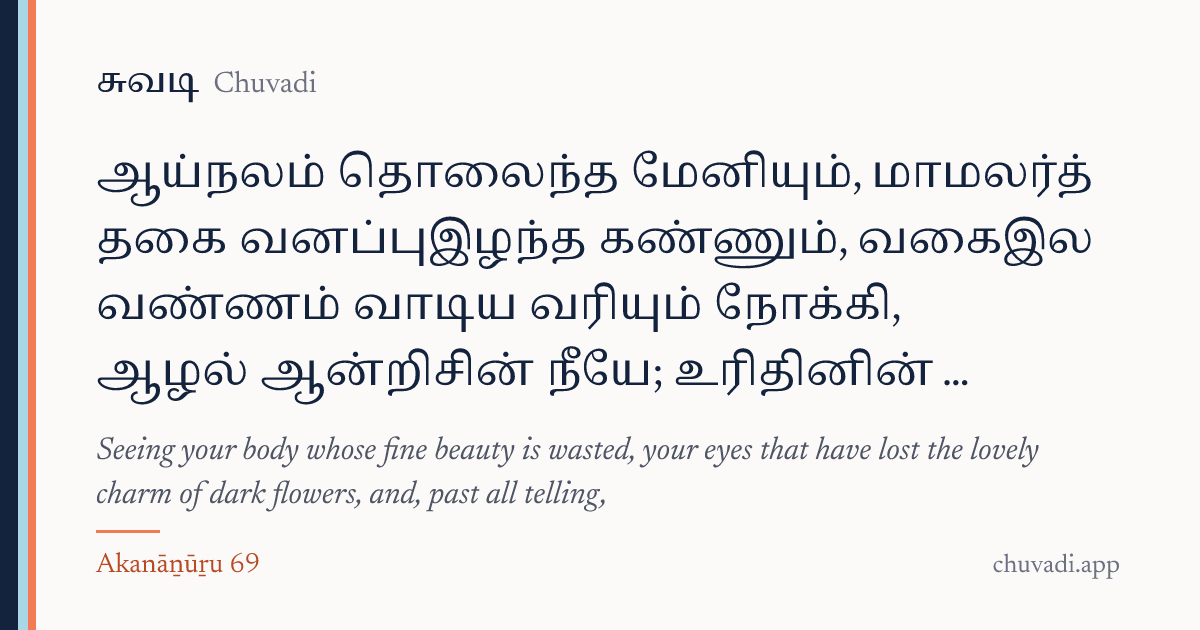

அகநானூறு 69
பாடல் · The poem
Tap a word to see where else it occurs.
பொருள் · Meaning in TamilAI
அழகிய நலம் கெட்ட உன் மேனியையும், கரிய மலர்களின் அழகை இழந்த கண்களையும், சொல்ல முடியாதபடி நிறம் வாடிய உடலின் வரிகளையும் பார்த்து அழுவதை நீ நிறுத்திக்கொள்ள வேண்டும். முறையாகக் கொடுப்பதன் இன்பத்தை விரும்பி, ஆர்வத்தோடு பொருள் தேடுவதில் வல்லவரானார் அவர். 'சிறிய இலைகளும் பருத்த அடியும் உடைய நெல்லியின் புளிப்பான திரண்ட காய்களைக் காட்டு மரைமான் கூட்டங்கள் கவரும் வேனிற்கால வழி இது' என்று எண்ணாமல், உறுதிகொண்டு, வானைத் தொடும் நெடிய குடைகளையுடைய தேர்களைக் கொண்ட மோரியர்களின் பொன்னால் அணிசெய்த சக்கரங்கள் உருண்டு செல்வதற்காக வெட்டப்பட்ட பாறையைக் கடந்து அவர் சென்றிருந்தாலும், சிறிதும் தாமதிக்க மாட்டார், தோழி, வாழ்க! ஆடும் இயல்புடைய இளமயில்கள் உதிர்த்த நீண்ட பீலியைத் தம் சிறந்த வலிய வில்லில் சுற்றி, சிறந்த பல அம்புகளைக் கையில் கொண்டு, பல அரண்களை அழித்து நல்ல அணிகலன்களைக் கொண்டுவரும் வீரர்களின் தலைவனும், ஒளிவீசும் மணிகள் பதித்த பெரிய அணிகலன்களை அணிந்தவனுமான ஆயின் காட்டில் முதல்நாள் மலர்ந்த பூவைப் போல மணக்கும், பரந்த முலைகளையுடைய உன் மார்பில் பெறும் இனிய உறக்கத்தை அவர் மறக்க மாட்டார்!
இது பாலைத் திணை; பொருள்வயிற் பிரிந்த தலைவனுக்காக வருந்தும் தலைவியைத் தோழி தேற்றுவது. கொடுக்கும் இன்பத்துக்காகப் பொருள் தேடச் சென்றாலும், காதல் அவனை விரைவில் திரும்பச் செய்யும் என்பது அவள் வாதம். மோரியர் பற்றிப் பாடல் சொல்வதை மட்டுமே இங்குக் கொண்டோம்.
ஆங்கிலம் · English translationAI
Translation
- Seeing your body whose fine beauty is wasted, your eyes
- that have lost the lovely charm of dark flowers, and, past all telling,
- the lines of your skin faded of their colour,
- you must stop weeping; rightly
- craving the joy of giving, eagerly
- he has set himself to the making of wealth; 'Of the thin-leaved,
- thick-trunked nelli the sour, clustered fruit
- the herds of young forest marai seize:
- a summer road,' he did not say, but, set on it,
- where for the Mōriyar, whose chariots bear tall umbrellas brushing the sky,
- so that their gold-bound wheels could roll, a way was cut through
- the rock — though he has gone beyond it, not at all
- will he delay, long live, friend! — the feathers the dancing
- young peacocks have shed they gather and, round their
- fine strong bows they wind them; with hands holding many fine
- arrows they smash many forts and bring back
- good treasures, these warriors' great lord,
- Āy of the great ornaments of bright gems: in his forest
- smelling like the first-day blossom, your
- chest with its spreading breasts — sweet sleep there he will not forget!
What the poem says
The heroine's friend consoles her. She sees the heroine's wasted body, her eyes that have lost their flower-like beauty and the faded lines on her skin, and tells her to stop weeping. The hero has gone for wealth, but for a good reason: he longs for the joy of giving rightly to those who need it.
The road he took is hard. It is summer, and herds of forest marai deer strip the sour fruit from the nelli trees, a sign of scarcity. He did not let that stop him. He has gone beyond the rock through which, the poem says, a way was cut so that the gold-bound wheels of the Mōriyar, whose chariots carry umbrellas that brush the sky, could pass. The poem mentions the Mōriyar only in this image of a cut through the rock, and nothing more is assumed here.
Even so far away, the friend insists, he will not delay, because he cannot forget sleeping on the heroine's breast. That breast is fragrant like the first-day flowers in the forest of Āy, the lord of warriors who wind peacock feathers round their bows, smash forts and bring back treasure. The praise of Āy's men has a function: it makes his forest a place of wealth and fragrance against which the heroine is measured, and her breast wins.
The poem balances the two motives of pālai, the duty to earn and the pull of love, and the friend argues that the second will bring him back. 'Ēmuṟṟu' in line 9 is taken as 'set on it'; it can also mean 'deluded', which would sharpen the friend's tone.