




அகநானூறு 73
பாடல் · The poem
Tap a word to see where else it occurs.
பொருள் · Meaning in TamilAI
பின்னலோடு சேர்த்து முடித்த, கழுவாத உச்சிக் கொண்டையில் எண்ணெய் நிறைந்த தொங்கும் கூந்தலை உள்ளடக்கிக் கட்டி, இருளில் உற்றுநோக்கும் காட்டுப்பூனையின் கண்களைப் போல ஒளிவீசும் ஒற்றைச்சர முத்துமாலை முலைகளின் இடையே விளங்க, வருத்தும் கற்போடும் இளமையோடும் மெலிந்து, நோய் உனக்குரியது அல்லாதிருந்தும், 'பாவம், இவள் என்ன ஆவாளோ?' என்று கடுமையாக என் அழிவுக்கு இரங்கும் நீயும் நானும், 'இது முறையன்று' என்று ஒரே எண்ணத்தோடு இருக்கும் இருவரும், நம் துயரம் தீர வருவதைக் காண வருவாயாக, அன்புத் தோழி! கொடிகள் பின்னிய புதரில் கரிய யானை உறங்கும் நேரத்தை எதிர்பார்த்து, புலியின் வலிமையோடு, அழகிய சிறுதினைப் புனத்தைப் பரண்மேலிருந்து காக்கும் காவலன் கையில் பிடித்திருக்கும் நெருப்பு முனையுடைய கொள்ளியிலிருந்து சிதறும் தீப்பொறிகளைப் போல மின்னி, அவர் சென்ற நாட்டின் மேல் மழை நிலைகொண்டிருக்கிறது!
இது பாலைத் திணை; பிரிவில் வருந்தும் தலைவி, தன்னோடு சேர்ந்து வருந்தும் தோழியிடம் கூறுவது. தலைவன் சென்ற நாட்டில் மழை தோன்றியது, அவன் திரும்ப வேண்டிய கார்காலம் வந்ததற்கான அடையாளம். பன்னிரண்டாம் அடி முதலான பகுதியின் அமைப்பு தெளிவாக இல்லை; 'நாகம்' என்பதை யானை என்று கொண்டோம்.
ஆங்கிலம் · English translationAI
Translation
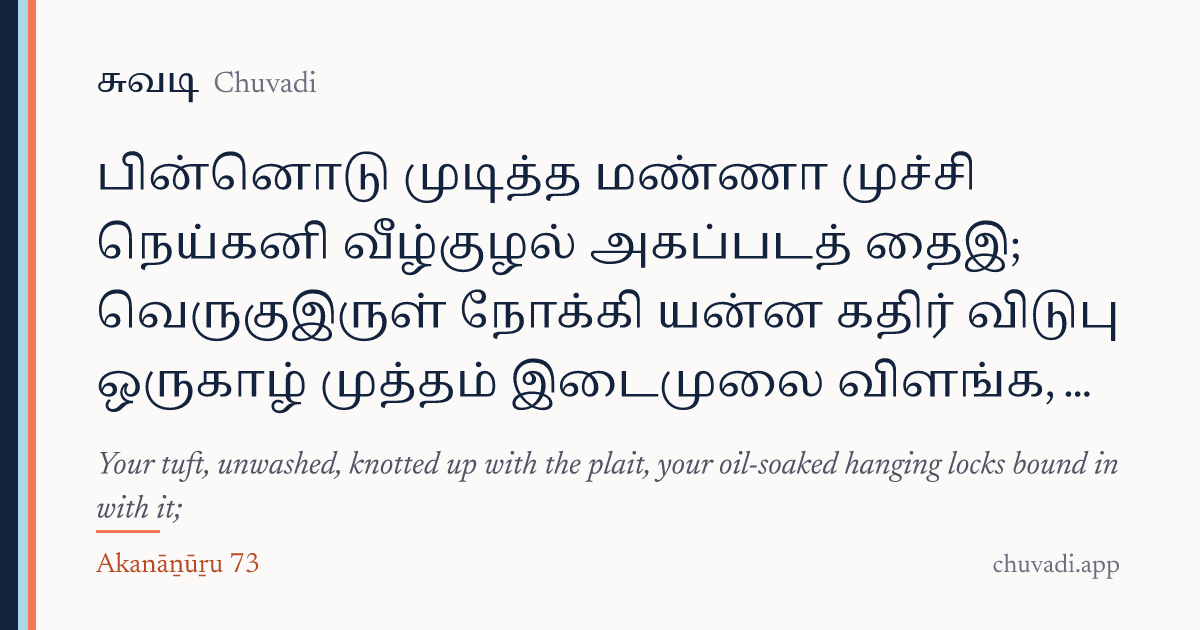
- Your tuft, unwashed, knotted up with the plait,
- your oil-soaked hanging locks bound in with it;
- shooting out light like a wildcat staring into the dark,
- a single strand of pearls gleaming between your breasts;
- withered, with a faithfulness that suffers and an innocence that holds you,
- though it is not your sickness that is chief; fiercely,
- 'What will become of her, poor thing?' you say,
- and grieve for my ruin; you and I,
- with one undivided mind that says 'this is not the way',
- both of us, to see what comes to end our grief,
- come, my dear friend!
- In the tangled-creeper thicket the dark elephant
- is watched for its moment of rest; with a tiger's strength,
- the far-perched watchman of the lovely little millet field, in his hand,
- holds a glowing firebrand shaped to his grip:
- like the sparks it scatters, it flashes, and over the land
- where he went, the rain has settled!
What the poem says
The heroine speaks to her friend while the hero is away. She begins by describing the friend herself: her hair tied up unwashed, her single strand of pearls glowing between her breasts like the eyes of a wildcat in the dark, her body thinned with a loyalty that hurts. The sickness is not the friend's own, but she has wasted in sympathy, asking 'What will become of her?' and grieving over the heroine's ruin. The neglected hair is a mark of grief shared.
The two are of one mind: both feel that his absence is 'not the way'. Now the heroine invites her friend to come and look at something that will end their grief. Over the land where he went, the rain has settled, flashing with lightning. The rainy season is the time by which an absent husband promises to return, so the clouds over his country are a sign that he must soon come home.
The lightning is compared to sparks from a firebrand held by the watchman on the high platform of a millet field, who has the strength of a tiger and keeps guard against an elephant lurking in the thicket of tangled creepers, waiting for the moment it lies down. The picture brings a kuṟiñci scene into a pālai poem, perhaps because the hero's road lies through hill country.
Lines 12–15 are compressed and their syntax is not certain. 'Nākam' is taken as 'elephant' rather than 'snake', and the 'tiger's strength' as describing the watchman. 'Aṇaṅkuṟu kaṟpu' in line 5 is rendered as 'a faithfulness that suffers'.