



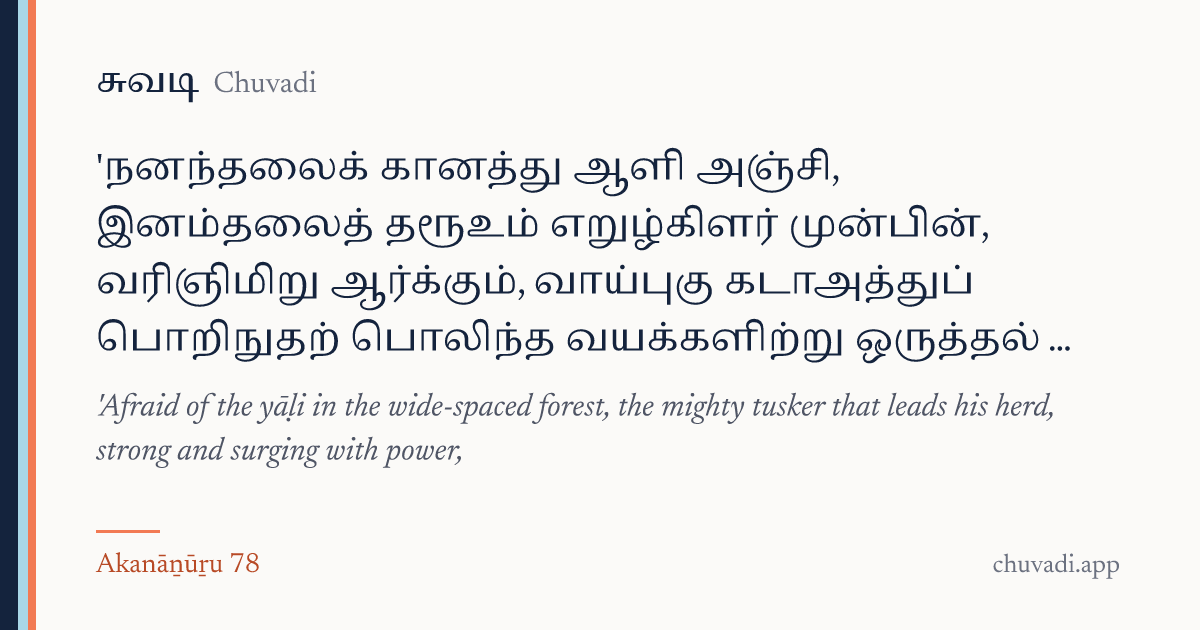

அகநானூறு 78
பாடல் · The poem
Tap a word to see where else it occurs.
பொருள் · Meaning in TamilAI
'அகன்ற காட்டில் யாளிக்கு அஞ்சி, தன் இனத்தை வழிநடத்தி வரும் பெருவலிமை கொண்ட, வரிவண்டுகள் ஒலிக்கும், வாய்வரை வழியும் மதநீரும் புள்ளிகள் பொலியும் நெற்றியும் கொண்ட வலிய ஆண்யானை, நடுங்கும் தன் சூல்கொண்ட இளம் பெண்யானையைத் தன் பெரிய சொரசொரப்பான கையால் ஆறுதல் தருமாறு தழுவும் மலைச்சாரலில், தேன்பிழிந்த கள்ளையுடைய குறவரின் முற்றத்தில் முந்தூழின் சிறந்த மலர்கள் உதிர, காந்தளின் நீண்ட இதழ் கொண்ட நெடிய துடுப்புப் போன்ற பூ வளைய, குளிரும் வாடைக்காற்று வீசும் பனிவரும் அற்சிரக் காலத்தில், நம்மை இழந்த தனிமையில் நம் ஊரில் தனித்திருக்கும் அந்த இரங்கத்தக்கவர் என்ன ஆவாரோ?' என்று, எம்மை விட்டுப் பிரிந்த சில நாள்களில் சிறிதேனும் நினைத்துப் பார்த்தீரோ, உயர்ந்த மலைநாட்டுத் தலைவரே! உலகெல்லாம் பரவிய பலரும் புகழும் நல்ல புகழைப் போல, வாய்மை மொழியுடைய கபிலன் உடனிருக்க, தொலைவிலிருந்து செழித்த வயல்நெல்லின் விளைந்த கதிர்களைப் பெற்று, பருத்த தண்டுடைய ஆம்பல் மலரோடு சேர்த்து, பல ஆண்டுகள் கழிந்தும் தேடி வந்தவர்க்குத் தவறாமல் கொடுத்து, படைவீரரை அனுப்பியவரை வென்று, வாட்போரைக் கலக்கி, உயர்ந்த கொம்புடைய யானைகளைக் கொண்ட வேந்தர்களை ஓட்டிய, நீண்ட ஓட்டமுடைய குதிரைகளை உடைய வள்ளல் பாரியின் இனிய பெரிய பசுஞ்சுனையில் பூத்த தேன்மணக்கும் புதுமலர்களைப் போல மணக்கும் இவளுடைய நெற்றி!
இது குறிஞ்சித் திணை; சில நாள் பிரிந்து மீண்ட தலைவனிடம் தோழி கூறுவது. சூல்கொண்ட பிடியைக் காக்கும் களிறு, தலைவியைத் தனியே விட்டுச் சென்ற தலைவனுக்கு நயமான கடிந்துரையாக அமைகிறது. பாரியின் முற்றுகை பற்றிய மரபைப் பாடல் மறைமுகமாகவே சுட்டுகிறது; 'கபிலன் சூழ' என்ற தொடரின் பொருளும் 'முந்தூழ்' என்ற செடியின் அடையாளமும் உறுதியாகத் தெரியவில்லை.
ஆங்கிலம் · English translationAI
Translation
- 'Afraid of the yāḷi in the wide-spaced forest,
- the mighty tusker that leads his herd, strong and surging with power,
- musth running into his mouth, where striped bees hum,
- his spotted brow shining, the great bull elephant,
- with his huge rough trunk clasps her to comfort her,
- his young cow-elephant heavy with young, who trembles on the slope;
- in the yards of the Kuṟavar who drink toddy pressed from honey
- the fine muntūḻ flowers drop, and of the kāntaḷ
- the tall, long-petalled spoon-like blossom bends, as coldly
- the north wind sweeps in the dewy season of falling mist —
- lonely without us, alone in our town,
- what will become of them, the poor things?' — thus
- in the few days since you left us, even a little
- did you think of it? — lord of the land of high mountains! —
- Like the good fame, praised by many, that wanders through the whole world,
- with Kapilar of truthful word beside him, from far off
- he got the ripened ears of paddy from rich fields
- and joined them with flowers of the thick-stemmed āmpal,
- many years going by, never failing those who came in need;
- he overcame those who sent men against him, churned the sword-battle,
- and drove off the kings with their elephants of lifted tusks,
- Pāri of the open hand and long-striding horses:
- in his sweet, great, green pools blossom
- fresh flowers with honey scent — so smells her brow!
What the poem says
The heroine's friend speaks to the hero, the 'lord of the land of high mountains', who has been away a few days and has now come back. She puts in his mouth the anxious words he ought to have said while away: in this cold, misty season, what will become of the girl left lonely in our town? And she asks whether he gave it even a moment's thought.
The opening scene works as a quiet reproach (iṟaicci). Fearing the yāḷi, a fabulous beast of prey, the bull elephant who leads his herd wraps his trunk round his trembling, pregnant mate to reassure her. Even an animal stays to protect the one who depends on him. The second picture, of flowers shaken down in the Kuṟavar's yards and kāntaḷ stems bending in the north wind, sets the season of dew and cold in which separation is hardest. The plant called muntūḻ is not securely identified.
The last lines praise the girl's brow by comparing its scent to the flowers of the pools of Pāri, the generous chieftain, with Kapilar, 'of truthful word', at his side. The poem says that Pāri, while years went by, obtained ripe paddy from far off, mixed with āmpal flowers, and drove away the kings who came against him with elephants. Tradition widely remembers Pāri's hill as besieged by enemy kings and Kapilar as his friend; the poem itself only hints at a long siege. Line 16 is hard to construe, and 'beside him' for cūḻa is one reading among others.
The final 'ō' can be read as plain praise (her brow is as fragrant as that) or as a pointed question (is it still?). Either way the friend is reminding the hero what he risks by staying away.