




அகநானூறு 8
பாடல் · The poem
Tap a word to see where else it occurs.
பொருள் · Meaning in TamilAI
ஈசல் புற்றின் ஈரமான வெளிப்பக்கத்தில் தங்கியிருக்கும், கறையான் புழுக்களை உணவாகக் கொள்ளும் பெரிய கைகளை உடைய ஆண்கரடி, தொங்கும் தோலுறையுள்ள தன் வலிய நகங்களால் தோண்டுவதால், அதனுள் இருக்கும் பாம்பு வலிமை இழக்கிறது. அப்படிப்பட்ட நள்ளிரவு இருளும் எனக்கு அரிதன்று, தோழி! — 'அவருடைய நாட்டில், அகன்ற வாயுடைய ஆண்புலி கொன்ற பெரிய பன்றியை இழுத்துச் செல்வதால் பலாமரங்கள் நிறைந்த மலைச்சரிவு புலால் நாறுகிறது. மூங்கில் ஒலிக்கும் அந்த மலையில், வழை மரங்களோடு வாழை உயர்ந்து வளர்ந்த ஆழ்ந்த சேற்றில் விழுந்த வலிய களிற்றின் வருத்தத்தைப் போக்க, பெண்யானை முறுக்கி ஒடித்த பெரிய மரத்தின் ஓசை வானைத் தொடும் மலைப்பிளவுகளில் எதிரொலிக்கிறது. அந்த நாட்டில், எண்ணற்ற குன்றுகளின் மான்வழிகளில் வழி தவறாமல், மின்னல் வெட்டும்போது சற்றே ஒதுங்கி, மெல்லமெல்ல, நீலமணி போன்ற பின்னிய கூந்தலில் மழைத்துளிகள் விழ, அதைச் சிறிய முதுகை மூடும்படி வாரி, கூந்தலைப் பிழிந்து, அதன் சுருள் கலையும்படி ஒதுக்கி வந்த நீங்கள் இந்தப் பாலைவழியை அறிவீர்களோ?' என்று கேட்பவர்களைப் பெற்றால் போதும்.
இது குறிஞ்சித் திணை; தலைவி தோழியிடம் கூறுவது. இரவில் தலைவன் வருவதற்கு மாறாக, தானே அவன் நாட்டுக்குச் செல்வதைத் தலைவி கற்பனை செய்கிறாள். சேற்றில் விழுந்த களிற்றுக்காக மரத்தை ஒடிக்கும் பெண்யானை, தலைவனுக்காகத் துன்பம் ஏற்கத் துணியும் தலைவியைக் காட்டுகிறது. 'என்னுநர்ப் பெறினே' என்ற இறுதி நிபந்தனையின் நோக்கமும், பதினேழாம் அடியின் பொருளும் உறுதியாகத் தெரியவில்லை.
ஆங்கிலம் · English translationAI
Translation
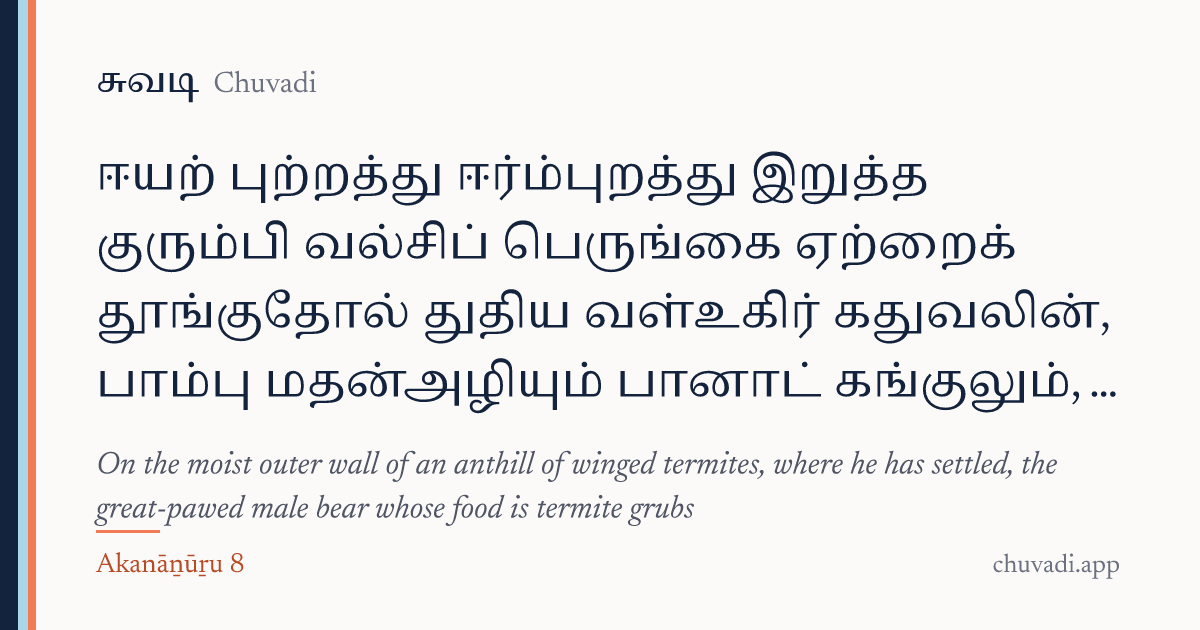
- On the moist outer wall of an anthill of winged termites, where he has settled,
- the great-pawed male bear whose food is termite grubs
- digs in with strong claws in their sheaths of loose skin,
- so that the snake loses its strength — even the dark night at midnight
- would not be hard for me, friend! — 'In his country, where a great
- boar killed by the wide-mouthed male tiger
- is dragged so that the slope crowded with jackfruit reeks of flesh;
- on the mountain where the bamboo creaks, there, where with vaḻai trees
- the plantains rise tall over the deep-sunk mire,
- to ease the pain of the fierce bull elephant that has fallen in,
- the uproar of a great tree that the cow elephant twisted and broke
- echoes in the sky-touching clefts — in his country,
- not losing your way on the deer-paths of the countless hills,
- stepping a little aside whenever lightning flashed, slowly, slowly,
- with raindrops fallen on your braided hair, fine as sapphire,
- gathering it to cover your small back, wringing out your tresses,
- pushing them aside till their curls were undone, you — this wild track,
- do you even know it?' — if only I could find people who would say this.
What the poem says
The heroine speaks to her friend (she calls her ikuḷai). The situation is not spelled out, but her words imply a reversal of the usual night meeting: instead of the hero risking the mountain paths to reach her, she imagines herself going to his country through the dark.
The opening scene is the terror of the night. A bear rips open a termite mound with its claws, and the snake that lives there loses its strength. Such a midnight, she says, would not be hard for her. The condition comes at the end: if only she could find people who would greet her there and say, 'You came by this track? Do you even know it?'
The long middle is what those people would see. His country is full of violence and noise: a tiger dragging a boar it has killed until the jackfruit slope stinks of flesh; a bull elephant stuck in a mire among plantains, and its mate tearing down a great tree to help it, the crash echoing through the clefts. And through all this comes the heroine, finding her way along the deer-paths, flinching aside at the lightning, her wet hair gathered over her back and wrung out. The image of the cow elephant labouring for her mate stands beside her own readiness to suffer for him.
The meaning of the final condition is not fully certain. It may express a wish to be recognised and welcomed in his land, that is, to be his acknowledged wife; or it may simply say that the dangers would be nothing if anyone there knew the way she had come. Line 17 is also difficult; it is taken here as pushing the wet tresses aside.