




அகநானூறு 80
பாடல் · The poem
Tap a word to see where else it occurs.
பொருள் · Meaning in TamilAI
வளைந்த கால்களுடைய முதலைகளும் கொம்புடைய சுறாமீன்களும் திரியும் கரிய உப்பங்கழியின் ஒடுங்கிய அரிய வழியை நீந்திக் கடந்து, இரவில் நீ உறுதியாக வந்திருக்கிறாய், குளிர்ந்த கடற்கரைத் தலைவனே! உனக்கு நாங்கள் எப்படி அடைவதற்கு அரியவர்கள் ஆவோம்? அலைகள் கூடும் பரந்த கடலில் தேடி எங்கள் தந்தை கொண்டுவந்த பலவகை மீன்களின் உலர்வத்தலில் வந்து அமரும் பறவைகளை நாங்கள் ஓட்டிக்கொண்டிருப்போம். முண்டகம் செழித்த பழைய நீர்க்கரையில், பல ஒளிமலர்கள் மலரும் பிளவுபட்ட இலையுடைய அடம்புக் கொடியின் சிவந்த மென்கொடியை உன் தேர்ச்சக்கரம் அறுக்க, வரிசையான மணிகள் கட்டிய குதிரைகள் பூட்டிய நெடிய தேரைச் செலுத்திக்கொண்டு, மின்னும் இலைகளிடையே பொலிவுடன் விரியும் பொன்னிறப் பூங்கொத்துகள் குளிர்ந்த மணமுள்ள புதிய மகரந்தத்தைச் சொரியும் அழகிய புன்னைச் சோலைக்குப் பகலில் வருவாயாக!
இது நெய்தல் திணை; இரவில் கழியைக் கடந்து வரும் தலைவனிடம் தோழி கூறுவது. இரவுக் குறியின் இடர்களைச் சுட்டி, பகலில் வெளிப்படையாக வரச் சொல்வதன் வழியாக, களவை விட்டு மணம் செய்யும்படி நயமாகத் தூண்டுகிறாள். 'எந்தை' என்று தந்தையைச் சுட்டுவது, மணத்துக்குக் குடும்பத்தின் இசைவு வேண்டும் என்பதையும் நினைவூட்டுகிறது.
ஆங்கிலம் · English translationAI
Translation
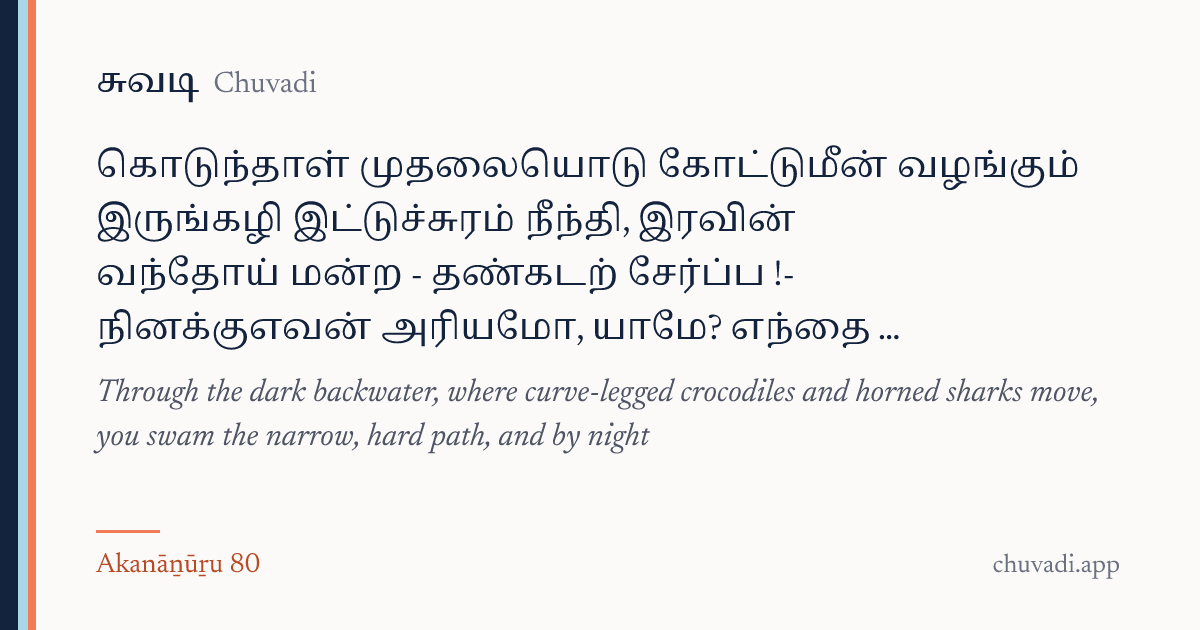
- Through the dark backwater, where curve-legged crocodiles and horned sharks move,
- you swam the narrow, hard path, and by night
- you have surely come — lord of the cool sea shore! —
- why should we be hard for you to win? We
- are scaring off the birds that settle on the many fish set out to dry,
- which our father brought, searching the wide waters where the waves meet;
- on the shore by the old water where the muṇṭakam grows thick,
- where the bright, many flowers open on the fork-leaved aṭumpu,
- its red, soft creepers cut by your chariot's wheels,
- drive your tall chariot with horses wearing rows of bells,
- where, among gleaming leaves, the bright clusters open gold
- and drip cool, fragrant fresh pollen,
- to the lovely punnai grove come by day!
What the poem says
The heroine's friend speaks to the hero, the 'lord of the cool sea shore', who has come to meet the girl at night by crossing the backwater. She praises his daring and at once turns it aside: the creek is full of crocodiles and sharks, and there is no need for such risk.
'Why should we be hard for you to win?' she asks. The girls are easy to find by day: they sit on the shore keeping birds off the fish their father has brought back from the sea and spread out to dry. So let him come openly, in daylight, driving his chariot along the beach, where its wheels cut the red creepers of the aṭumpu, to the grove of punnai trees, whose golden clusters drop pollen.
This is the familiar akam move of turning a lover away from night meetings (iravuk kuṟi) towards day meetings, and, beneath that, towards making the union public and marrying. The dangers of the creek stand for the dangers of secrecy; the sunny grove and the chariot with its bells suggest an approach that everyone can see. The friend's mention of 'our father' quietly reminds the hero of the family whose consent he will need.
The text is clear; the sea creature called kōṭṭumīṉ, 'horned fish', is usually taken as the shark.