




அகநானூறு 88
பாடல் · The poem
Tap a word to see where else it occurs.
பொருள் · Meaning in TamilAI
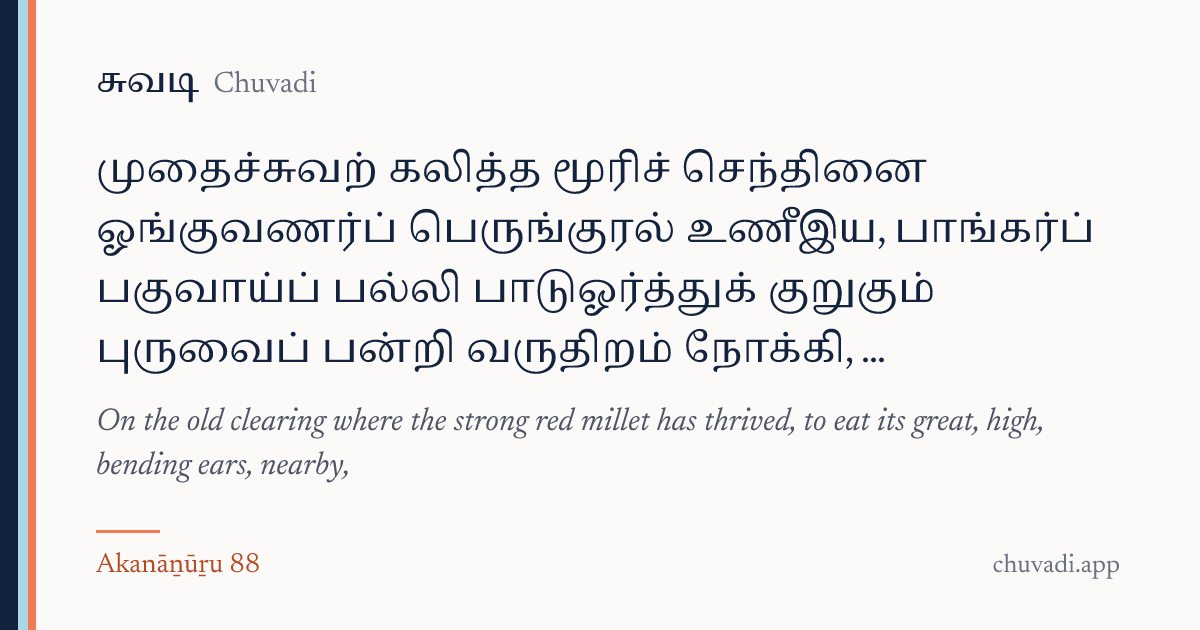
பழைய கொல்லையில் செழித்து வளர்ந்த வலிய செந்தினையின் உயர்ந்து வளைந்த பெரிய கதிர்களைத் தின்பதற்காக, அருகில், பிளந்த வாயுடைய பல்லியின் ஒலியைக் கூர்ந்து கேட்டு மெல்ல நெருங்கும் இளம் பன்றி வரும் வழியைப் பார்ப்பதற்காக, வலிய கையுடைய கானவன் பரண் மேல் ஏற்றிய நெடிய தீப்பந்த ஒளியைப் பார்த்துக்கொண்டு வந்து, நம் நடுங்க வைக்கும் துயரைப் போக்கிய அந்த நல்லவன், மலையில் பெரிய புலியைக் கொன்ற பெருங்கை யானையின் கன்னத்திலிருந்து பெருகி வழியும் அழகிய மதநீரைச் சுற்றிக் கரிய சிறகுடைய வண்டுக்கூட்டம் ஒலிக்க, அதை யாழிசை என்று எண்ணிக் கரிய பாறையின் பிளவில் உள்ள அசுணம் கூர்ந்து கேட்கும், மூங்கில் அடர்ந்த புதர்க்காட்டில் பாம்புகள் கூட்டமாக நெருங்கியிருக்க, வளைந்த நகமுடைய கரடி தோண்டும் வடுக்கள் ஆழ்ந்த புற்றுகளையுடைய, நடப்பதற்கரிய வழியில் சென்றுவிட்டானோ?
இது குறிஞ்சித் திணை; இரவுக்குறியில் வந்து சென்ற தலைவனின் வழியை எண்ணித் தலைவி தோழியிடம் கவலையுடன் கூறுவது. பன்றியைக் காண ஏற்றிய விளக்கே தலைவனுக்கு வழிகாட்டியது நயமானது. வண்டின் இனிய ஒலிக்குப் பின்னால் கொலையானை நிற்பது போல, அழகும் அச்சமும் கலந்த வழி காட்டப்படுகிறது. அசுணம் எந்த விலங்கு என்பது உறுதியாகத் தெரியவில்லை.
ஆங்கிலம் · English translationAI
Translation
- On the old clearing where the strong red millet has thrived,
- to eat its great, high, bending ears, nearby,
- listening for the gaping-mouthed lizard's call, there creeps up
- the young boar; watching for the way it comes,
- the hard-handed forester lit, up on his platform,
- a tall torch; looking to that light he came, and our
- trembling distress he removed, that good man:
- has he gone his way, I wonder — on the mountain,
- where from the great-trunked elephant that killed the dark tiger
- the lovely musth swells from its cheek and runs down,
- and the dark-winged swarm hums, and, taking it for a lute,
- the acuṇam in the dark rock cleft listens;
- in the bamboo-thick thicket where snakes gather in crowds
- and the curve-clawed bear digs
- at scarred, deep anthills — on that path so hard to travel?
What the poem says
The heroine speaks to her friend at night, after the hero has left from a secret meeting. Her worry is for his journey home through the hills.
The opening explains how he found his way. In the millet field, a young boar creeps towards the ripe ears, pausing to listen for the lizard's chirp (taken as an omen). The forester guarding the field lights a tall torch on his watch-platform to spot the boar, and by that light her lover came and 'removed our trembling distress'. The detail is neat: the torch that was meant to keep intruders out guided this intruder in.
The rest of the poem is the path she fears for him. An elephant that has killed a tiger stands with musth running down his cheek, bees humming round it so sweetly that the acuṇam, a creature said to be enchanted by music, listens from its rock cleft as if to a lute. Snakes swarm in the bamboo thicket and a bear tears at anthills with curved claws. Each image is beautiful and threatening at once, and the bees' 'music' hides a killer.
The acuṇam is known in Tamil poetry only as an animal that loves sweet sound; what animal it was is uncertain. 'Kaḻutu', rendered 'platform', is the raised watch-shelter in the fields. Kuṟiñci fits: secret union in the hills and anxiety over the night path.