



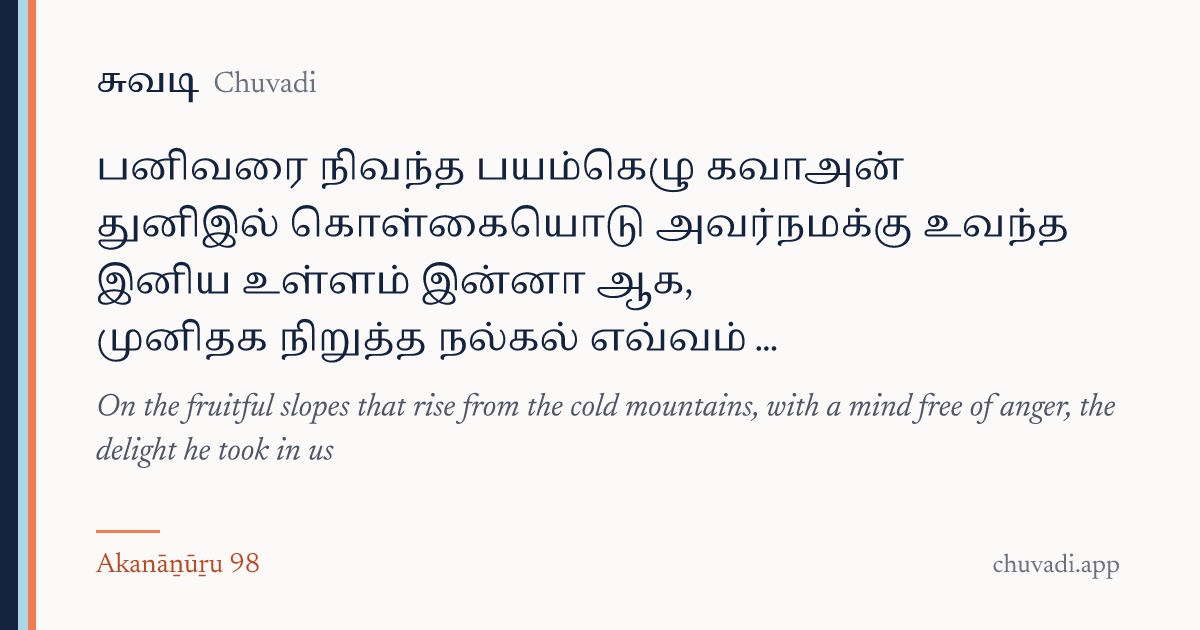

அகநானூறு 98
பாடல் · The poem
Tap a word to see where else it occurs.
பொருள் · Meaning in TamilAI
குளிர்ந்த மலையில் உயர்ந்து நிற்கும் வளமான சாரலில், வெறுப்பில்லாத இயல்போடு அவர் நம்மிடம் கொண்ட மகிழ்ச்சியும் இனிய உள்ளமும் இப்போது துன்பமாக மாறிவிட்டன. நான் வெறுக்கும்படி அவர் அருளை நிறுத்தியதால் வந்த இந்தத் துயரம், தெய்வம் உறையும் மலையின் தலைவனுடைய மார்பைத் தழுவினால் மட்டுமே தணியும் என்பதை அன்னை அறியவில்லை. நீண்ட முன்கையில் நெருக்கமாக ஒளிர்ந்த வளையல்கள் நெகிழ்ந்ததைப் பார்த்து, செய்வதறியாத நெஞ்சத்தோடு அவள் கேட்க, அனுபவம் மிக்க பேச்சுடைய, பொய் சொல்வதில் வல்ல பெண்கள் முறத்தில் தானியத்தை இட்டுப் பார்த்து, 'இது முருகனின் கடுமையான அணங்கு' என்றனர். அதை நம்பி, ஓவியம் போன்ற வேலைப்பாடுடைய நல்ல வீட்டில், 'பாவை போன்ற, பலரும் வியக்கும் என் மகளின் சிறந்த அழகு முன்னைவிடச் சிறக்கட்டும்' என்று அன்னை வேண்டினாள். இனிய இசைக்கருவிகள் சேர்ந்து ஒலிக்க, களம் அமைத்து, ஆட்டத்துக்கு அணிசெய்த அகன்ற பெரிய பந்தலில், வெண்மையான பனங்குருத்தைக் கடம்ப மலரோடு சூடி, இனிய சீரோடு மெல்லிய தாளத்தை அமைத்து, கைகளை ஓயாமல் அசைத்து, முருகனின் பெரும்புகழைப் போற்றி, வெறியாடும் அகன்ற களத்தை அழகுபடுத்த வல்ல வேலன், கயிற்றால் இயக்கும் பாவையைப் போல ஆட விரும்பினால் என்ன ஆகுமோ, தோழி? மயங்கிய மையல்கொண்ட பெண்ணுக்கு அது துன்பமாகவே முடியும். அவன் ஆடிய பின்னும் வாடிய என் மேனி முன்னைப் போலச் சிறக்காவிட்டால், இந்த மறைவான காதல் அலராகாமல் இருப்பது அரிது. அதுமட்டுமன்று, குறிசொல்வோர் உண்டாக்கிய துன்பத்தைக் கண்டு இரங்கி, வெறியாட்டின் மணம் கமழும் நெடுவேள் அருள் செய்தால், 'செறிந்த வளையணிந்தவளின் துன்பம் வேறு காரணத்தால் வந்தது' என்று காடுகள் நிறைந்த நாட்டின் தலைவன் கேட்டுவிட்டால், நான் உயிர் வாழ்வது அதைவிட அரிதாகும்!
இது குறிஞ்சித் திணை; அன்னை வெறியாட்டு எடுப்பதைக் கண்டு தலைவி தோழியிடம் கூறுவது. வெறியாட்டால் நோய் தீராவிட்டால் களவு வெளிப்படும்; தீர்ந்ததுபோலத் தோன்றினால் தலைவன் தன்மீது ஐயம் கொள்வான் என்ற இருமுனை அச்சமே பாடலின் மையம். இருபத்தொன்றாம் அடியில் பிரிந்து அச்சான சொல்லும், அடுத்த அடியில் உள்ள 'பெண்டிற்க்கு' என்பதும் அச்சுப்பிழைகளாகத் தெரிகின்றன.
ஆங்கிலம் · English translationAI
Translation
- On the fruitful slopes that rise from the cold mountains,
- with a mind free of anger, the delight he took in us
- and his sweet heart have turned to pain;
- this grief at a grace held back, till I am vexed,
- eases only when I touch the chest of the lord of the hill where the cūr dwell —
- my mother does not know it; my long, close-set,
- shining bright bangles have slipped loose; seeing that,
- with a helpless heart she asked, and the old-tongued
- women skilled at lies spread out the grain offering, sat,
- and said, 'It is Murukaṉ's fierce possession'; believing it,
- in our good house, its work as fine as a painting,
- 'May her rare beauty, admired by many, like a doll's,
- grow finer than before, my daughter's,' she prayed,
- and with sweet instruments sounding together, the dance ground marked out,
- in the wide, great canopy dressed for the dance,
- wearing white palm-strips with kaṭampu, setting a sweet-measured,
- delicate beat, his hands never still,
- praising the great name of the Lord, the vēlaṉ,
- skilled at making the wide ground of the veṟi rite splendid,
- if he chooses to sway like a puppet worked by strings,
- what will come of it, friend? To the bewildered,
- deluded woman it will bring only pain;
- even after he has danced, if my withered body
- is no finer than before, then this secret
- can hardly escape becoming gossip; and besides,
- if, seeing the trouble that the diviners have brought on,
- the tall Vēḷ, fragrant with the veṟi rite, should grant his grace,
- and 'The pain of the tight-bangled girl came from something else' —
- if the lord of the forest land should hear that,
- my staying alive would be harder still than that!
What the poem says
The heroine speaks to her friend about a veṟi rite, the possession dance her mother has arranged. The girl is lovesick: the hero, whose love was once free and sweet, now keeps away, and only his embrace could ease her. Her mother does not know this. Seeing the bangles slipping off her daughter's thinning arm, she asked the old women of the place, practised liars in the girl's view, who cast grain and declared that Murukaṉ had seized her.
The middle of the poem is a detailed picture of the rite. A canopy is set up and decorated, instruments sound together, a ground is marked out, and the vēlaṉ, Murukaṉ's priest, wearing white palm strips and kaṭampu flowers, keeps a delicate rhythm with his hands and praises the god's name. The mother prays that her daughter's beauty will be restored. The girl imagines him swaying 'like a puppet worked by strings', a touch of mockery.
The end turns into a trap with two jaws. If the dance does no good, her wasted looks will stay and the secret love will become gossip. But if the god does seem to grant relief, people will say her sickness had 'some other cause', and if her lover hears that, he may believe she was never pining for him at all. That, she says, would be harder to survive than either. Behind the anxiety lies the usual kuṟiñci hope: that the friend will reveal the truth, or the hero will come to marry her.
Two misprints: 'எ ன்ஆம்' in line 21 should be one word, 'என்ஆம்', and 'பெண்டிற்க்கு' in line 22 is read as 'பெண்டிர்க்கு'. Line 22 is unclear: the 'bewildered woman' may be the mother or the girl herself.