



கம்பராமாயணம் Invocation · பால 0.2
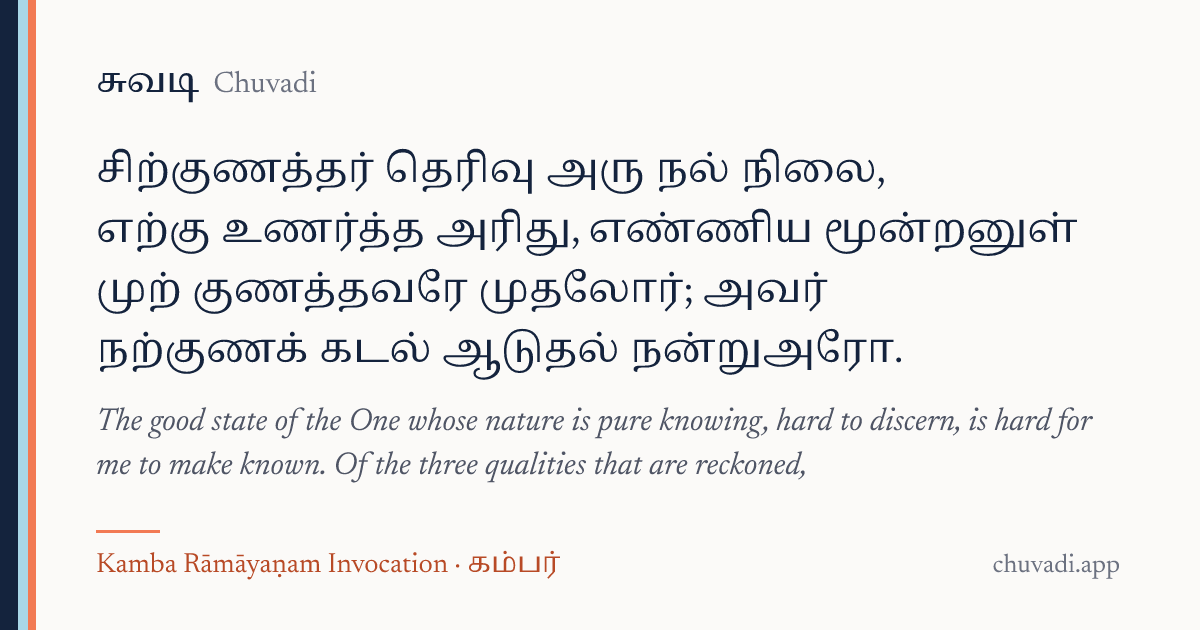
பாடல் · The poem
Tap a word to see its gloss in the commentary and where else it occurs.
பாட வேறுபாடு · Project Madurai reads
பொருள் · Meaning in Tamil
சிற்குணத்தர் - மெய்யறிவினராகிய கடவுளின்; தெரிவு அரு நல் நிலை - தெரிந்து கொள்ளுதற்கு அரிய நல்ல தன்மை; எற்கு உணர்த்த அரிது - என்னால் எடுத்துரைத்து உணர்த்தல் அரியதாகும். (ஆயினும்); எண்ணிய மூன்றனுள் - சான்றோர்களால் எண்ணப்பட்ட சத்துவம், இராஜசம், தாமசம் என்ற மூன்று குணங்களில்; முற்குணத்தவரே முதலோர் - முதலில் சொல்லப்பட்ட சத்துவ குணம் கொண்டவரே மேலோராவார்; அவர் நற்குணக் கடல் - அம்மேலோரின் நற்குணமாகிய கடலிலே; ஆடுதல் நன்று - மூழ்கித் திளைத்தல் நல்லது.
கடவுள் வாழ்த்துப் பகுதியில் சத்துவ குணமுடையவர் பற்றிப் பேசுவது ஏன் என்று எண்ணிப் பார்க்கத் தூண்டுகிறது. இப்பாடல் 'சிற்குணத்தர்' அறிவே வடிவான / பூரண ஞானமாகிய பரம்பொருள். அப் பரம்பொருளை உணர்த்துதல் அரிது என்கிறார் முதலில். அடுத்து, முற்குணமாகிய சத்துவ குணம் கொண்டோரின் குணக்கடலில் ஆடுதல் நன்று என்கிறார். இவ்விரு கருத்துக்களுக்கும் இடையேயுள்ள தொடர்பினை உய்த்துணர வேண்டும். பிரகலாதன், அனுமன், வீடணன் போன்ற சத்துவ குணமுடையாரின் பெருமைகள் இக்காப்பியத்துள் விரித்துரைக்கப்படுகின்றன - அதாவது அன்னாரின் நற்குணக் கடலில் கவிச்சக்கரவர்த்தி ஆடித் திளைக்கிறார் அவ் வழியில் பரம்பொருளின் இயல்பினை, அவதாரமாக எழுந்தருளிய பகவானின் இயல்பினை உணர்த்த முயல்கிறார் பாகவதர்கள் வழியாக பகவானை உணர்ந்து உணர்த்தும் முயற்சி இது. எனவே இச் செய்யுளும் கடவுள் வணக்கப் பகுதியில் இடம் பெறுகிறது. சத்தும் சித்துமாய்ப் பொழியும் பரத்தை, சத்துவ குணத்தர் வாயிலாக உணர்ந்து ஆனந்தம் அடையலாகும் என சச்சிதானந்த நிலையை இச்செய்யுள் விளக்குகிறது.
'சிற்குணத்தர்' என்று பரம்பொருளைக் குறித்த கவிச் சக்கரவர்த்தி, "குணங்களால் உயர்ந்த வள்ளல்" என்று (479) இராமபிரானைக் கவிக் கூற்றாகக் குறிப்பது ஒப்பிட்டுணரத் தக்கது.
குணக்கடல் - உருவகம். அரோ - அசை.
ஆங்கிலம் · English translationAI
Translation
- The good state of the One whose nature is pure knowing, hard to discern,
- is hard for me to make known. Of the three qualities that are reckoned,
- those of the first quality are the foremost; in their
- ocean of good qualities it is good to bathe.
What the poem says
The second verse of the invocation admits that the true nature of God, who is pure consciousness, is beyond the poet's power to describe. Of the three qualities of classical Indian thought (sattva, rajas and tamas), those who possess the first, purity and goodness, are the highest of beings, and the poet says it is good to immerse oneself in the ocean of their virtues.
The link between the two halves is that God can be known through his devotees. The epic will dwell at length on such good souls as Aṉumaṉ and Vīṭaṇaṉ, and through them the poet hopes to convey the Lord himself. "Ocean of good qualities" is a metaphor.