



கம்பராமாயணம் Invocation · பால 0.4
பாடல் · The poem
Tap a word to see its gloss in the commentary and where else it occurs.
பொருள் · Meaning in Tamil
ஒரு பூசை - ஒரு பூனை; ஓசை பெற்று உயர் பாற்கடல்புக்கு - ஒலி மிகுந்ததும் உயர்ந்ததுமான பாற்கடலை அடைந்து; முற்றவும் நக்குபு புக்கென - (அந்தப் பாற்கடல்) முழுவதையும் நக்கப் புகுந்தாற் போல; இக் காசு இல் கொற்றத்து இராமன் கதை - குற்றமில்லாத வெற்றி கொண்ட இராமபிரானது இக்கதையை; ஆசை பற்றி அறையலுற்றேன் - ஆசை கொண்டமையால் சொல்லத் தொடங்கினேன்.
ஓயாத ஒலி கடலுக்கு இயல்பு; ஆதலின் 'ஓசை பெற்று உயர் பாற்கடல்' என்றார். தேவருக்கு அமுது ஈந்த சிறப்பைப் பற்றி உயர் பாற்கடல் என்றார் போலும். எளிய பூனை ஆழ்ந்து பரந்த பாற்கடல் முழுவதையும் நக்கிக் குடித்துத் தீர்த்துவிட முடியாது என்பது தெளிவு. ஆயினும், அந்த முயற்சி குறித்து ஒரு பூனை பாற்கடலை அடைந்திருக்கிறது; இம்முயற்சிக்கு ஆற்றலை விடப் பேராசையே காரணமாக இருக்கமுடியும். அதுபோலத் தன் ஒப்பார் இல்லா அப்பனாகிய நடையில் நின்றுயர் நாயகனின் புகழ்க் கடலை அளந்துரைக்க முடியாது என்பது தெளிவு. ஆயினும், ஆற்றல் கருதாத பேராசை காரணமாக மட்டுமே இச்செயலில் துணிந்து இறங்கியிருப்பதாகக் கவிச்சக்கரவர்த்தி கூறுகிறார் உவமையணி. (பூனையை உவமையாகக் கொள்ளாமல் ஆசை பற்றிய அதன் முயற்சியையே உவமையாகக் கொள்ளல் வேண்டும்)
நக்குபு: செய்பு என்னும் வாய்பாட்டு வினையெச்சத்தைச் செய என்னும் வாய்பாட்டு வினையெச்சமாகத் திரித்துப் பொருள் கொள்ள வேண்டும். (எச்சத் திரிபு)
இராமபிரானது வெற்றி குற்றமற்ற வெற்றி என்பார் 'காசு இல் கொற்றம்' என்றார். பின்னர் வாலிவதை போன்ற செய்தி வரும்போது இத்தொடரை நினைந்து கணிக்க வேண்டும்.
ஆங்கிலம் · English translationAI
Translation
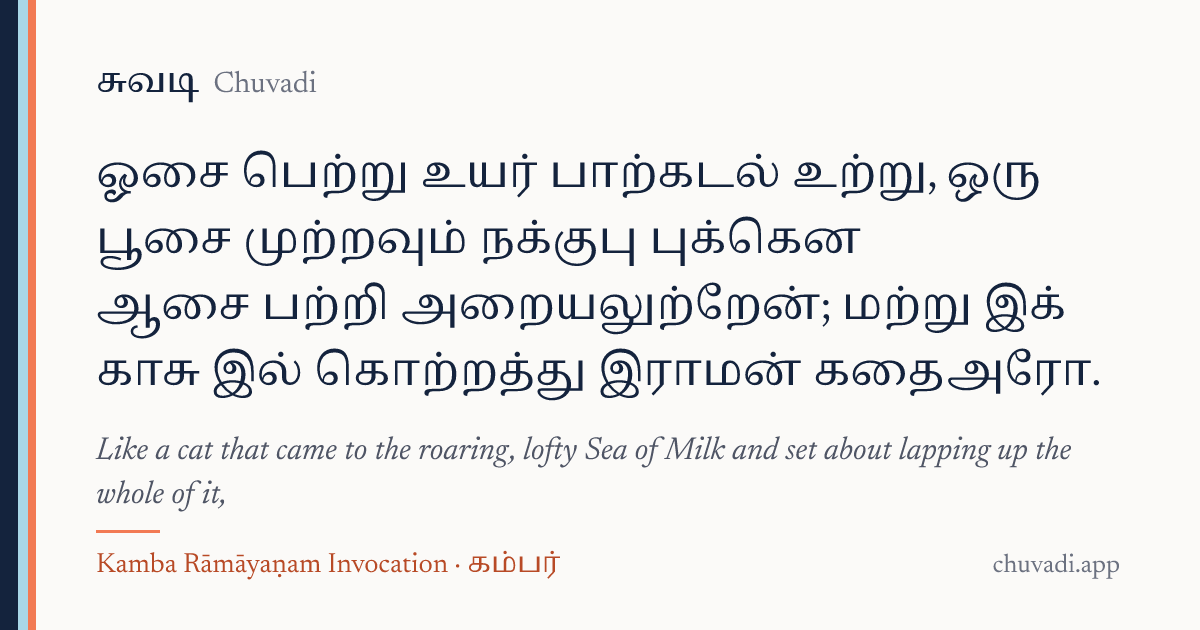
- Like a cat that came to the roaring, lofty Sea of Milk
- and set about lapping up the whole of it,
- out of sheer longing I have begun to tell
- this story of Irāmaṉ, whose victory has no flaw.
What the poem says
With this verse the poet turns from the invocation to his apology, the customary statement of the author's modesty. He compares himself to a cat that wanders up to the vast, roaring Sea of Milk, the ocean that once yielded the nectar of the gods, and begins to lap it up. The cat could never drink it dry; only greed, not strength, sends it there. In the same way, only his longing has led the poet to attempt Irāmaṉ's boundless glory.
The point of the simile is the cat's eager attempt, not the cat itself. Irāmaṉ's victory is called flawless, a phrase readers are asked to keep in mind later, when the epic reaches the controversial killing of Vālī.