



கம்பராமாயணம் Invocation · பால 0.7
பாடல் · The poem
Tap a word to see its gloss in the commentary and where else it occurs.
பொருள் · Meaning in Tamil
துறை அடுத்த - பல்வேறு வகைப்பட்ட; விருத்தத் தொகைக் கவிக்கு - செய்யுள் தொகுதியாலாகிய கவிதைக்கு; உறை அடுத்த செவிகளுக்கு - இடமாக உள்ள செவிகளுக்கு; என்பா ஓதில் - என் கவிதைகளை ஓதினால்; யாழ் நறை அடுத்த - யாழிசை யாகிய தேனைப் பருகுகின்ற; அசுண நன் மாச்செவிக்கு - அசுணமாகிய நல்ல விலங்கின் செவிகளிலே; பறை அடுத்தது போலும் - (கடுமையான) பறையோசை வீழ்ந்ததைப் போன்றது. இசையில் மகிழ்ந்து திளைக்கும் அசுணம், பறையின் வல்லோசை கேட்டால் உயிர் விட்டுவிடும் என்பர் அதுபோல 'நற்கவிதைகள் கேட்டுத் திளைத்த செவிகளில் என் புல்லிய பாவின் ஓசை வீழ்ந்ததால் கேட்டோர் துன்புறுவர்' என்கிறார் கம்பர்.
துறை: பல பிரிவுகள்; அகத்துறை புறத்துறைகளைக் குறித்ததாகக் கொள்ளலாம். விருத்தம் என்பது ஒருவகை யாப்பு; அச்சொல் இங்கே பொதுமை நிலையில் எல்லா வகைச் செய்யுள்களையும் குறித்து வந்தது. உறை: இடம். 'யாழ்' - இங்கு யாழில் பிறக்கும் இசைக்கு ஆகுபெயர் யாழ் நறை - யாழிசையாகிய தேன்; உருவகம். விலங்காயினும் இன்னிசையில் திளைப்பதால் 'நன்மா' என்றார். பறை - ஆகுபெயராய் பறையோசையைக் குறித்தது. அரோ - அசை.
ஆங்கிலம் · English translationAI
Translation
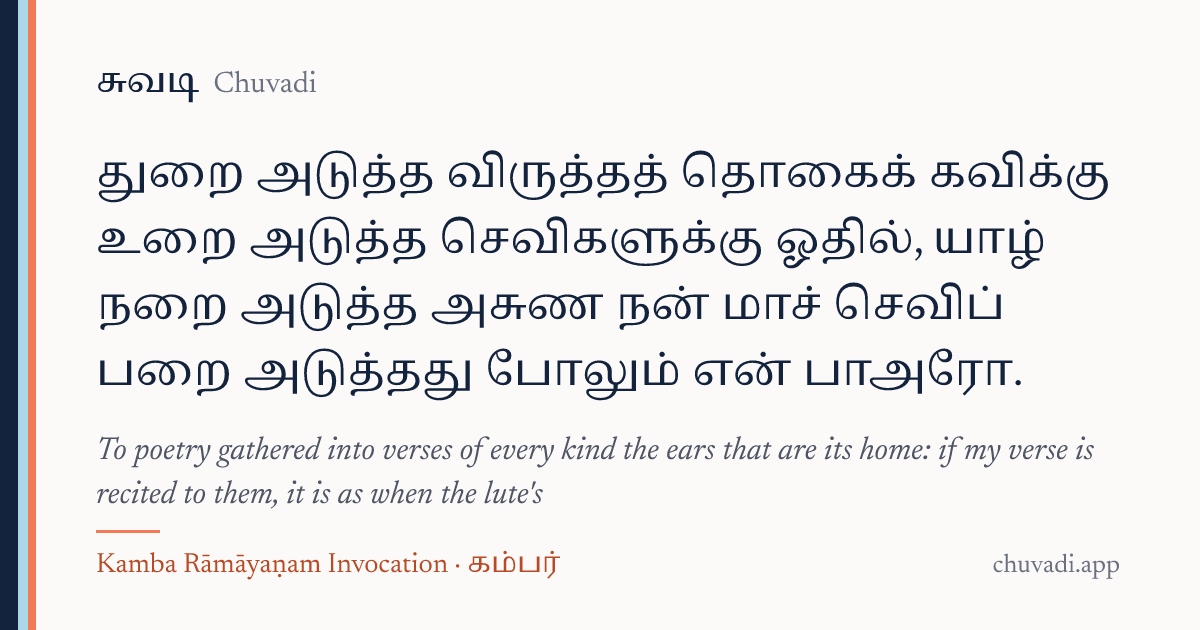
- To poetry gathered into verses of every kind
- the ears that are its home: if my verse is recited to them, it is as when the lute's
- honey fills the fine ears of the noble asuṇam beast
- and a drum strikes upon them: such is my song.
What the poem says
The poet's modesty continues. Ears that have long been steeped in fine poetry of every kind would suffer on hearing his poor verse. He draws on an old Tamil belief about the asuṇam, a creature that delights in the sweet music of the yāḻ (lute) but dies if it hears the harsh beat of a drum. His verses, he says, would fall on cultivated ears like a drumbeat on the asuṇam's ears.
The "honey" of the lute is a metaphor for its music. The "kinds" of verse may refer to the Tamil divisions of poetry on love and on war.