



கம்பராமாயணம் Invocation · பால 0.8
பாடல் · The poem
Tap a word to see its gloss in the commentary and where else it occurs.
பாட வேறுபாடு · Project Madurai reads
பொருள் · Meaning in Tamil
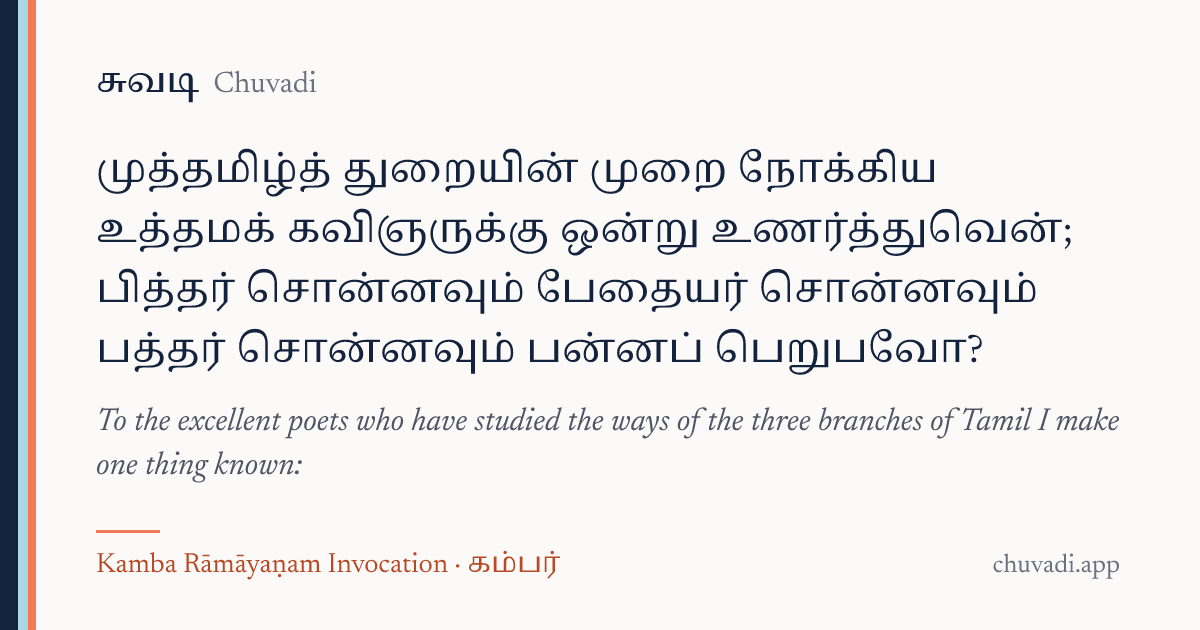
முத்தமிழ்த் துறையின் - இயல், இசை நாடகம் என்று பகுக்கப்படும் தமிழ்த் துறைகளின்; முறை நோக்கிய - (நூல்களின்) முறைமைகளை ஆராய்ந்தறிந்த; உத்தமக் கவிஞர்க்கு - உயர்ந்த புலவர்களுக்கு; ஒன்று உணர்த்துவென் - ஒன்றைத் தெரிவித்துக் கொள்கிறேன் (அது யாது எனில்); பித்தர் சொன்னவும் - பயித்தியக்காரர்கள் சொன்ன சொற்களும்; பேதையர் சொன்னவும் - அறிவற்றோர் சொன்ன சொற்களும்; பக்தர் சொன்னவும் - பக்தர்கள் சொன்ன சொற்களும்; பன்னப் பெறுபவோ - ஆராயப்படுவனவோ? (ஆராயும் தகுதியற்றவை என்பதாம்)
முன்னைய பாடல்களில் பொதுமையாகப் பேசிய கவிச்சக்கரவர்த்தி, இப்பாடலில் நேராகத் தமிழ்த் துறை முற்றிய புலவர்களை நோக்கிப் பேசுகிறார். "பித்தர் மனத்தெளிவு இல்லாதவ ராதலானும், பேதையர் பகுப்பறிவு இல்லாதவ ராதலானும், பத்தர் பரவச ராதலானும் அவர்களாற் சொல்லப்பட்டனவற்றில் குணங் குற்றம் நாடப் புகல் மணற் சேற்றிற் கல் ஆய்தலாமாதலின், பித்து, பேதமை, பத்தி என்னும் மூன்றனையும் ஒருங்குடைய சொல்லினும் குணங் குற்றம் நாடல் உத்தமக் கவிகட்குத் தக்க செயல் அன்று என்றாயிற்று" - காஞ்சிபுரம் இராமசாமி நாயுடு அவர்கள் விளக்கம் இது.
'பெறுபவோ' ஓகாரம் எதிர்மறைப் பொருளில் வந்தது; பன்னத் தகுதியற்றவை என்பது கருத்து. பின் இரண்டு அடிகள் பிறிதுமொழிதல் அணி.
'அன்பு எனும் நறவம் மாந்தி, மூங்கையான் பேசலுற்றான் என்ன யான் மொழியலுற்றேன்' என்ற கவி வாக்கு (82) இங்கு ஒப்பிட்டு நோக்கத் தக்கது.
ஆங்கிலம் · English translationAI
Translation
- To the excellent poets who have studied the ways of the three branches of Tamil
- I make one thing known:
- the words of madmen, the words of fools,
- the words of devotees: are they things to be weighed?
What the poem says
Here the poet addresses the masters of Tamil learning directly, those versed in its three branches of literature, music and drama. No one sits in judgement on the ravings of a madman, the talk of a fool, or the outpourings of a devotee lost in love of God. The poet counts himself as all three at once, so his work should not be examined for merits and faults.
The question expects the answer "no". The last two lines make their point indirectly, by stating a general truth. The poet says something similar later, when he likens himself to a mute who begins to speak after drinking the wine of love.