



கம்பராமாயணம் Invocation · பால 0.11
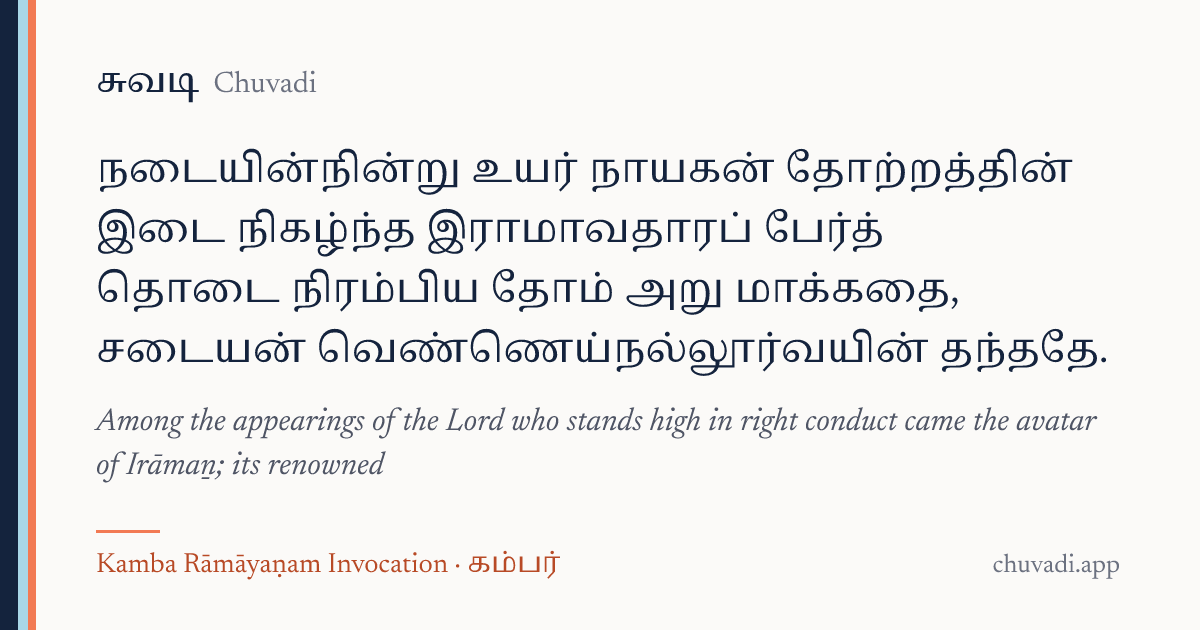
பாடல் · The poem
Tap a word to see its gloss in the commentary and where else it occurs.
பாட வேறுபாடு · Project Madurai reads
பொருள் · Meaning in Tamil
நடையின் நின்று - நல்லொழுக்கத்தில் நின்று; உயர் - உயர்ந்த; நாயகன் - திருமாலின்; தோற்றத்தின் இடை நிகழ்ந்த - அவதாரங்களுக்கு இடையே ஒன்றாக நிகழ்ந்த; இராமாவதாரப் பேர் - இராமாவதாரத்தைக் குறித்தும் புகழ்மிக்கதுமான; தொடை நிரம்பிய தோம் அறு மாக் கதை செய்யுள்கள் நிறைந்த குற்றமற்ற சிறந்த இந்தக் காப்பியம்; சடையன் - வள்ளல் சடையப்பரது; வெண்ணெய் நல்லூர் வயின் - திருவெண்ணெய்நல்லூரில்; தந்தது - இயற்றப்பட்டது.
இராமாவதாரம் என்ற பெயரில் பாடப்பட்ட இக் காப்பியம் தோன்றியகளம் சடையப்பரின் திருவெண்ணெய்நல்லூராகும் என்பது செய்யுளின் செய்தி. நடையின் நின்றுயர் நாயகனாவான் இறைவனாகிய திருமால். தன் இயல்பில் வைகுந்தத்தில் எழுந்தருளியிருக்குங்கால் குணங்குறி கடந்தவனாகிய பிரான், அவதாரமெடுத்து இறங்கி/இரங்கி வரும்போது சாத்துவீக குணமுடையவனாகிறான்; இதனை உணர்த்துவது 'நடையில் நின்றுயர் நாயகன் தோற்றம்' என்ற தொடர். இராமன் என்ற பெயர்கொண்ட அவதாரங்கள் மூன்று; பரசுராமன் பலராமன் ஆகியோருக்கு இடையே நிகழ்ந்த அவதாரம் தசரத ராமாவதாரம்.
தம்மை ஆதரித்த வள்ளலாகிய சடையப்பரை 394, 8264, 10327 ஆம் பாடல்களிலும் கம்பர் குறிப்பார்.
ஆங்கிலம் · English translationAI
Translation
- Among the appearings of the Lord who stands high in right conduct
- came the avatar of Irāmaṉ; its renowned
- great story, rich in linked verse and free of fault,
- was brought forth at Caṭaiyaṉ's Veṇṇeynallūr.
What the poem says
The last verse of the preface records where the poem was made: at Tiruveṇṇeynallūr, the town of Caṭaiyappar, the generous patron who supported Kampaṉ. The poet gratefully names him in several later verses of the epic as well.
The "Lord who stands high in right conduct" is Vishnu, who takes on a righteous, sattvic nature when he descends as an avatar. Of the three avatars who bear the name Rāma, the son of Tacarataṉ comes between Paraśurāma and Balarāma. The poem itself was originally called the Irāmāvatāram.