



கம்பராமாயணம் 1004 · பால 16.2
பாடல் · The poem
Tap a word to see its gloss in the commentary and where else it occurs.
பாட வேறுபாடு · Project Madurai reads
பொருள் · Meaning in Tamil
அங்கு அவர் - அந்த நீர்நிலைகளில், ஆடவரும் மகளிரும்; நல்நீர்ப் பண்ணை - நல்ல நீர் விளையாட்டை; ஆடுவான் அமைந்த தோற்றம் - ஆடுவதற்குப் புறப்பட்ட காட்சியானது; மேல்நாள் கங்கைவார் சடையோன் அன்ன - கங்கைநதி ஒழுகும் சடையையுடைய சிவபெருமானைப் போன்ற; மாமுனி கனல - பெருமைக்குரிய துருவாச முனிவர் வெகுண்டதனால்; வானவர்க்கு இறைவன் செல்வம் - தேவர்களின் தலைவன் ஆகிய இந்திரனுடைய (கற்பகத்தரு, காமதேனு, வெள்ளையானை, சங்கநிதி முதலிய) செல்வங்கள் யாவும்; மங்கையர் கூட்டத்தோடும் - (அவனுடைய அரம்பை, ஊர்வசி முதலிய) மகளிரின் குழுவோடு; பொங்குமா கடலில் செல்லும் - (பலவளங்களும் நிறைந்த) திருப்பாற்கடலுக்குள் சென்று சேர்வதற்கு (அமைந்த); தோற்றம் போன்றது - காட்சியினை ஒத்திருந்தது.
தற்குறிப்பேற்ற அணி. அன்று, ஏ - அசைகள். அமைந்த - பொருந்திய, ஆயத்தமான. தேவ உலகச் செல்வமும், தேவ உலக மகளிரும் அயோத்திச் செல்வத்திற்கும், அயோத்தி மகளிர்க்கும் சமம் ஆகக் கூறினார். தேவேந்திரனின் அயிராபத யானையைப் போல ஆடவரும், அவனுடைய அரம்பை முதலிய மடந்தையரைப் போல மகளிரும், அவனுடைய சங்க நிதி, பதுமநிதிபோல மகளிர் ஆபரணச் செல்வங்களும் இருந்தன என்க. தேவ உலகச்செல்வம் அனைத்தும் அயோத்தி மகளிரிடம் இருந்தன என்பது கருத்து.
ஆங்கிலம் · English translationAI
Translation
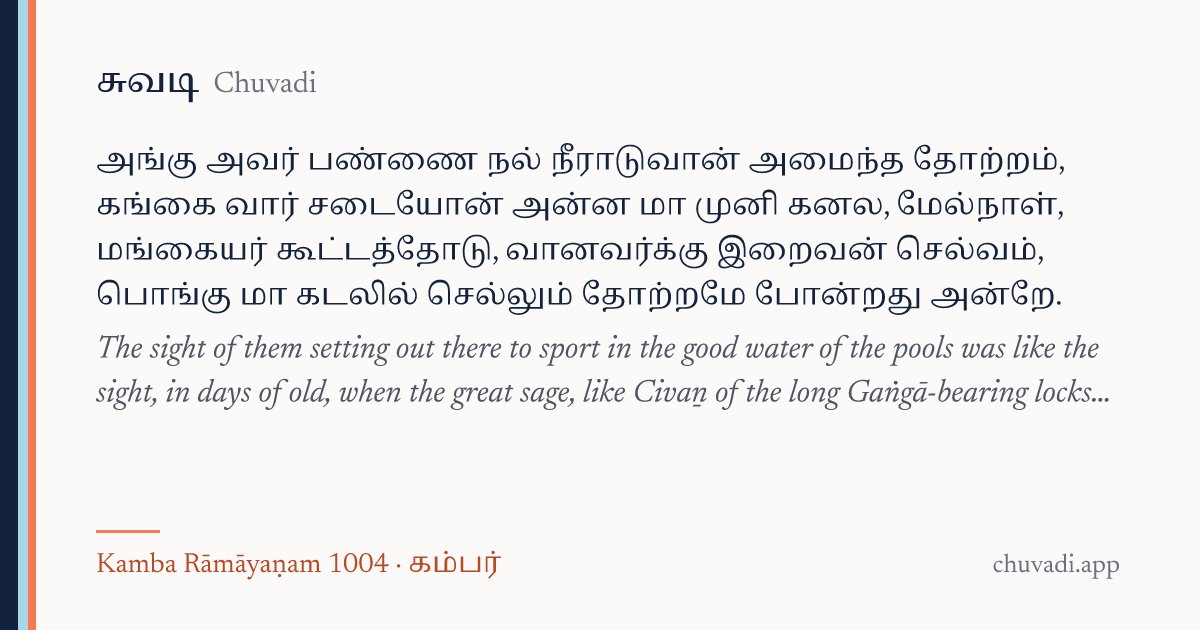
- The sight of them setting out there to sport in the good water of the pools
- was like the sight, in days of old, when the great sage, like Civaṉ of the long Gaṅgā-bearing locks, blazed in anger,
- and all the wealth of the king of the gods, with his throng of heavenly women,
- went down into the great surging sea.
What the poem says
The poet recalls an old story. The sage Turvācar, whose temper was as fierce as Civaṉ's, once cursed Intiraṉ, king of the gods. Intiraṉ's treasures, his wish-granting tree, his white elephant and his heavenly dancers, all sank into the ocean of milk.
As the people of Ayōttī stream into the water, the poet imagines that same scene again. The men are like the great white elephant, the women like the dancers of heaven, and their jewels like the god's treasure-hoards. The point is that all the riches of heaven are to be found in Ayōttī. This is a poetic fancy in which the poet supplies his own cause for what is seen.