



கம்பராமாயணம் 1013 · பால 16.11
பாடல் · The poem
Tap a word to see its gloss in the commentary and where else it occurs.
பாட வேறுபாடு · Project Madurai reads
பொருள் · Meaning in Tamil
தளிர்க்கைப் பொன்சங்கத்தொடி - தளிர் போன்ற கைகளில் அணிந்த பொன்னாலும் சங்குகளாலும் ஆன வளையல்கள்; வண்டொடு புலம்பி ஆர்ப்ப - (பொய்கையில் ஒலிக்கின்ற) வண்டுகளின் ஒலிகட்கு மாறுபட்டு ஒலிக்க; எற்றும் நீர்குடையும் தோறும் - (அலை) மோதுகின்ற நீரில் மூழ்கும்போதெல்லாம்; ஏந்துபேர் அல்குல் நின்று - உயர்ந்த பெரிய நிதம்பத்திலிருந்து; கற்றை மேகலைகள் நீங்கி - (அலைக்கழிக்கப் பெற்றதனால்) (பல) கோவையாகவுள்ள மேகலையென்னும் இடையணி கழன்று; சீறடி கவ்வ - சிறிய பாதங்களைப் பற்றும் போது; காலில் சுற்றிய நாகம் என்று - பாதங்களைச் சுற்றிக்கொண்ட பாம்பென்று கருதி; துணுக்கத்தால் துடிக்கின்றாரும் - நடுக்கத்தால் துடித்துப் போகின்றவர்களும்.
(ஆயினார் என்று கூட்டி, நான்காம் பாடலிலிருந்து வந்த உம் ஈற்று உயர்திணைச் சொற்களை முடித்துக்கொள்க).
பொற்றொடி - பொன் தொடி. இடையணி அறுவதும் தெரியா அளவிற்கு நீர்விளையாட்டு ஆர்வம் மிக்கிருந்தது என்க. நாகம் - பொதுப் பெயராய்ப் பாம்பினைச்சுட்டி நின்றது. பலரும் மூழ்கி எழுவதால் நீர் அலையெறிந்து கொண்டிருந்தது என்பார், “எற்றும் நீர்” என்றார். மேகலை காலில் சுற்றியது ஒருமுறையன்று; பலமுறை என்பார், “நீர் குடையும் தோறும்” என்றார். மேகலை காலில் சுற்றிய ஒவ்வொரு முறையும் காலில் சுற்றியது நாகமே என நினைந்த மகளிர் பேதைமை மிகுதியைச் சுட்டினார். ஒன்றை மற்றொன்றாக நினைத்து மயங்குவதால் மயக்க அணி ஆயிற்று.
ஆங்கிலம் · English translationAI
Translation
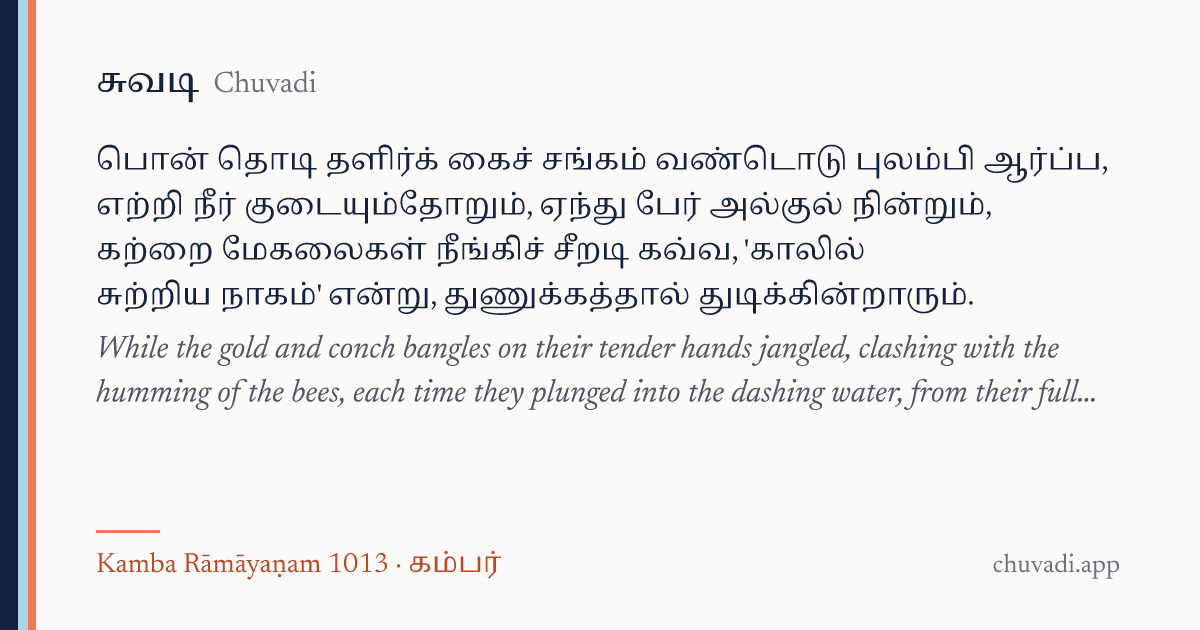
- While the gold and conch bangles on their tender hands jangled, clashing with the humming of the bees,
- each time they plunged into the dashing water, from their full, broad hips
- the clustered strands of their girdles slipped and caught their small feet; 'A snake
- has coiled round my foot!' cried some, and shook with fright.
What the poem says
This verse ends the run of eight that began with the women clinging to their husbands. So many people are diving in and out that the water is choppy. The women's jewelled girdles come loose without their noticing and wind around their feet. Each time this happens they think a snake has caught them and shriek.
The poet makes fun of their innocence, and the mistake of taking one thing for another is itself a recognised figure of speech.