



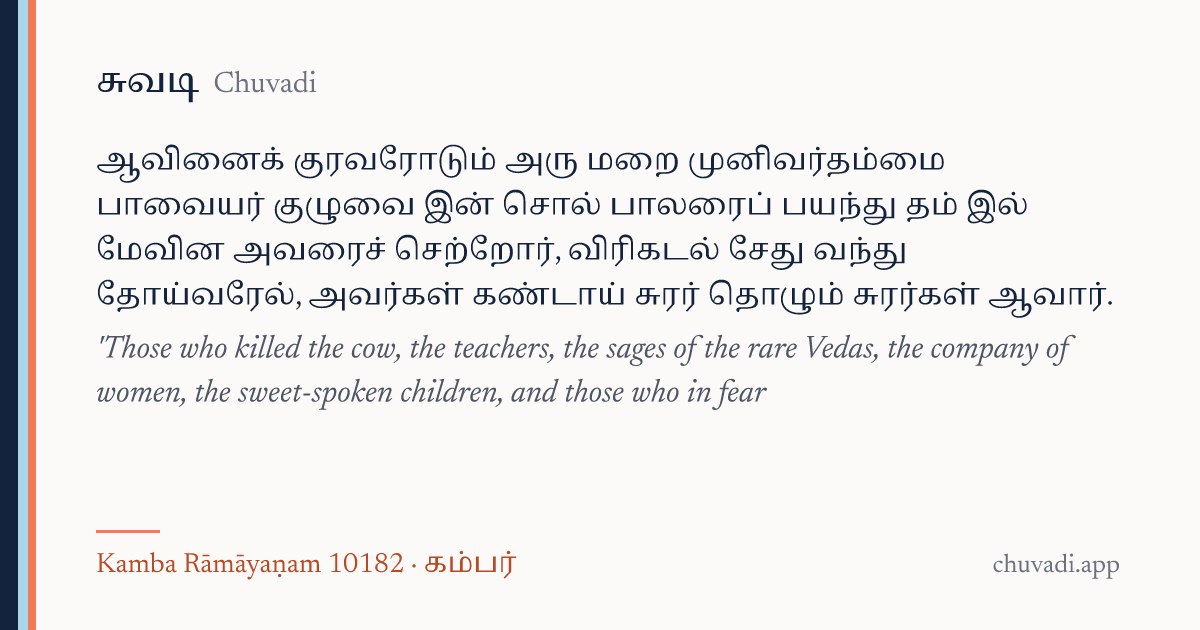
கம்பராமாயணம் 10182 · யுத்த 37.169
பாடல் · The poem
Tap a word to see where else it occurs.
பாட வேறுபாடு · Project Madurai reads
பொருள் · Meaning in TamilAI
இது மிகைப் பாடல். பசுவையும், குருமார்களையும், அரிய வேதங்களை உணர்ந்த முனிவர்களையும், பெண்கள் கூட்டத்தையும், இனிய சொல் பேசும் சிறுவர்களையும், அஞ்சித் தம் வீட்டை அடைக்கலமாக நாடி வந்தவர்களையும் கொன்ற பெரும் பாவிகளும், விரிந்த கடலில் கட்டிய சேதுவுக்கு வந்து அதன் நீரில் மூழ்குவார்களானால், தேவர்களும் தொழும் தேவர்கள் ஆவார்கள் என்று இராமன் சீதைக்குக் கூறுகிறான். சேதுவின் தூய்மையைப் புகழும் பாடல்களின் தொடர்ச்சி இது.
ஆங்கிலம் · English translationAI
Translation
- 'Those who killed the cow, the teachers, the sages of the rare Vedas,
- the company of women, the sweet-spoken children, and those who in fear
- came to their house for refuge, if they come to the causeway of the wide sea
- and bathe, they, you see, become gods whom even gods worship.'
What the poem says
This is an additional verse found in some manuscripts, continuing Irāmaṉ's praise of the causeway as he shows it to Cītai from the Puṣpaka.
It lists the gravest crimes in traditional law: killing a cow, a teacher, a Vedic sage, a woman, a child, or one who has sought shelter. Even such sinners, if they bathe at the causeway, become gods honoured by other gods.