



கம்பராமாயணம் 10184 · யுத்த 37.171
பாடல் · The poem
Tap a word to see its gloss in the commentary and where else it occurs.
பாட வேறுபாடு · Project Madurai reads
பொருள் · Meaning in Tamil
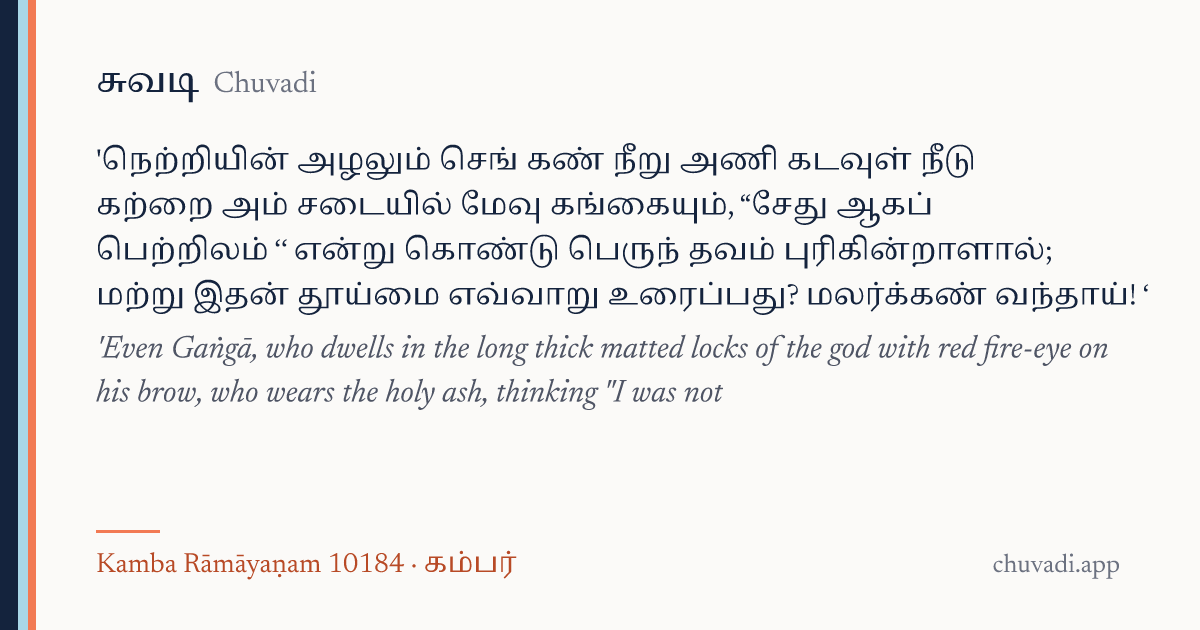
மலர்க்கண் வந்தாய்! - தாமரை மலரின்கண் தோன்றிய திருமகளாகிய பிராட்டியே!; நெற்றியின் அழலும் செங்கண்நீறு அணி கடவுள் - நெற்றியின்கண் நெருப்புக் கனலும் செங்கண்ணை உடையவனாய்த் திருநீறு பூசுகின்ற கடவுளாகிய இவனது; கற்றை அம் சடையில் மேவு கங்கையும் - சடைத்தொகுதியில் பொருந்தியுள்ள கங்கா நதித் தேவியும்; 'சேது ஆகப் பெற்றிலம்' என்று கொண்டு பெருந்தவம் புரிகின்றாள் - நாம் சேதுவாக ஆகப் பெறாமல் போய்விட்டோமே என்று வருந்தி பெரிய தவத்தைச் செய்கின்றாள்; (என்றால் மற்று இதன் தூய்மை எவ்வாறு உரைப்பது - வேறான இந்தச் சேது அணையின் தூய்மையை எவ்வாறு சொல்ல இயலும்?
ஆங்கிலம் · English translationAI
Translation
- 'Even Gaṅgā, who dwells in the long thick matted locks of the god
- with red fire-eye on his brow, who wears the holy ash, thinking "I was not
- granted to become the causeway", performs great austerities;
- how then can its purity be told? You who came from the flower!'
What the poem says
Irāmaṉ continues to praise the causeway's holiness. The river Gaṅgā, who lives in the matted hair of Śiva, the ash-smeared god with a fiery third eye on his forehead, does penance in envy, wishing she had been fortunate enough to become this causeway.
Cītai is addressed as Lakṣmī, the goddess born from the lotus.