



கம்பராமாயணம் 10185 · யுத்த 37.172
பாடல் · The poem
Tap a word to see its gloss in the commentary and where else it occurs.
பாட வேறுபாடு · Project Madurai reads
பொருள் · Meaning in Tamil
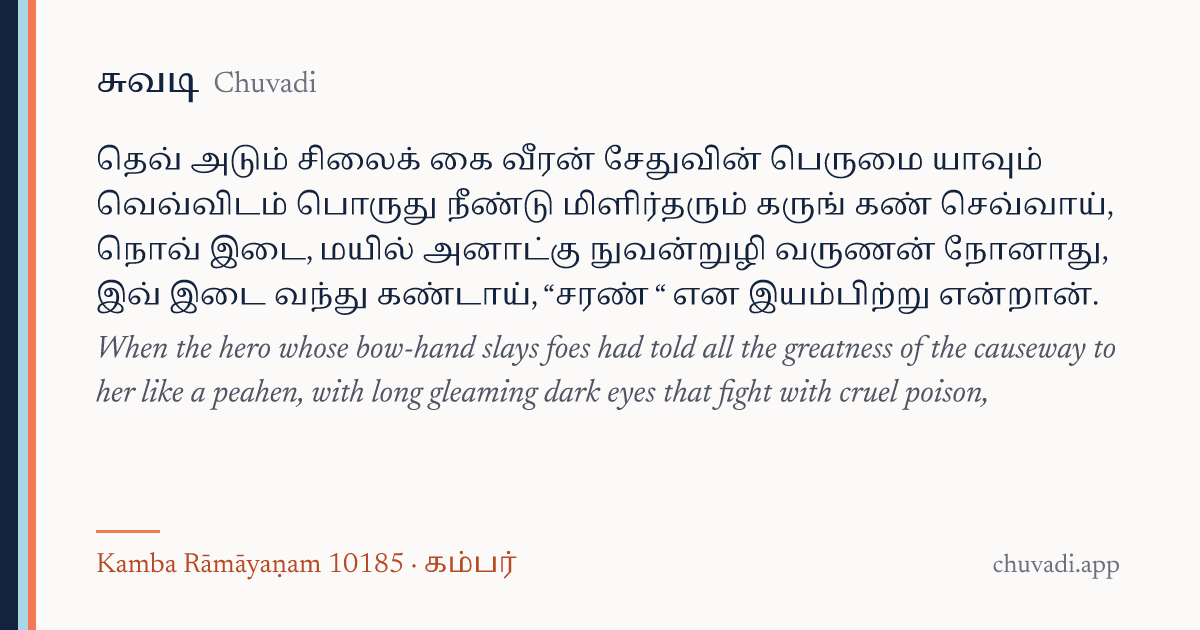
தெவ் அடும் சிலைக்கை வீரன் - பகைவர்களை அழிக்கின்ற வில் ஏந்திய கையினை உடைய இராமன்; சேதுவின் பெருமை யாவும் - சேது என்னும் அணையின் பெருமை எல்லாவற்றையும்; வெவ்விடம் பொருது நீண்டு மிளிர்தரும் கருங்கண் செவ்வாய் நொவ் இடை மயில் அனாட்கு நுவன்றுழி - கொடிய விடத்தோடு போர்செய்து (காதுவரை) நீண்டு விளங்குகின்ற கரிய கண்ணையும் சிவந்த வாயையும் குறுகிக் குறுகித் துன்புறுகின்ற இடையையும் உடைய மயில் போன்ற சீதைக்குச் சொல்லி வருகிறபோது; (ஓர் இடம் காட்டி) 'வருணன் நோனாது வந்து சரண் என இயம்பிற்று இவ் இடை கண்டாய்' என்றான் - வருணனானவன் என் அம்பின் கனலைப் பொறுக்கமாட்டாமல் ஓடி வந்து அபயம் என்று என்பால் சொல்லியது இந்த இடத்தில்தான் காண்பாயாக என்று கூறினான்.
ஆங்கிலம் · English translationAI
Translation
- When the hero whose bow-hand slays foes had told all the greatness of the causeway
- to her like a peahen, with long gleaming dark eyes that fight with cruel poison,
- red lips and aching waist, he said, 'Unable to endure it, Varuṇa
- came here, see, and cried "Refuge!"'
What the poem says
Still describing the sea, Irāmaṉ shows Cītai the spot where Varuṇa, god of the ocean, came to him and begged for protection. This recalls the episode before the causeway was built, when Irāmaṉ, angered that the sea would not give way, began to shoot fiery arrows at it.
Cītai's eyes are said to rival poison in their power and to stretch toward her ears; her waist is so slender that it seems to suffer.