



கம்பராமாயணம் 1025 · பால 16.23
பாடல் · The poem
Tap a word to see its gloss in the commentary and where else it occurs.
பொருள் · Meaning in Tamil
பசுஞ் சாந்தினால் - ஈரம்மிக்க சந்தனக் குழம்பினால்; பாய் அரித்திறலான் - பாயும் சிங்கத்தினைப் போன்ற ஆற்றல் மிக்கான் ஒருவனுடைய; தூய பொன் புயத்து - தூய்மையுடைய பொன் அணிகள் பூண்ட தோள்களிலே; பொதி தூக் குறி - தான் எழுதிய தூய தொய்யில் கோலம்; மீ அரித்து விளர்க்க - (நீர்) மேலே பட்டு அழிந்துவிட்டதனாலே (தோள்) இயல்பான நிறம்பெற; ஒர் மெல்லியல் - அது கண்டு ஒரு மென்மைத் தன்மை கொண்ட ஒருத்தியின்; சேய் அரிக் கருங் கண்கள் சிவந்த - செவ்வரி படர்ந்த கருங் கண்கள் (சினத்தால்) சிவந்து போயின. தான் புனைந்த கோலம் அழிந்தது நீரால் என நினையாது, இன்னொருத்தியின் தோய்வால் என நினைந்து அவள் வெகுண்டாள் என்க. ஆடவனின் தோள்களில் இருந்த செஞ்சாந்துக் குழம்பு நீங்க இவள் கருங்கண்கள் சிவப்பாயின என நயந்தோன்றக் கூறினார். தான் தொடும் மார்பு; இதுவரையிலும் யாரும் தொடாதது. தான் பொன் போல் பாதுகாத்து வருவது என்பாள், “தூய பொன் புயத்து” என்றாள். இத்தகைய தன் பொற் புதையலை யார் தொட்டார் என்பதே கருங்கண்கள் சிவக்கக் காரணம். தூக்குறி மீ அரித்து விளர்க்க, கண்கள் சிவந்த(ன) என முடிக்க.
ஆங்கிலம் · English translationAI
Translation
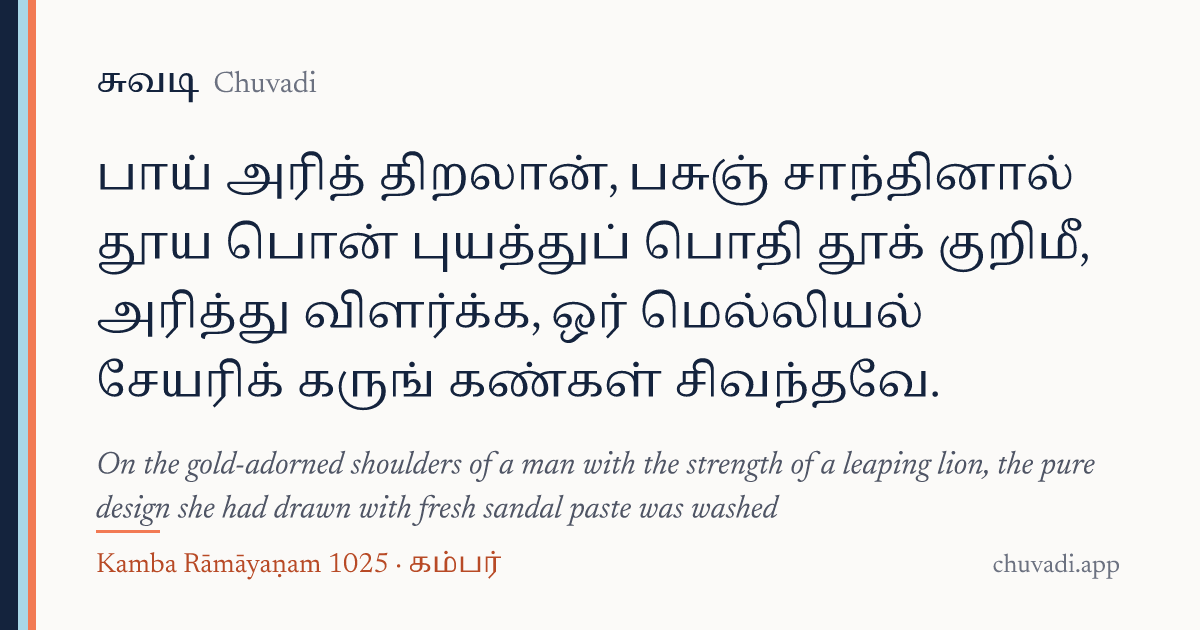
- On the gold-adorned shoulders of a man with the strength of a leaping lion, the pure design
- she had drawn with fresh sandal paste was washed
- away by the water and the skin showed pale; at that a gentle woman's
- dark eyes, streaked with red, turned red.
What the poem says
A wife had painted a pattern in fresh sandal paste on her husband's shoulders. The water washes it off. She does not stop to think that the water did it. She suspects that another woman has been pressing against him, and her eyes go red with anger.
The poet enjoys the swap of colours. The red paste goes from his shoulders, and the red comes into her dark eyes. To her those shoulders are a treasure she guards like gold.