



கம்பராமாயணம் 1038 · பால 17.3
பாடல் · The poem
Tap a word to see its gloss in the commentary and where else it occurs.
பாட வேறுபாடு · Project Madurai reads
பொருள் · Meaning in Tamil
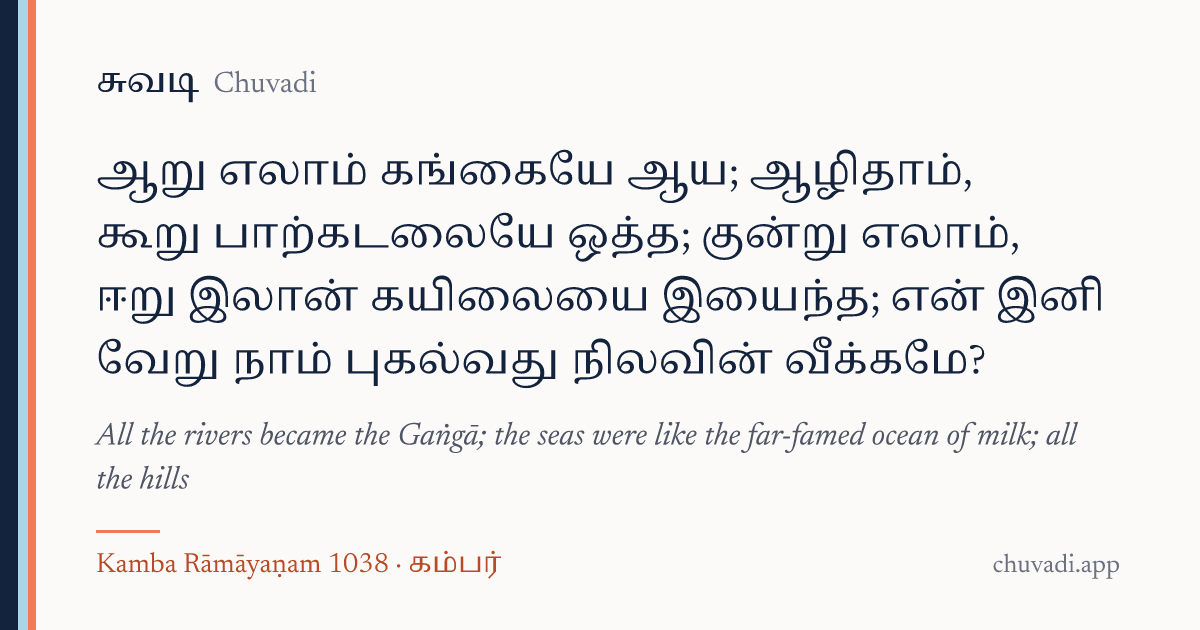
ஆறு எலாம் கங்கையே ஆய - (நிலவொளி பரவியதால்) ஆறுகள் யாவும் (வெண்ணிறம் பெற்று) கங்கையாற்றினையே ஒத்தவை ஆயின; ஆழிதாம் கூறுபாற் கடலையே ஒத்த - கடல்கள் யாவும் (சிறப்பித்துக்) கூறப்படும் திருப்பாற்கடலையே ஒத்தவை ஆயின; குன்று எலாம் ஈறு இலான் கயிலையை இயைந்த - மலைகள் யாவும் (வெள்ளிப் பனிமலையாய்ச்) சிவ பெருமான் வாழும் திருக்கயிலை மலைக்கு ஒப்புச் சொல்லலாம்படி இருந்தன; நிலவின் வீக்கம் வேறு நாம் இனி என் புகல்வது? - நிலவொளியின் பெருக்கிற்குத் தனியாக யாம் இனிப்புகல என்ன உள்ளது? நிலவொளியால் உலகு வெண்மையில் மூழ்கிக் கிடந்தமைக்கு வெண்மையிற் சிறந்த மூன்று உலகப் பொருள்களை உவமையாக்கி விளக்கி விட்ட மனநிறைவில், “என் இனி வேறு நாம் புகல்வது?” என்கின்றார். நிலாக் கதிரின் வெண்மை வீச்சால், (கரிய) யமுனை முதலிய ஆறுகள் கங்கை ஆயின; பிற கருங்கடல்கள் யாவும் பாற்கடல் ஆயின; (நீல) மலைகள் யாவும் கயிலை ஆயின என்றார். சிவபிரானை “ஈறு இலான்” என்றதனால், கவிஞரின் சமயப் பொறை விளங்கும்.
ஆங்கிலம் · English translationAI
Translation
- All the rivers became the Gaṅgā; the seas
- were like the far-famed ocean of milk; all the hills
- matched the Kailāsa of the Endless One; what more is there, then,
- for us to say of the swelling of the moonlight?
What the poem says
The moonlight turns the whole world white. Every river, even the dark Yamuṉai, looks like the white Gaṅgā. Every dark sea looks like the ocean of milk. Every blue hill looks like snowy Kailāsa, home of Civaṉ, whom the poet calls the Endless One, a sign of his respect for Civaṉ although his own hero is an incarnation of Tirumāl.
Having named the three whitest things in the world, the poet says there is nothing left to add.