



கம்பராமாயணம் 1039 · பால 17.4
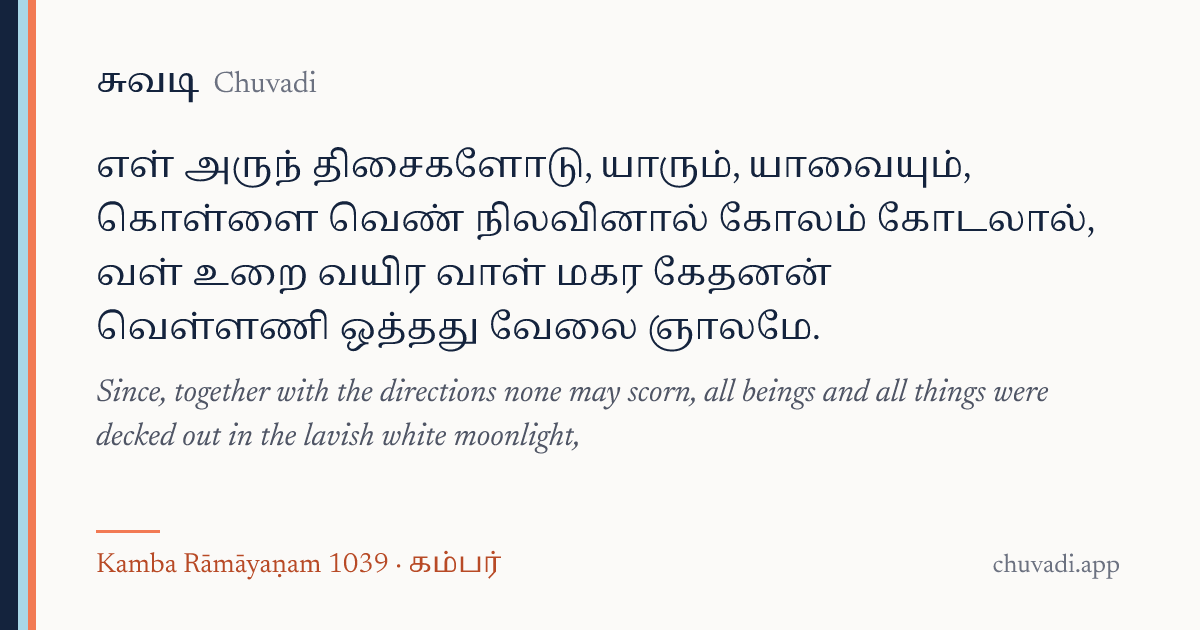
பாடல் · The poem
Tap a word to see its gloss in the commentary and where else it occurs.
பொருள் · Meaning in Tamil
எள்ள அருந்திசைகளோடு யாரும் யாவையும் - இகழ்தற்கு அரிய திக்குகளுடனே அத்திக்குகளிலே உள்ள உயர்திணையாரும் அஃறிணைப் பொருள்களும்; கொள்ளை வெண் நிலவினால் கோலம் கொள்ளலால் - கொட்டிக் கிடக்கிற நிலவின் ஒளியால் (வெண்ணிறக்) கோலம் கொண்டதனால்; வேலை ஞாலம் - கடல் சூழ்ந்த இவ்வுலகம்; வள் உறை வயிரவாள் மகர கேதனன் - கூர்மை தங்கும் வலிமை பொருந்திய வாளினையுடைய மகர மீனைக் கொடியாக உடைய மன்மதனுக்கு; வெள்ளணி ஒத்தது - பிறந்தநாள் விழாக் கொண்டாடுவது போன்றிருந்தது.
உலகத்து உயிர்கள் யாவும் பிறக்க உதவியவன்; இன்பத்தைத் தருபவன் மன்மதன் ஆதலால், அவையாவும் அவனுக்கு நன்றி மறவாமல் வெள்ளாடையணிந்து பிறந்த நாள் கொண்டாடியது போன்றிருந்தது, உலகை நிலா ஒளி குளிப்பாட்டிய கோலம் என்றார். பிறந்த நாள் விழாவிற்கு வெள்ளாடையணிதல் மரபு ஆதலை “வெள்ளணி நாள்” எனும் சொல்லே குறித்தது. வெள்ளணி நாள் - பிறந்தநாள்: பு.வெ. 212. மகர கேதனன் - மகர மீனைக் கொடியில் பொறித்த மன்மதன். மகரம்: சுறா மீன். கேதனம்: கொடி.
ஆங்கிலம் · English translationAI
Translation
- Since, together with the directions none may scorn, all beings and all things
- were decked out in the lavish white moonlight,
- the sea-girt world seemed to be keeping the white-robed birthday feast
- of the god with the strong, keen sword and the makara on his banner.
What the poem says
Everything in every direction, living or not, is dressed in white by the moonlight. A birthday was traditionally celebrated by putting on white clothes, and the Tamil name for a birthday means "the day of white dress".
So the poet imagines the whole world in white keeping the birthday of Maṉmataṉ, whose banner bears the makara, a sea creature. He is the god through whom all creatures are born and know pleasure, and the world gratefully celebrates him.