



கம்பராமாயணம் 1043 · பால 17.8
பாடல் · The poem
Tap a word to see its gloss in the commentary and where else it occurs.
பாட வேறுபாடு · Project Madurai reads
பொருள் · Meaning in Tamil
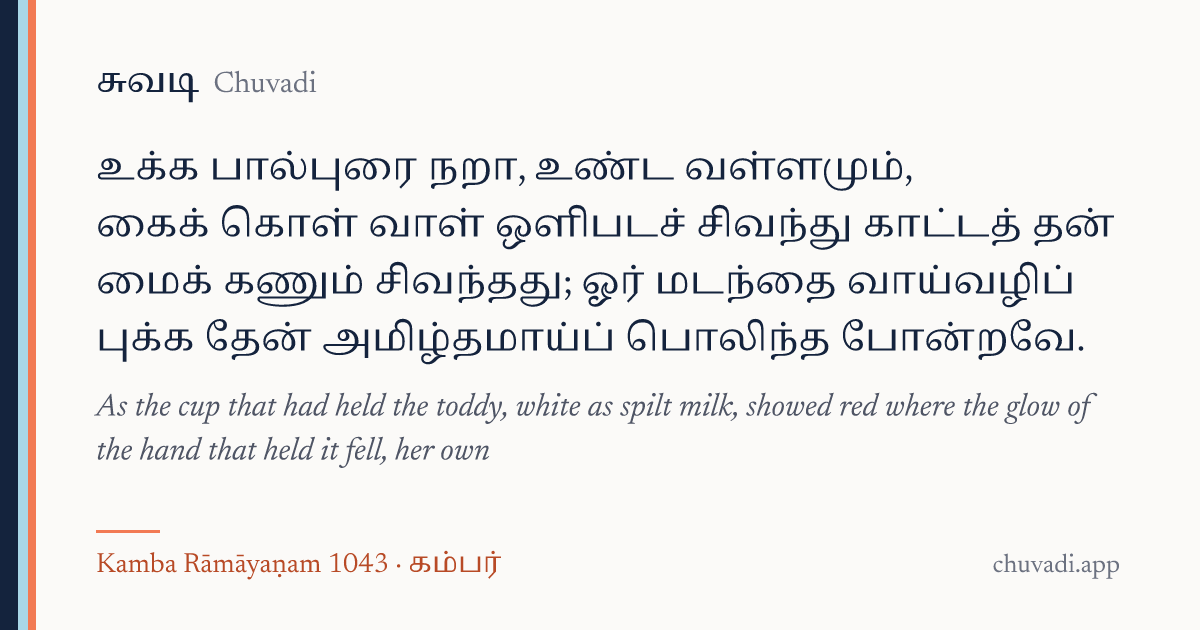
ஓர் மடந்தை வாய்வழிப் புக்க தேன் - ஒரு மங்கையின் வாய்வழியாகப் புகுந்த மது; அமிழ்தமாய்ப் பொலிந்த போன்றவே - அமிழ்தமாக அவளுக்குள் விளங்கியது; உக்கபால் புரை நறா உண்ட வள்ளமும் - சிந்திய பாலினை ஏற்று நிற்பது போன்ற வெண்ணிற மதுவினை ஏந்தியிருந்த (பளிங்காலான) மதுக்கிண்ணமும்; கைக்கொள் வாள் ஒளி படச் சிவந்து காட்ட - (மதுவைப் பருக எடுத்த) அவளுடைய சிவந்த கைகள் கொண்டுள்ள சிறந்த ஒளிபடுதலால் செந்நிறமாகத் தோன்ற; தன் மைக்கணும் சிவந்தது - அவளுடைய கருங்கண்ணும் (மதுவின் வேகத்தால்) செந்நிறம் பெற்றது.
அவளுக்கு, மதுவின் வேகத்தால் கண் சிவந்தது இயல்பு; ஆனால் அவள் மதுவுண்ட மதுக் கிண்ணமும் சிவந்தது என நயந்தோன்ற மதுவின் கடுமை கூறியவாறு. கள் உண்பார்க்குக் கண் சிவத்தல் இயல்பு. இனி, நறாவும் நறா உண்ட வள்ளமும் சிவந்த என இயைப்பினுமாம். நறா கைபடச் சிவந்து தேன் ஆயிற்று, வாய்படத் தண்ணிய அமுதாக்கிற்று, வள்ளத்தைச் சிவப்பாக்கிற்று என்று மதுதொட்ட எதையும் மாற்றாமல் விடாது என்றார் எனினுமாம்.
ஆங்கிலம் · English translationAI
Translation
- As the cup that had held the toddy, white as spilt milk,
- showed red where the glow of the hand that held it fell, her own
- kohl-dark eyes turned red as well; and the honeyed wine that went in
- by that young woman's mouth seemed to shine within her as nectar.
What the poem says
A woman drinks from a crystal cup of milk-white toddy. The glow of her red hand turns the cup red. The strong drink turns her dark eyes red too, as it does for anyone who drinks. Inside her, the wine becomes nectar.
The poet plays with how the drink changes everything it touches. It reddens the cup and the eyes, and it turns into sweetness in her mouth.