



கம்பராமாயணம் 1061 · பால 17.25
பாடல் · The poem
Tap a word to see its gloss in the commentary and where else it occurs.
பாட வேறுபாடு · Project Madurai reads
பொருள் · Meaning in Tamil
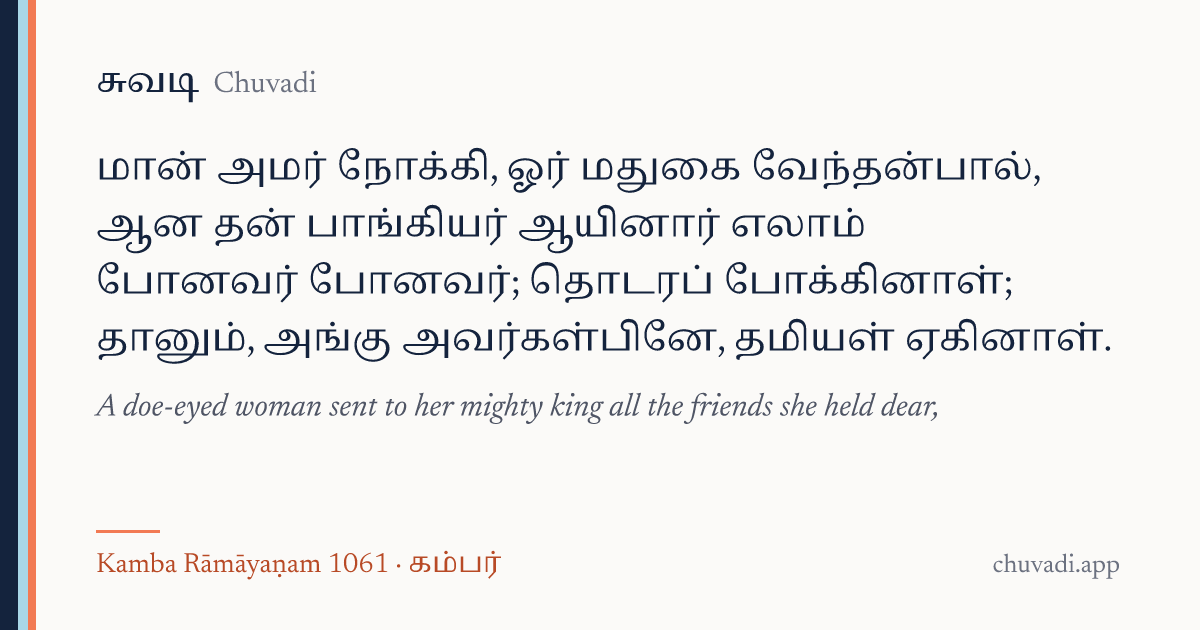
மான் அமர் நோக்கி ஓர் மதுகை வேந்தன்பால் - மான்கள் விரும்பும் கண்ணுடையாள் ஒருத்தி, ஒப்பற்ற வலிமை வாய்ந்த (தன்) கணவனிடத்தில்; ஆனதன் பாங்கியர் ஆயினார் எலாம் - (தனக்கு) விருப்பமான தோழியர் ஆனவரையெல்லாம்; போனவர் போனவர் தொடரப் போக்கினாள் - (பின்னே) சென்றவர்கள் (முன்னே) சென்றவர்களைத் தொடருமாறு தொடர்ந்து அனுப்பிய வண்ணம் இருந்தாள்; தானும் அங்கு அவர்கள் பின் தமியள் ஏகினாள் - (இனி அனுப்பத் தோழியர் இல்லை யாதலால்) தன்னைத் தானே தூதாக்கி, கணவன் இருக்குமிடம் நோக்கி (இவளும்) அவர்கள் பின்னே தனியாளாய்ப் புறப்பட்டாள்!
மதுவுண்டவுடன் எழுந்த காம வேட்கையால், கணவனிடம் சென்று சேரும் கால இடை வெளி தராமலேயே தூதனுப்பித் தூதனுப்பி இனி அனுப்ப யாரும் இல்லை யாதலால் தானும் தூதானாள் எனத் தலைவியின் ஆரா அன்பும் தீரா வேட்கையும் அறிவித்தவாறு. கால இடை வெளியின்றி அடுக்கடுக்காகத் தோழியரை அனுப்பிக் கொண்டே இருந்தாள் என்பதனை, “போனவர் போனவர் தொடரப் போக்கினாள்” எனும் அடுக்கால் உணர்த்திய திறம் காண்க. மிக வேட்கை உயர்வு பாராது ஆதலால், தான் தலைவி நிலையிலிருந்தும் தாழ்ந்து தானும் தூதியானாள் என்பார், “தானும் அங்கு அவர்கள் பின் தமியள் ஆயினாள்” என்றார்.
ஆங்கிலம் · English translationAI
Translation
- A doe-eyed woman sent to her mighty king
- all the friends she held dear,
- one after another, each hard on the heels of the last;
- and then she herself went after them there, alone.
What the poem says
With the wine stirring her desire, a woman sends a friend to her husband, then another before the first has had time to arrive, then another, until she has no friends left to send.
So she becomes her own messenger and sets off after them by herself. Strong desire forgets dignity: the mistress of the house does the work of a go-between. The repeated words "one who went, one who went" in the Tamil catch the stream of messengers.