



கம்பராமாயணம் 1089 · பால 17.53
பாடல் · The poem
Tap a word to see its gloss in the commentary and where else it occurs.
பாட வேறுபாடு · Project Madurai reads
பொருள் · Meaning in Tamil
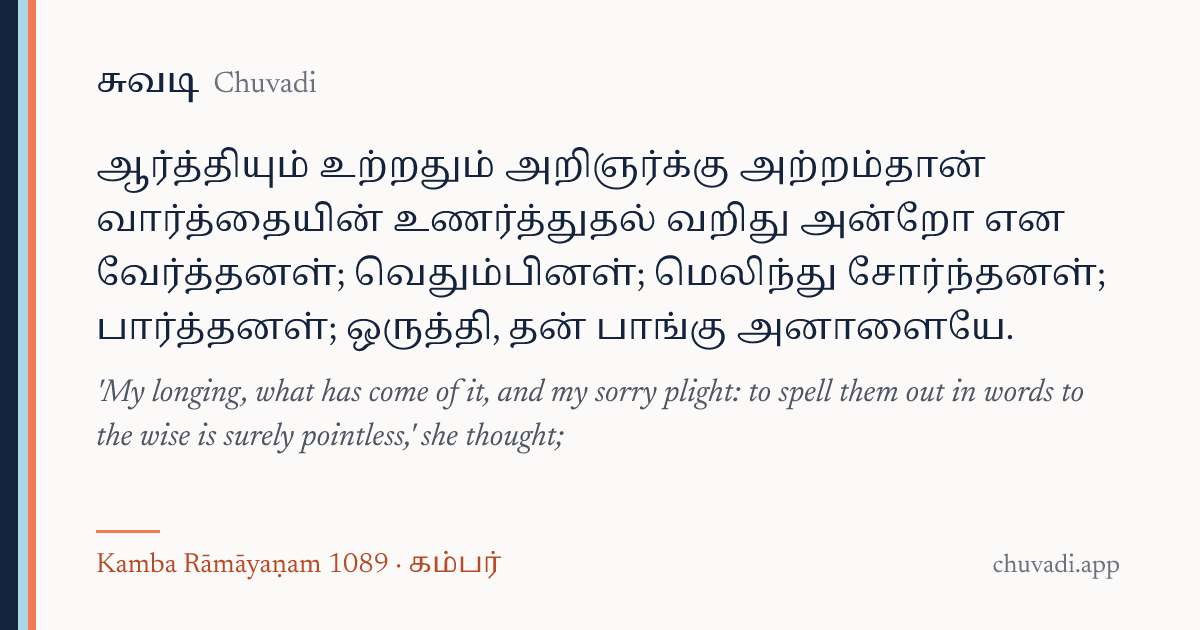
ஆர்த்தியும் உற்றதும் அற்றமும் - (தனக்கு நேர்ந்துள்ள) காம நோயும் (அதன் பின்) விளைவுகளும் (இவ்விரண்டால் எழுந்துள்ள உடல் உள) குறைகளும்; அறிஞர்க்கு வார்த்தையின் தான் உணர்த்துதல் வறிது அன்றோ? எனா - (குறிப்பால் உணரவல்ல) குறைகளும் அறிஞர் ஆயினோர்க்கு வாய்மொழியால் தானே சென்று உரைத்து விளக்குவது வீண் அன்றோ? என்று கருதி; வேர்த்தனள்; வெதும்பினள் மெலிந்து சோர்ந்தனள் - (தோழிக்குத் தன் துயர்களை வாயால் உரையாது) உடல் வெயர்த்து மனம் வெதும்பி மிக வாடிச் சோர்ந்து (அணையில்) சாய்ந்தாள்; தன் பாங்கு அனாளைப் பார்த்தனள் - (என் நிலை கண்டும், கணவனை வருவித்தற்குரிய வழிதுறை நாடாமல் வாளா இருத்தியோ? எனும் குறிப்போடு) தன் அருகுள்ள தோழியை (ஏக்க விழிகளோடு) பார்த்தாள்.
குறிப்பால் உணரும் திறம் குறித்துக் கவிஞர்க்கு உள்ள விருப்பமும் மதிப்பும் இப்பாடலிலும் இலங்கல் காணலாம். தோழியைக் குறிப்பால் உணரவல்ல அறிவுத் திறமுடையவளாகத் தலைவி கருதும் பாங்கு இங்குத் தெளிவாம்.
ஆங்கிலம் · English translationAI
Translation
- 'My longing, what has come of it, and my sorry plight: to spell them out
- in words to the wise is surely pointless,' she thought;
- she sweated, she burned, she wasted and drooped;
- and one woman just looked at her companion.
What the poem says
Another lovesick woman decides there is no need to put her suffering into words. Her friend is wise and will understand without being told.
So she says nothing. She sweats, burns with fever, sinks back exhausted, and simply gives her friend a long, pleading look that asks why she is not already off to fetch the husband. The poet often praises the ability to understand without being told.