



கம்பராமாயணம் 1096 · பால 17.60
பாடல் · The poem
Tap a word to see its gloss in the commentary and where else it occurs.
பாட வேறுபாடு · Project Madurai reads
பொருள் · Meaning in Tamil
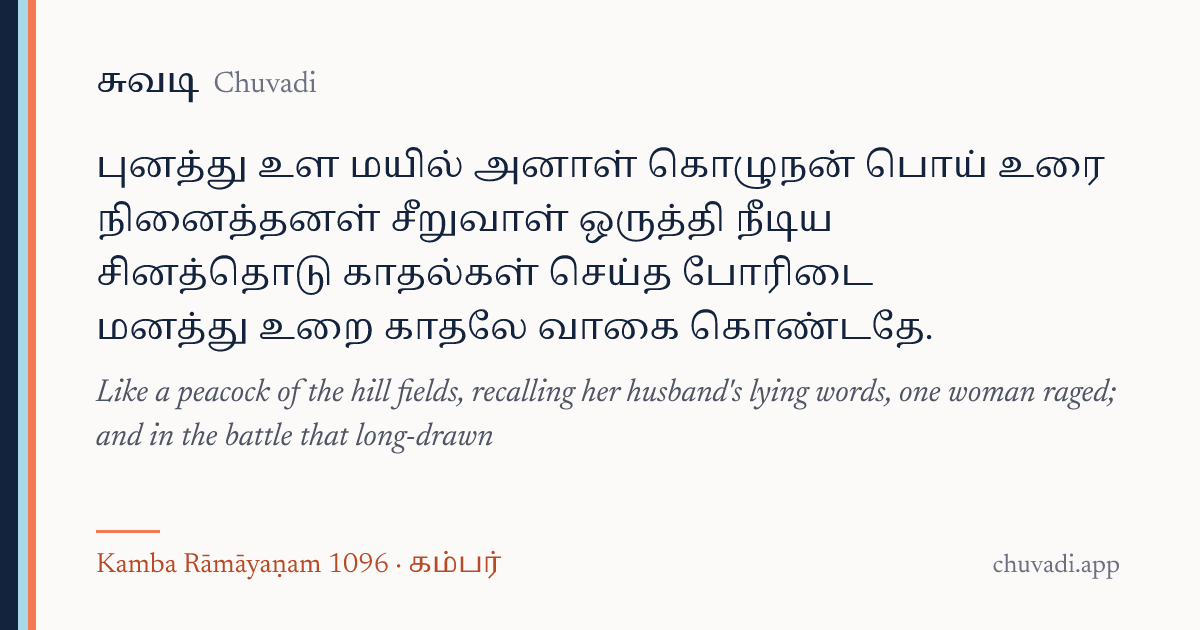
புனத்து உள மயில் அனாள் - குறிஞ்சி நிலக் கொல்லைகளில் வாழும் மயிலையொத்தவளாய்; கொழுநன் பொய்உரை நினைத்தனள் சீறுவாள் ஒருத்தி - கணவன் உரைத்த பொய்ம் மொழிகளை நினைத்து வெகுள்பவளாகிய ஒருத்தியின்; நீடிய சினத்தொடு காதல்கள் செய்த போரிடை - (மனத்தில் கொண்ட) (ஊடல்) சினத்தோடு, இருவர் உள்ளத்திலும் எழுந்த காதல் வேட்கைகள் மோதிய போரினில்; மனத்து உறை காதலே வாகை கொண்டது - மனத்தில் எழுந்த காதல் வேட்கையே வெற்றி பெற்றது.
ஏ - அசைநிலை. ஊடலில் தோற்றுக் காதலில் வெல்வது (திருக். /330) உயர் மரபு ஆதலால், “மனத்துள காதலே வாகை கொண்டது” என்று மகிழ்ந்தார். வருவேன் என்று சொல்லி வராத அவன் பொய்யுரைக்கு வெகுளி பிறந்தது. அவன் வந்தால் இணங்கக்கூடாது என, அதனால் அவளுக்கு ஊடல் பிறந்தது. ஆனால், அவன் வந்தவுடன் உள்ளத்தில் காதல் பிறந்தது. இருவர் காதலும் சேர்ந்து இவள் ஊடலோடு மோதல் பிறந்தது. அப்போரில் ஊடல் தோற்றுக் காதல் வெற்றிக் கொண்டது என்றார். “ஊடலில் தோற்றவர் வென்றார் அது மன்னும் கூடலிற் காணப்படும்” (திருக். ) என்பது வள்ளுவம்.
ஆங்கிலம் · English translationAI
Translation
- Like a peacock of the hill fields, recalling her husband's lying words,
- one woman raged; and in the battle that long-drawn
- anger and their two loves fought out together,
- it was the love dwelling in her heart that won the victory.
What the poem says
A husband promised to come and did not. His wife, remembering his lies, resolves to keep up her anger when he finally arrives.
When he does come, her own love rises up in her, joins with his love, and battles her anger. Love wins. The Tirukkuṟaḷ says that in a lovers' quarrel the one who loses is the real winner, as their reunion proves.