



கம்பராமாயணம் 1119 · பால 18.17
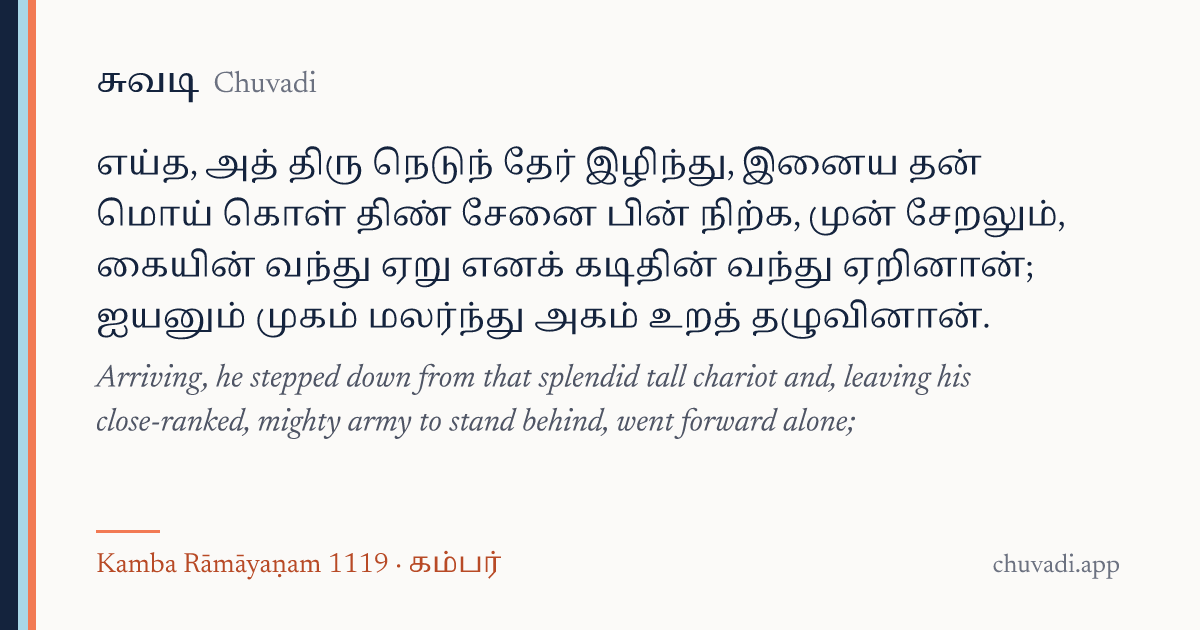
பாடல் · The poem
Tap a word to see its gloss in the commentary and where else it occurs.
பொருள் · Meaning in Tamil
எய்த அத்திருநெடுந்தேர் இழிந்து - தசரதன் தேர் அருகே வந்து அடைந்த சனகன் தன் அழகிய நீண்ட தேரிலிருந்து இறங்கி, இனிய தன் மொய் கொள் திண்சேனை பின் நிற்க முன் சேறலும் - அழகிய தனது வலிமை கொண்ட சேனை பின்னே நிற்க, தான் முன்னே சென்ற அளவில்; கையின் “வந்து ஏறு” என - தசரதன் தனது கரங்களைச் சைகையால் காட்டி, வந்து தேரில் ஏறுக என்று தெரிவிக்க; கடிதின் வந்து ஏறினான் - விரைந்து வந்து (சனகன்) தசரதன் தேரில் ஏறினான்; ஐயனும் முகம் மலர்ந்து அகம் உறத் தழுவினான் - (அப்பொழுது) தசரதச் சக்கரவர்த்தியும் முக மலர்ச்சி பெற்று, மனத்திலும் மலர்ச்சி பொருந்தத் தழுவினான்.
சேனை பின் நிற்கச் சனகன் முன் செல்லலும், தயரதன் கையால் சைகை காட்டித் தேர் ஏறச் செய்தலும் முகமும் அகமும் மலர இருவரும் தழுவுதலும் ஒரேபாடலில் சொல் ஓவியப் படிவம் ஆக்கியிருத்தல் சுவைத்தற் பாலது. அக்காலத்து, விருந்தினராம் வேந்தரை வரவேற்கும் ஒழுங்காசாரம் தெளிவுறச் சுட்டப்படலும் உணர்க. “கையின் வந்து ஏறு” என்பதற்கு, கைகொடுத்து, வந்து ஏறுக என்றான் எனினுமாம். “முகத்தான் அமர்ந்து இனிது நோக்கி அகத்தான் ஆம் இன்சொலினதே அறம்” (திருக். 93) ஆதலின், “ஐயனும் முகம் மலர்ந்து அகம் உறத்தழுவினான்” என்றார்.
ஆங்கிலம் · English translationAI
Translation
- Arriving, he stepped down from that splendid tall chariot and, leaving
- his close-ranked, mighty army to stand behind, went forward alone;
- when a hand signed “Come up!”, he quickly came and climbed aboard;
- and the lord, his face blossoming, embraced him with all his heart.
What the poem says
Caṉakaṉ halts his army, gets down from his chariot and walks ahead on foot. Tacarataṉ beckons him with his hand to climb into his own chariot, and when he does, Tacarataṉ embraces him, glad in face and in heart.
The verse is a small word-picture of the courtesy with which kings once received a royal guest. The joy showing both on the face and within recalls the Tirukkuṟaḷ's teaching that true virtue lies in a welcoming look joined to a kind heart.