



கம்பராமாயணம் 1118 · பால 18.16
பாடல் · The poem
Tap a word to see its gloss in the commentary and where else it occurs.
பொருள் · Meaning in Tamil
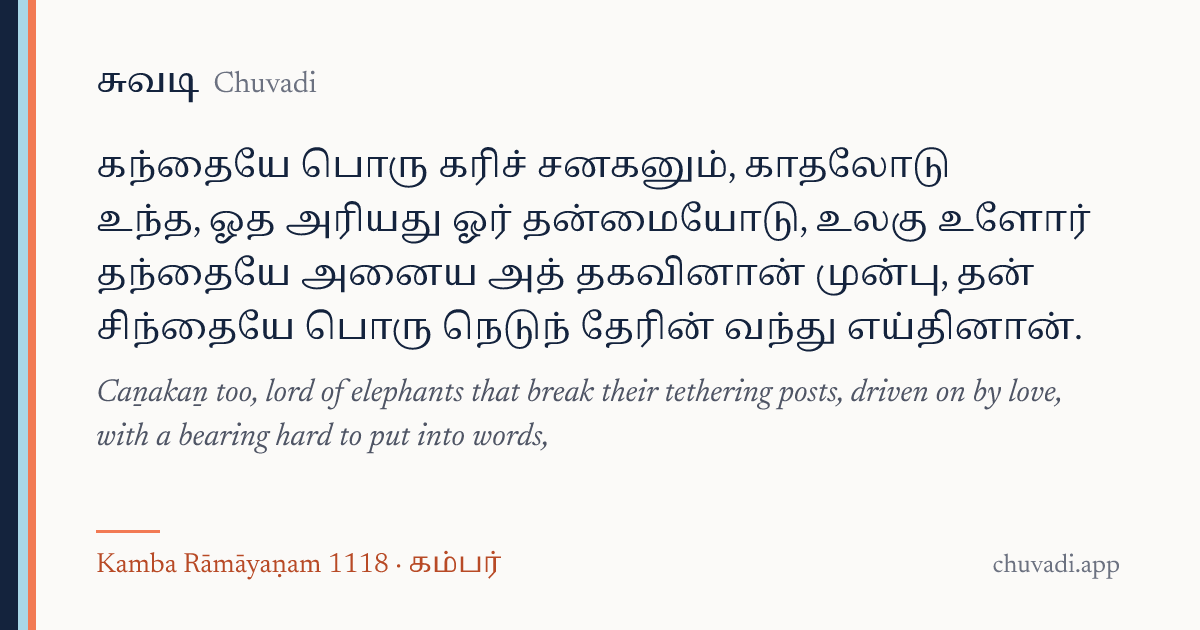
கந்தையே பொரு கரிச் சனகனும் - கட்டுந்தூணை முறித்துத் தள்ளும் வலிமையுடைய யானைச்சேனையை யுடைய சனக மன்னனும்; காதலோடு உந்த ஓத அரியது ஓர் தன்மையோடு - ஆசையால் உந்தப் பெற்று, சொல்லுதற்கரியதோர் இயல்புடனே; உலகு உளோர் தந்தையே அனைய அத் தகவினான் முன்பு - உலகுள்ளோர் அனைவர்க்கும் தந்தையைப் போன்ற பண்பாளனான அந்தத் தசரதன் முன்பு; தன் சிந்தையே பொரு நெடுந்தேரின் வந்தெய்தினான் - தன் மனத்தினைப் போன்று (விரைவிற்) செல்லும் நெடிய தேர் (ஒன்றில்) வந்து அடைந்தான்.
உலகீன்ற பரம் பொருளை உலகுக்கு ஈன்று தந்தவன் ஆனதனாலே, தயரத மன்னன், உலகோர் அனைவர்க்கும் தந்தையாகும் தகவுடையோன் என்று நினைவூட்டுகின்றார். மூவுலகும் ஈன்றானை முன் ஈன்றான் ஆதலின், “மூவுலகுளோர் தந்தையே அனைய அத் தகவினான்” என்றார். கந்து - யானை கட்டுந்தறி. அதனை முறிக்கும் திறல் வாய்ந்த யானைப் படைக்குடையவன் சனகன். வாயு வேகத்திலும் சிறந்தது மனோ வேகம் ஆதலின், “தன் சிந்தையே பொரு நெடுந்தேர்” எனத் தேரின் ஒப்பற்ற விரைவு குறித்தும். உலகு உள்ளோர்க்கு “மகன் அறிவு தந்தை யறிவு” (நாலடி 367) ஆதலின் தந்தையே யனைய என்றார் எனினுமாம்.
ஆங்கிலம் · English translationAI
Translation
- Caṉakaṉ too, lord of elephants that break their tethering posts, driven on by love,
- with a bearing hard to put into words,
- came before that worthy one who was like a father to all who live in the world,
- arriving in a tall chariot as swift as his own thought.
What the poem says
Caṉakaṉ, king of Mithilā, rides out in a chariot that moves as fast as his own eager mind to greet Tacarataṉ. His elephants are so strong they snap the posts they are tied to.
Tacarataṉ is called father to the whole world because he fathered Irāmaṉ, the Supreme Being who himself brought the worlds forth. The swiftness of thought, faster even than wind, is the measure of the chariot's speed.