



கம்பராமாயணம் 1145 · பால 19.9
பாடல் · The poem
Tap a word to see its gloss in the commentary and where else it occurs.
பொருள் · Meaning in Tamil
குழைஉறா மிளிரும் கெண்டை - காதணியின் மேல்சென்று ஒளிரும் கெண்டை மீன்களைப் போன்ற கண்கள்; கொண்டலின் ஆலிசிந்த - மேகங்கள் துளிகளைப் பொழிதல் போல, கண்ணீர்த்துளிகளைச் சிந்தி நிற்க; தழைஉறாக் கரும்பின் சாபத்து அனங்கவேள் சரங்கள் பாய - தழையில்லாத கரும்பினை வில்லாகக்கொண்ட மன்மதன் (மலர்க்) கணைகள் (தன்மேல்) பாய்வதனால்; புண்அறாத - புண்கள் நீங்காத; இழை உறா இளமுலை ஒருத்தி சோர்ந்து - நூல் இழை நுழையும் அளவும் வெற்றிடம் இல்லாத இளைய தனங்களையுடையாள் ஒருத்தி, தளர்ந்தவளாய்; மழை உறா மின்னின் அன்ன மருங்குல் போல் நுடங்கி நின்றாள் - மேகத்தில் உதிக்காமல் (மண்ணில் உதித்த) மின்னற்கொடி போன்ற (தனது) இடையினைப் போலவே (மற்றையங்கங்களும் இளைத்து) (இராமன் சென்றுவிட்டதனால்) சோர்ந்து போய் நின்றாள்.
மழை உறா மின்; தழைஉறாக் கரும்பு - இல்பொருள் உவமைகள். இடையைப்போல, உடல் முழுதும் இளைத்தது என்றதனால், இடையின் இளைப்பை உய்த்துணர்க, என்பது குறிப்பு. “மென்மருங்குல்போல் வேறுள அங்கமும் மெலிந்தாள்” (கம்ப. 5072) என்பார் மேலும்.
ஆங்கிலம் · English translationAI
Translation
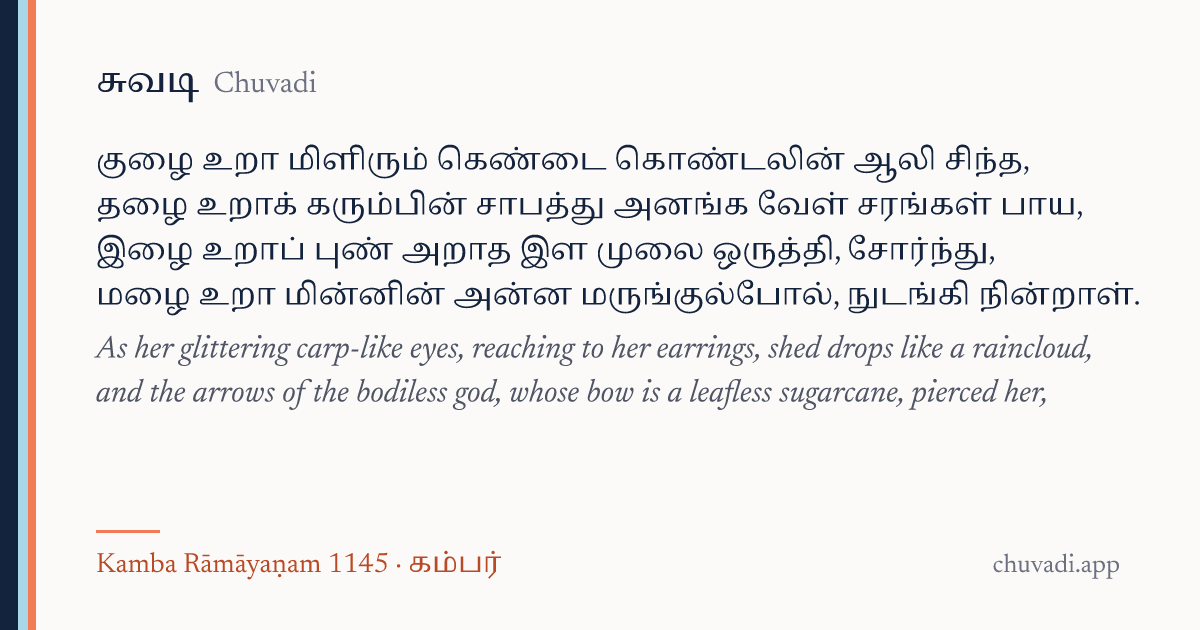
- As her glittering carp-like eyes, reaching to her earrings, shed drops like a raincloud,
- and the arrows of the bodiless god, whose bow is a leafless sugarcane, pierced her,
- one young woman, her breasts so close no thread could pass between, never free of their wounds, grew faint
- and stood drooping, like her own waist, a lightning streak that touches no cloud.
What the poem says
Another woman, struck by the love god's flower-arrows on seeing Irāmaṉ, weeps and wilts. Her long, fish-shaped eyes, reaching to her ears, shed tears like rain.
Her whole body now droops and grows thin like her slender waist, which is compared to a lightning streak that has no cloud. That image, like the love god's leafless sugarcane bow, is a deliberately impossible comparison, a recognised figure in Tamil poetics.