



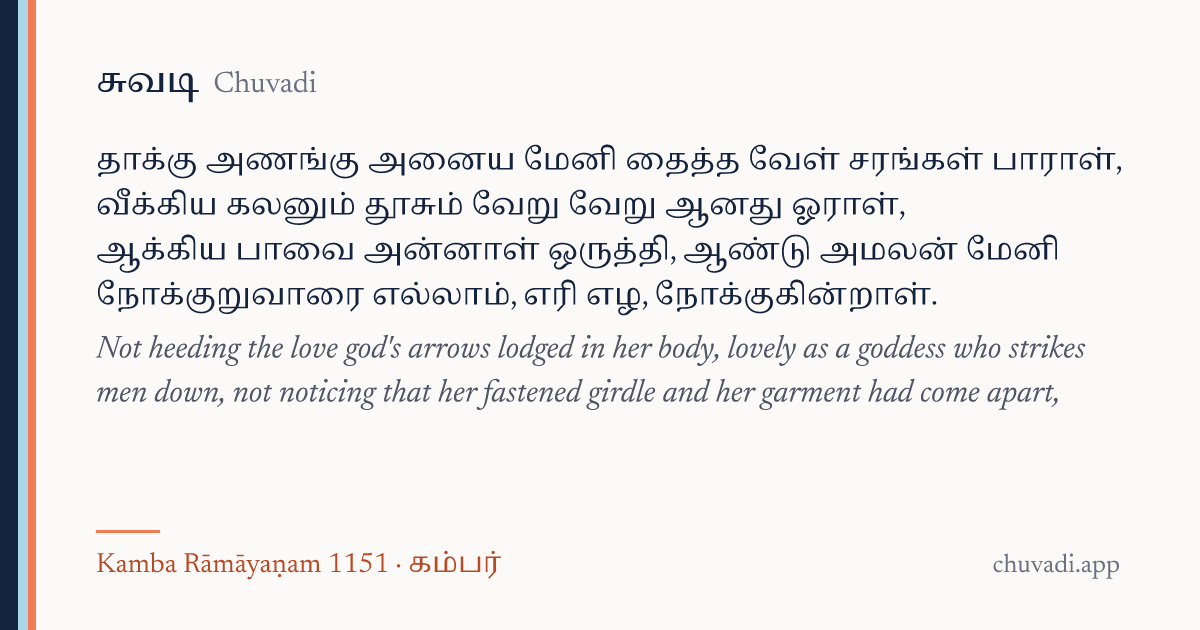
கம்பராமாயணம் 1151 · பால 19.15
பாடல் · The poem
Tap a word to see its gloss in the commentary and where else it occurs.
பொருள் · Meaning in Tamil
ஆக்கிய பாவை யன்னாள் ஒருத்தி - (கைவல்லான் ஒருவனால்) ஆக்கப்பட்ட பதுமை போன்றாள் ஒருத்தி; தாக்கு அணங்கு அனைய மேனி தைத்த வேள் சரங்கள் பாராள் - தாக்கி வருத்தும் தெய்வ நங்கை போன்ற தனது மேனியில் பாய்ந்த மன்மத அம்புகளை மதியாதவளாய்; வீக்கிய கலையும் தூசும் வேறுவேறு ஆனது ஓராள் - தான் இடையில் கட்டியிருந்த மேகலையும் ஆடையையும் வேறுவேறாகப் பிரித்துள்ளதையும் உணராதவளாய்; ஆண்டு அமலன் மேனி நோக்குவாரை எல்லாம் - அங்கே, தூயவனான இராமனின் திருமேனியை (அன்போடு) பார்ப்பவரையெல்லாம்; எரி எழ நோக்குகின்றாள் - (கண்களிலிருந்து) தீப்பொறி எழுமாறு (சினத்துடன்) நோக்குவாள் ஆனாள்.
எரி எழ நோக்கியதற்கு ஏது பெருமானின் திருமேனிக்குக் கண்ணேறு படக்கூடும் என்பது. தன் காதற்குரியவனைப் பிறர் பார்ப்பது பொறாமையினாலும் எரி எழ நோக்கினாள் ஆதல்வேண்டும். தாக்கணங்கு - தீண்டி வருத்துகின்ற மோகினி என்னும் அழகுத் தெய்வம். “தாக்கணங்கு தானைக் கொண்டன்ன துடைத்து” (திருக். 1082).
ஆங்கிலம் · English translationAI
Translation
- Not heeding the love god's arrows lodged in her body, lovely as a goddess who strikes men down,
- not noticing that her fastened girdle and her garment had come apart,
- one woman, like a doll that had been crafted, glared there
- with fire flaring from her eyes at everyone who looked upon the pure one's body.
What the poem says
This woman, beautiful as a doll fashioned by a master, ignores the love god's arrows in her flesh and does not notice that her girdle and dress have parted. Instead she glares furiously at every other woman gazing at Irāmaṉ.
The commentary gives two reasons for her anger: she fears that so many eyes will put the evil eye on him, and she is jealous of anyone else looking at the man she loves.