



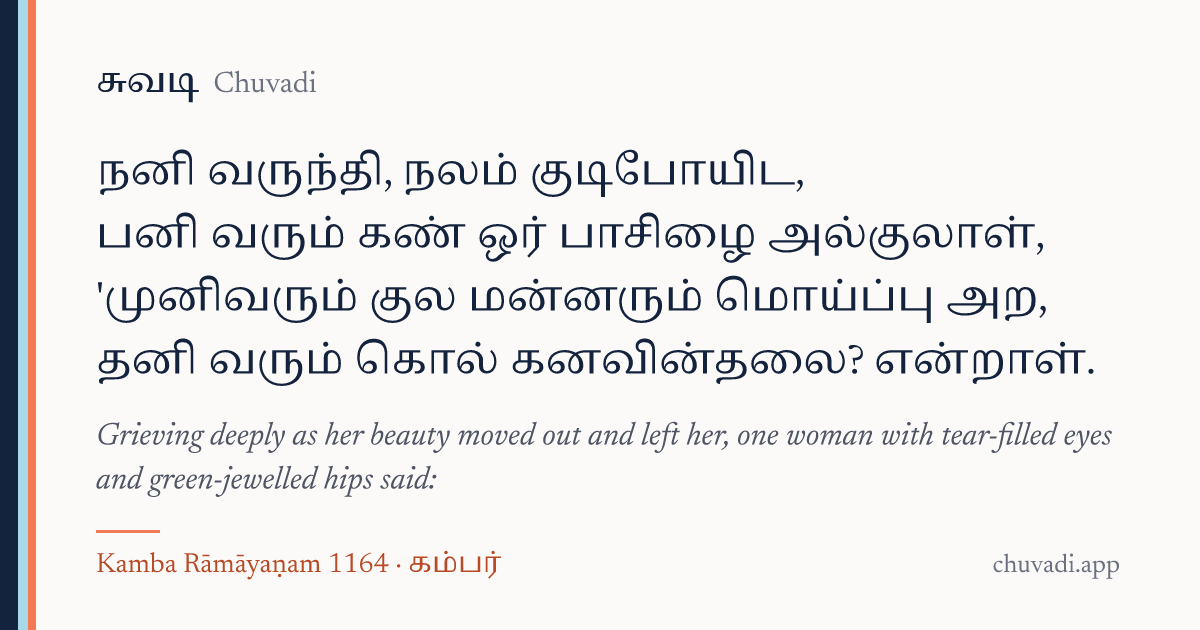
கம்பராமாயணம் 1164 · பால 19.28
பாடல் · The poem
Tap a word to see its gloss in the commentary and where else it occurs.
பொருள் · Meaning in Tamil
பனிவரும் ஓர் பாசிழை அல்குலாள் - கண்ணீர் நீர்த்துளிகள் ததும்பிய கண்ணையும் பச்சைக் கற்கள் பதித்த (மேகலை முதலிய) அணிகலனையும் அணிந்த இடைப் பக்கத்தையும் உடையாள் ஒருத்தி; நலம் குடிபோயிட நனி வருந்தி - (இவ்வளவு நாளும் தன் உடலில் குடியிருந்து தன் அழகு இடம் பெயர்ந்து நீங்கிடுமாறு (இராமன் மேற்கொண்ட வேட்கையில்) மிகவும் துயருற்று; முனிவரும் குலமன்னரும் மொய்ப்பு அற - (இவ்விராமன்) முனிவர்களும் மன்னர் குலத்தினரும் (இப்போது) மொய்த்துக் கிடப்பது போல் அல்லாமல்; கனவின் தலை தனிவரும் கொல் என்றாள் - என் கனவில் தனியாய் வருவானோ?” என்று (ஏக்கத்தோடு) கூறினாள்.
தனித்து வந்தால் தன்வேட்கை தீரத் தழுவி மகிழ்வேன் என்பது குறிப்பு. கூடி இருப்பார் முன் தழுவல் நாணத்தால் இயலாது. நனவில் தழுவுதல் தவமின்மையால் இயலாது. ஆதலால், “கனவில் தனிவருங்கொல்” என்றாள்.
ஆங்கிலம் · English translationAI
Translation
- Grieving deeply as her beauty moved out and left her,
- one woman with tear-filled eyes and green-jewelled hips said:
- “Free of the sages and the royal kin who crowd around him,
- will he come alone, in my dream?”
What the poem says
Losing her looks to longing, a weeping woman wonders whether Irāmaṉ might come to her alone in a dream, away from the sages and princes who surround him now.
The hint is that only then could she embrace him: modesty forbids it in front of a crowd, and in waking life she lacks the merit to win him.