



கம்பராமாயணம் 1174 · பால 19.38
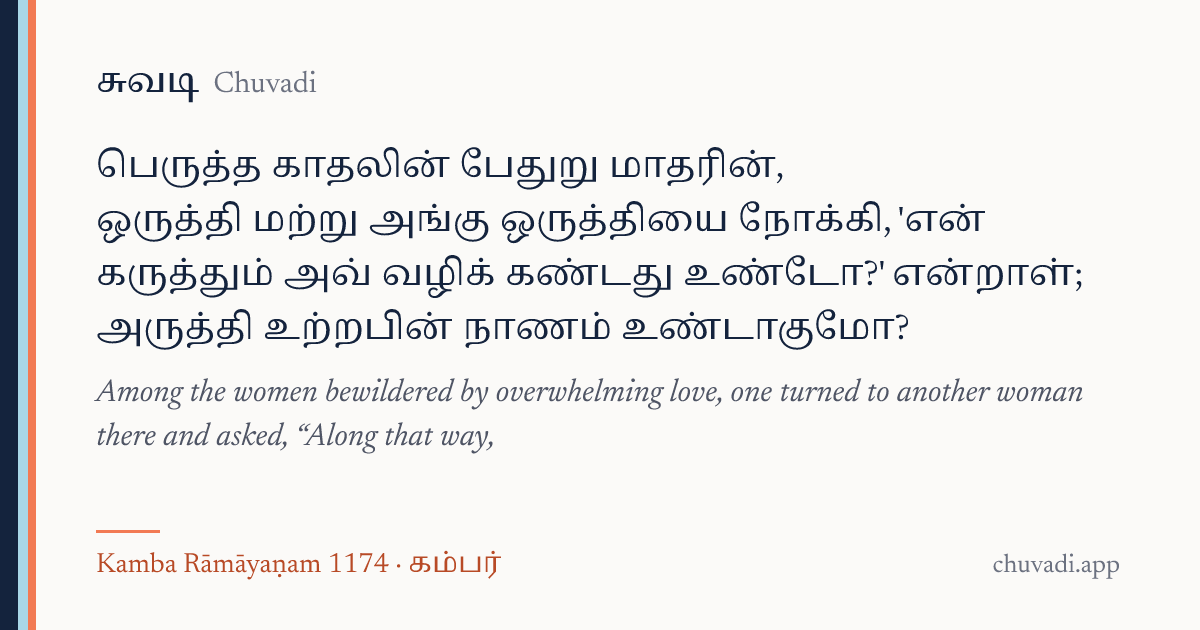
பாடல் · The poem
Tap a word to see its gloss in the commentary and where else it occurs.
பொருள் · Meaning in Tamil
பெருத்த காதலின் பேதுறு மாதரின் ஒருத்தி - வரம்பிகந்த வேட்கையினால் மதி மயக்கமுற்ற மங்கையர்களுக்குள்ள ஒருத்தி; மற்று அங்கு ஒருத்தியை நோக்கி - அவ்விடத்து வந்த இன்னொருத்தி யைப் பார்த்து; அவ்வழி என் கருத்தும் கண்டது உண்டோ என்றாள் - நீ, இராமனை நாடிச் சென்ற அவ்வழியிடையே என்னுடைய மனத்தை (அங்கு எங்காவது) பார்த்தது உண்டோ? எனக் கேட்டாள்; அருத்தி உற்றபின் நாணம் உண்டாகுமோ? - ஆசை மிகுந்த பின்பு வெட்கம் உள்ளதாகுமோ?
கருத்து - ஆகு பெயராய் அது தோன்றும் மனத்தைக் குறித்தது. ஆசை வெட்கம் அறியாது என்பது பழமொழி - வேற்றுப்பொருள் வைப்பணி. அணுவடிவினதாய்க் கண்ணுக்குப் புலன் ஆகாத மனத்தை, “வரும் வழியில் கண்டாயோ?” எனக் கேட்டது, வரம்பிகந்த ஆசையினால் வெட்கமறியாது கேட்டது என்க. என் மனத்தை வரும் வழியில் பார்த்தாயா என்று வினவினால் பிறர் ஏளனம் செய்வார்கள்; அது வெட்கப்படவைக்கும் என்பதனை அவளால் அவள் வேட்கை மிகுதியால் நினைக்கக் கூடவில்லை. பெண்மைக்குரிய நாற்பண்புகளுள் ஒன்றான நாணத்தை வேட்கை உண்டு விடும் என்றவாறு. “காமம் விடு ஒன்றோ நாண் விடு நன்நெஞ்சே! யானோ பொறேன் இவ்விரண்டு” என்பாள் திருக்குறள் காதலியும் (திருக். 1247).
ஆங்கிலம் · English translationAI
Translation
- Among the women bewildered by overwhelming love,
- one turned to another woman there and asked, “Along that way,
- did you happen to see my heart?”
- Once desire has taken hold, can there be any shame?
What the poem says
One woman, past caring how she sounds, asks another who has come back from following Irāmaṉ whether she happened to see her heart along the road, since her heart has gone off after him.
The last line is a general truth set beside the particular case, a recognised figure of speech: desire knows no shame. The commentary cites the Tirukkuṟaḷ, where a lover tells her heart to give up either desire or modesty, since she cannot bear both.