



கம்பராமாயணம் 1176 · பால 19.40
பாடல் · The poem
Tap a word to see its gloss in the commentary and where else it occurs.
பொருள் · Meaning in Tamil
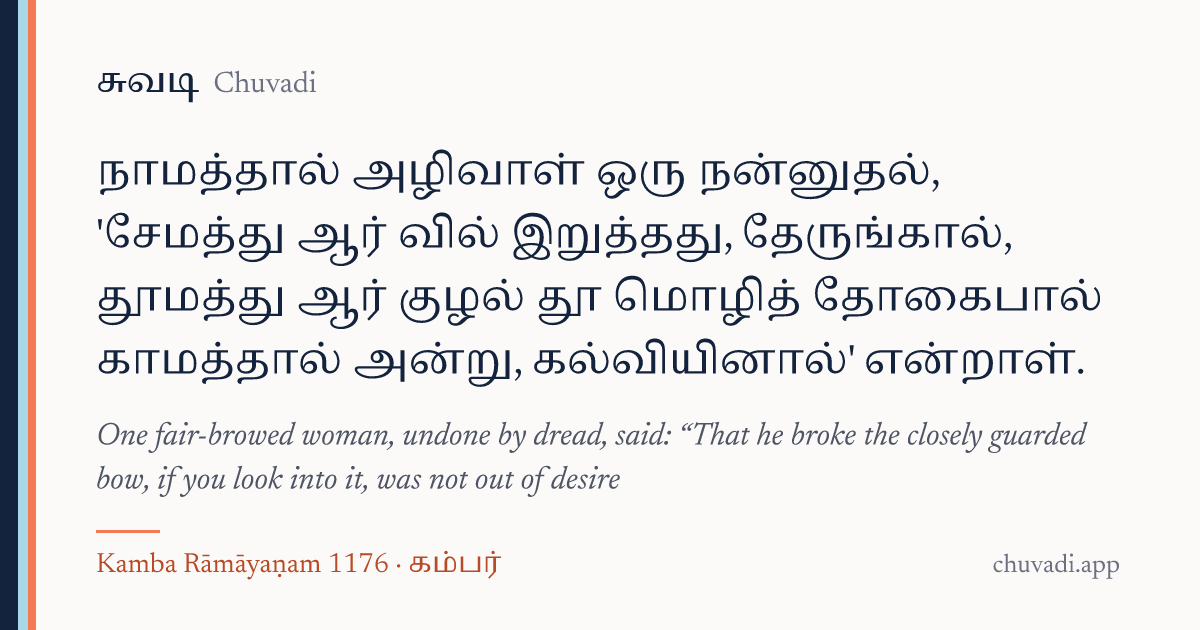
நாமத்தால் அழிவாள் ஒரு நன்னுதல் - (இராம வேட்கை எனும்) அச்சத்தால் நிலை குலைந்தவளான நல்ல நெற்றியினையுடையாள் ஒருத்தி; சேமத்து ஆர் வில் இறுத்தது தேருங்கால் - (ஆயுத சாலையில்) காவல் நிறைந்திருந்த சிவதனுசை (எடுத்து) இராமன் முறித்த காரணத்தை ஆராயுமிடத்து; தூமத்து ஆர்குழல் தூமொழித் தோகைபால் காமத்தால் அன்று - (அகில்) புகை (மணம்) நிறையும் கூந்தலையுடைய தூய மொழியினைப் பேசும் மயில் அனையாள் ஆகிய சீதையினிடத்துக் கொண்ட ஆசையால் அன்று என்றே தோன்றுகிறது; கல்வியினால் என்றாள் - (அவன் தான் கற்ற) வில் வித்தையாகிய கல்வியின் திறம் வெளிப்படச் செய்த செயலாகவே தோன்றுகிறது என்றாள்.
வேட்கை மிகுந்தவர்கள் நிகழும் செயல்களைத் தமக்குச் சாதகமாகவே நோக்குவர் என்னும் உள இயலை அழகுறக் கூறியவாறு. இராமன் பிற மகளிரிடத்து எவ்விதக் காமக் குறிப்பும் அற்றிருந்த நிலையை நோக்கிச் சீதையிடத்தும் அவ்வாறே இருப்பான் எனத் தனக்குத் தானே ஆறுதல் கொள்கிறாள். நாமத்தால் அழிந்தாள் என்பதற்கு, இராம நாமத்தைச் சொல்லி மெலிந்தாள் எனினுமாம். சேமம்: காவல்.
ஆங்கிலம் · English translationAI
Translation
- One fair-browed woman, undone by dread, said: “That he broke the closely guarded bow,
- if you look into it, was not out of desire
- for that peacock with pure speech and hair heavy with incense smoke;
- it was to show his learning!”
What the poem says
A woman worn down by love consoles herself with wishful reasoning: Irāmaṉ did not break Civaṉ's bow, kept under guard, because he desired Cītai, but merely to display his skill at archery. Since he shows no sign of desire for any woman in the street, he surely feels none for Cītai either.
The commentary remarks on the psychology of people in love, who read every event in their own favour. The opening phrase may also mean she wasted away repeating Irāmaṉ's name.