



கம்பராமாயணம் 1177 · பால 19.41
பாடல் · The poem
Tap a word to see its gloss in the commentary and where else it occurs.
பொருள் · Meaning in Tamil
ஆரமும் துகிலும் கலன் யாவையும் - முத்து மாலையும், சேலையும் பிற ஆபரணங்கள் யாவற்றையும் (இராம வேட்கையால் வந்த); சோர இன்னுயிர் சோரும் ஓர் சோர் குழல் - (தன் உடல் இளைப்பால்) கழலவிட்டு உயிரும் தளர்ந்து விழும் நிலையுடைய தளர்ந்த கூந்தலாள் ஒருத்தி; கோர வில்லி முன்னே எனைக் கொல்கின்ற மாரவேளின் - அச்சம் தரத்தக்க வில்லை ஏந்தியுள்ள இந்த இராமன் முன்னிலையிலேயே அஞ்சாமல் வில் எய்து என்னைக் கொல்கின்ற மன்மதனைப் போன்ற; வலியவர் யார்?” என்றாள் - வலிமையுடையார் உலகில் யாவர் உளர்? என்று கேட்டாள்.
பெருவீரனின் முன் எதிர் நிற்கும் துணிவே பெருவீரம் ஆம். ஆதலால், இராமன் என்னும் பெருவீரன் கண்முன்னே அபலைகளை எய்கின்ற மன்மதன் பெருவீரன்தான் என்று குறிப்பால் இகழ்ந்தவாறு. அபலைகளை எய்கின்ற ஒருவனைத் தட்டிக் கேட்காது நிற்கின்ற இராமனின் நிலையையும் குறிப்பால் சுட்டி வருந்தினாள் என்க. ஆரமும், துகிலும், கலன் யாவையும் சோர்வதனால் இன் உயிர் சோர்கின்றமை தெரிவித்த வாறு.
ஆங்கிலம் · English translationAI
Translation
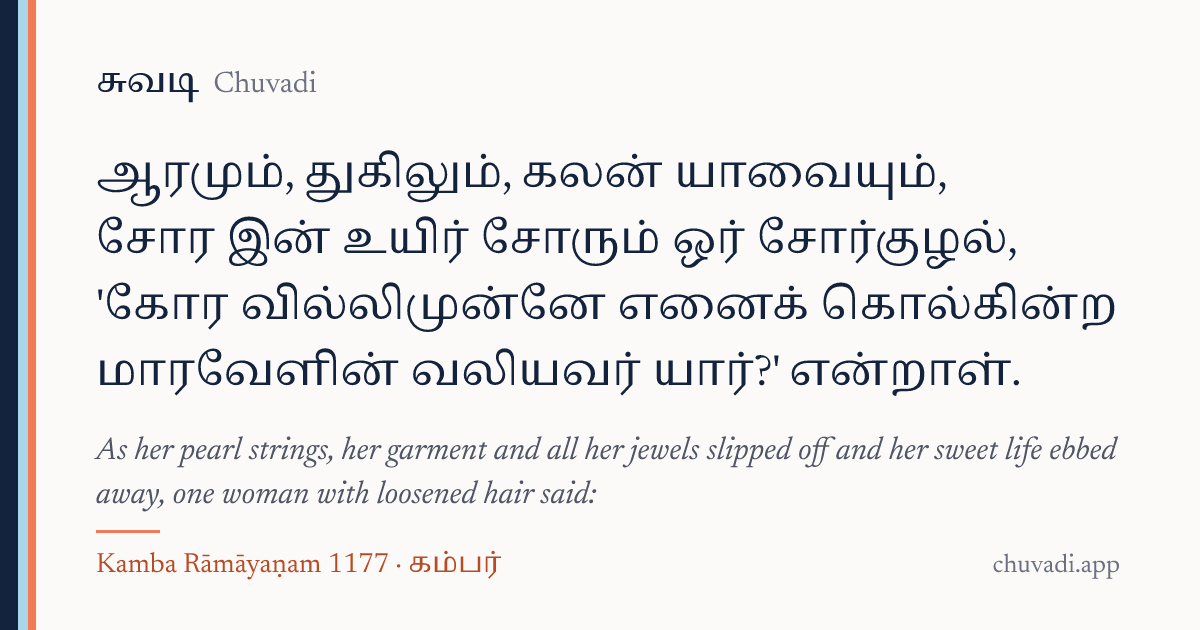
- As her pearl strings, her garment and all her jewels slipped off
- and her sweet life ebbed away, one woman with loosened hair said:
- “Right in front of the one with the terrible bow, he is killing me:
- who could be mightier than Māraṉ, the god of love?”
What the poem says
A woman whose jewels and clothes are slipping off her failing body says, with bitter irony, that the love god must be the mightiest warrior alive, since he dares to shoot her down right under the eyes of the great archer Irāmaṉ.
The sarcasm cuts two ways: the love god is no hero for attacking helpless women, and Irāmaṉ stands by and does nothing to stop him.