



கம்பராமாயணம் 1202 · பால 20.12
பாடல் · The poem
Tap a word to see its gloss in the commentary and where else it occurs.
பாட வேறுபாடு · Project Madurai reads
பொருள் · Meaning in Tamil
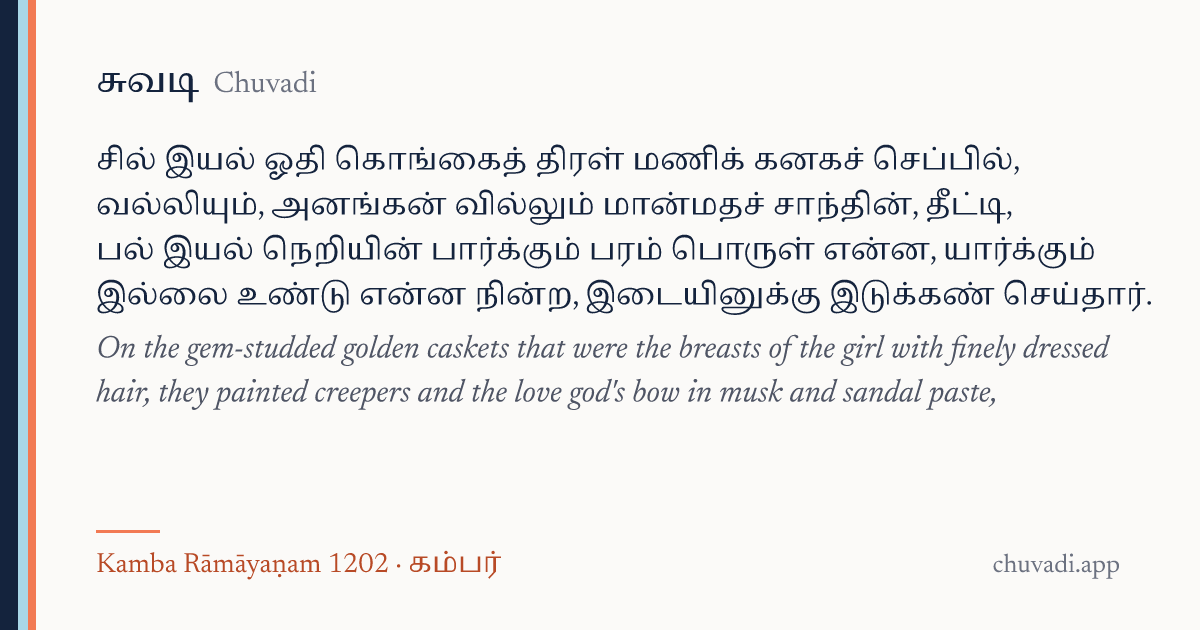
சில் இயல் ஓதி கொங்கைத் திரள் மணிக் கனகச் செப்பில் - சில வகைகளாக வகுத்து அலங்கரிக்கப்படும் கூந்தலையுடைய சீதையின் தனங்களாகிய திரண்ட மணி பதிக்கப்பட்ட பொற்செப்புக்களில்; வல்லியும் அனங்கன் வில்லும் மான் மதச் சாந்தின் தீட்டி - பூங்கொடிகளையும், மன்மதனது வில்லாகிய கரும்புகளையும் கத்தூரி, சந்தனக் குழம்புகளால் (ஓவியமாக) எழுதி; பல்இயல் நெறியில் பார்க்கும் பரம்பொருள் என்ன - பலவகையான (சமய) நெறிகளால் பலவாறாகப் (உண்டு, இல்லை யென்று) பார்க்கப்படுகின்ற பரம் பொருளாகிய கடவுளின் வடிவத்தினைப் போல; யார்க்கும் இல்லை, உண்டு என்ன நின்ற இடையினுக்கு இடுக்கண் செய்தார் - உண்டோ இல்லையோ என்று யாவர்க்கும் ஐயம் உண்டாம் படியிருக்கிற (சீதையின்) மெல்லிய இடைக்கு (ஓவியம் எழுதி) மேலும் வருத்தத்தைத் (தோழியர்) விளைவித்தனர்.
உண்டோ இல்லையோ என்று இடை ஐயப்படுமாறு கூறப்படினும் இடையென்று ஒன்று இருப்பது யாவர்க்கும் ஐயத்திற் கிடமில்லாத் துணி பொருள் ஆதல்போல, இல்லையோ, உண்டோ எனப் பல்வகையால் ஐயுறப்படும் பரம்பொருளும் ஐயத்திற்கிடமில்லாத் துணி பொருளாய் உள் பொருளே என உவமையால் பெற வைத்த அருமையினை ஓர்ந்துணர்க. “அன்றே என்னின் அன்றே ஆமே, ஆம் என்னின் ஆமே யாம்” (கம்ப. 6059) என்று உரைத்து, அன்றெனவும் ஆம் எனவும் கூறப்பட ஆம் ஒருபொருள் உண்டு என மேலும் உரைப்பார். “தொட்ட எற்கு உணரலாம் மற்று உண்டெனும் சொல்லும் இல்லை” (கம்ப. 4484) என்பான் இராமபிரான். “கண்கொளா நுடங்கு இடையை உண்டெனத் தமர் மதிப்பர்; நோக்கினார் பிறர் எல்லோரும் உண்டு இல்லையென ஐயம் அல்லது ஒன்று உணர்வு அரிதே” (சீவக. 172).
ஆங்கிலம் · English translationAI
Translation
- On the gem-studded golden caskets that were the breasts of the girl with finely dressed hair,
- they painted creepers and the love god's bow in musk and sandal paste,
- and so added to the burden of her waist, which, like the Supreme Being seen in many ways by many paths,
- stands there so that no one can say whether it is or is not.
What the poem says
The maids paint designs of vines and of Kāmaṉ's sugarcane bow on Cītai's breasts in musk and sandal paste. This only adds weight to her waist, already strained by them.
Her waist is so slender that no one can tell whether it exists at all, just as the many schools of thought argue whether God exists or not. The commentary draws out the poet's point: the waist plainly does exist, since the body stands on it, and in the same way God, though endlessly debated, surely is.