



கம்பராமாயணம் 1211 · பால 20.21
பாடல் · The poem
Tap a word to see its gloss in the commentary and where else it occurs.
பாட வேறுபாடு · Project Madurai reads
பொருள் · Meaning in Tamil
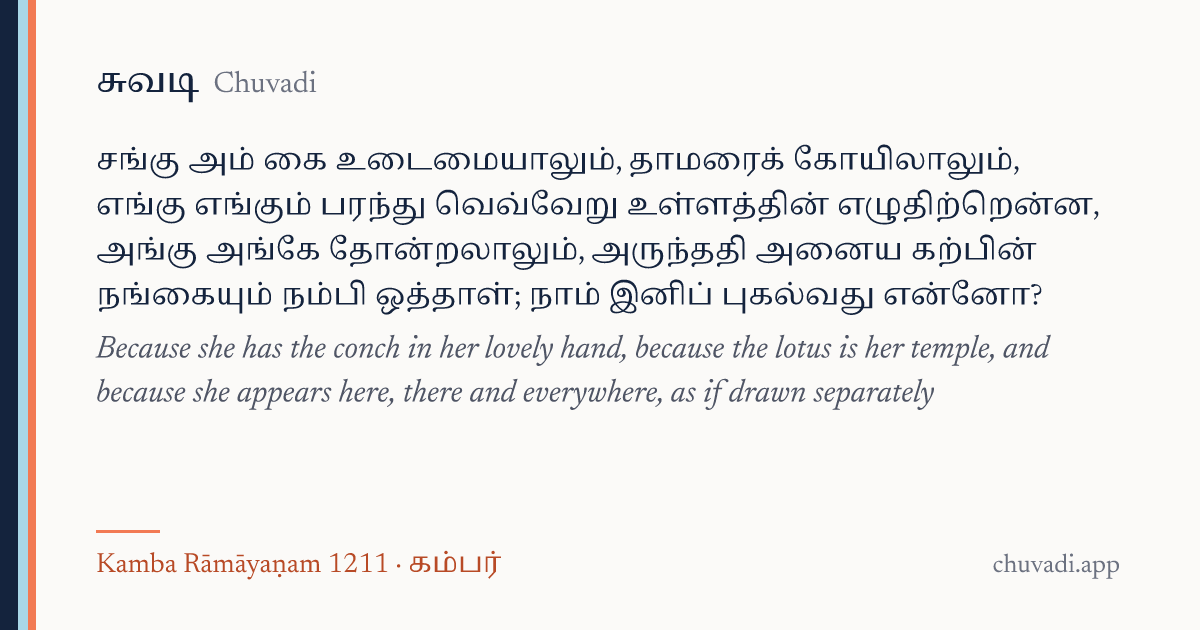
சங்கு அம்கை உடைமையாலும் - பாஞ்ச சன்னியம் என்னும் சங்கினை அழகிய (இடக்) கையில் ஏந்தியுள்ளமையாலும், (சங்கு வளையல்களைக் கைகளிற் கொண்டுள்ளமையாலும்); தாமரைக் கோயிலாலும் - (நினைப்பவர் (உள்ளத்) தாமரையை இடமாகக் கொண்டிருத்தலாலும்); (செந்தாமரை மலரைத் தன் வாழிடமாகக் கொண்டிருத்தலாலும்); எங்கு எங்கும் பரந்து வெவ்வேறு உள்ளத்தின் எழுதிற்று என்ன அங்கு அங்கே தோன்றலாலும் - எல்லா இடங்களிலும் பரவி, தனித்தனியாக, அவரவர் மனத்தில் எழுதியது போல, அவ்வவ்விடங்களில் தோன்றுவதாலும்; அருந்ததி அனைய கற்பின்நங்கையும் - அருந்ததி தேவியைப் போன்ற கற்பினையுடைய பிராட்டியும்; நம்பி ஒத்தாள் - ஆடவரிற் சிறந்த இராமன் ஆகிய திருமாலுக்குச் சமமானாள்; நாம் இனிப் புகல்வது என்னோ? - (இதனினும் சிறப்பாக) நாம் இனிப் பிராட்டிக்கு உவமை கூறுவது எவ்வாறு?
சீதைக்குப் பெண்குலத்தில் உவமை இல்லாமையால் புருட உத்தமனாகியவனையே தம் சாதுரியத்தால் உவமையாக்கி நிறுவினார். தலைவன் தலைவி இருவருக்கும் ஒருவர்க்கு ஒருவரை உவமை கூறுவதால், அழகு, குணம் முதலிய பொருத்தங்கள், சிறப்புகள் அனைத்திலும் உள்ள ஒப்புமை உணர்த்தப் படுகின்றமை ஓர்க. திருமாலுக்கு மட்டுமின்றி, இராமனுக்கும் திருக்கையில் இரேகையாகச் சங்கு உள்ளதை, “சங்கு சக்கரக் குறியுள தடக்கையின்” (கம்ப. 3859) எனச் சுட்டுவார் பின்னும். சிலேடையடியாக வந்த உவமையணி. உள்ளத் தாமரையைக் கோயிலாக உடைமை “மலர்மிசை ஏகினான்” (திருக்.) எனும் திருக்குறளாலும், அதன் பரிமேலழகர் உரையாலும் உணரலாம். சங்குவளை அணிந்தகை; தாமரைப் பூவில் இருக்கை, எல்லார் உள்ளத்திலும் நினைக்கப்படுதல் ஆகியன பிராட்டிக்கும், பாஞ்சசன்னியம் ஏந்தல், அன்புடையார் இதய மலர்மிசை ஏகல், எங்கும் பரந்துள்ள வியாபகத்துவம் ஆகியன இராமனுக்கும் ஏற்பன வாதல் காண்க.
ஆங்கிலம் · English translationAI
Translation
- Because she has the conch in her lovely hand, because the lotus is her temple,
- and because she appears here, there and everywhere, as if drawn separately
- in each person's heart, the lady, as chaste as Aruntati,
- is the equal of the hero himself: what more is there for us to say?
What the poem says
No woman can be compared with Cītai, so the poet compares her with Irāmaṉ, who is Viṣṇu. Every phrase applies to both, a double meaning that is a recognised figure. Viṣṇu holds the conch in his hand, and she wears conch-shell bangles. He dwells in the lotus of the devotee's heart, and she, as the goddess Tirumakaḷ, lives in a red lotus. He pervades everything, and she appears in every heart, as if painted there separately.
She is as chaste as Aruntati, the sage Vasiṣṭha's wife and the model of wifely faithfulness.