



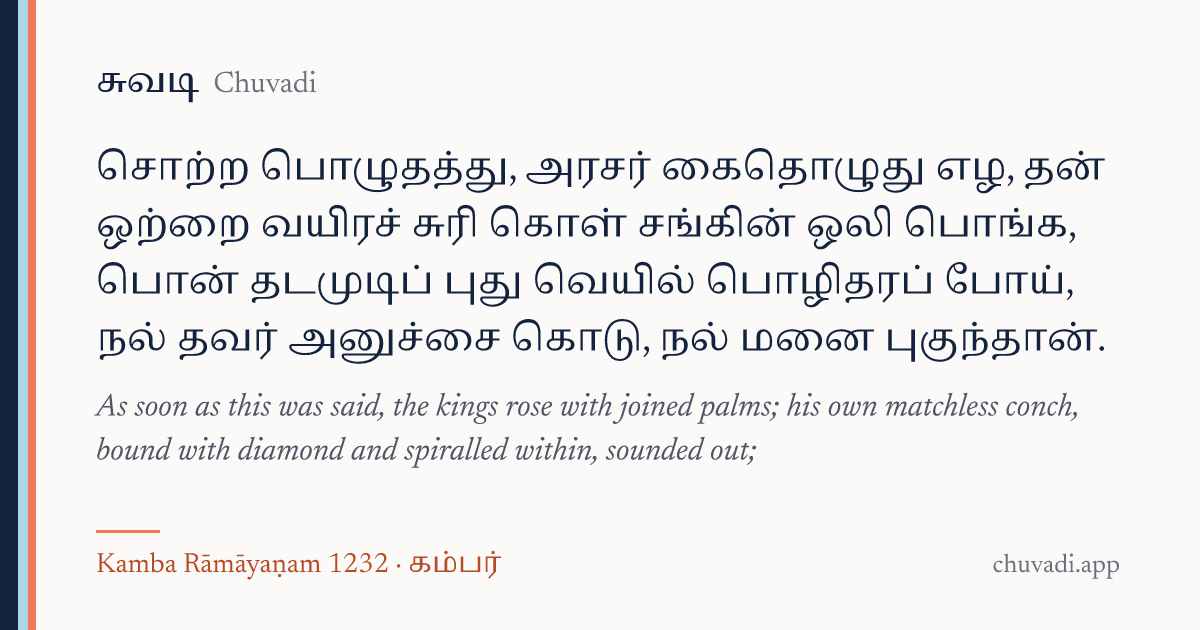
கம்பராமாயணம் 1232 · பால 20.42
பாடல் · The poem
Tap a word to see its gloss in the commentary and where else it occurs.
பொருள் · Meaning in Tamil
சொற்ற பொழுதத்து - (இங்ஙனம் கோசிக முனிவன்) கூறிய பொழுதில்; அரசர் கைதொழுது எழ - (தசரதன்) மற்றையரசர் எல்லோரும் தன்னைக் கைகூப்பி அஞ்சலி செய்து எழவும்; தன் ஒற்றை வயிரச் சுரிகொள் சங்கின் ஒலிபொங்க - தனக்கு உரிய ஒப்பற்ற வயிரப் பூண் அணிந்த, உள்சுழிகின்ற (வெற்றிச்) சங்கின் ஒலி பொங்கியெழவும்; பொற்றடமுடிப் புது வெயில் பொழிதரப் போய் - பொன்னாலான (தன்) அகன்ற மணிமகுடம் இளவெயில் வீசச்சென்று; நல்தவர் அனுச்சைகொடு நல்மனை புகுந்தான் - சிறந்த முனிவர்களின் இசைவைப் பெற்றுக்கொண்டு (தனக்குரிய) சிறந்த மாளிகைக்குச் சென்றடைந்தான்.
நில அரசர்கள் எழுந்து நின்று விடைதர, தவஅரசர்களைப் பணிந்து நின்று அனுமதி வேண்டி விடைபெற்றான் எனக் கூறி, தசரதனின் வீரமும் அருளின் ஈரமும் தோற்றுவித்த திறம் உணர்க. அனுச்சை - அநுமதி, இசைவு.
ஆங்கிலம் · English translationAI
Translation
- As soon as this was said, the kings rose with joined palms; his own
- matchless conch, bound with diamond and spiralled within, sounded out;
- and with his broad golden crown shedding a fresh morning glow, he went,
- taking leave of the good ascetics, and entered his fine mansion.
What the poem says
With the date fixed, the assembly breaks up. The other kings rise and salute Tacarataṉ with joined hands, his victory conch sounds, and his golden crown glows like the early sun as he leaves.
Before going he bows to the sages and asks their permission to depart. The poet shows both sides of the king: earthly rulers stand up to send him off, while he himself humbly seeks leave from the rulers of austerity.