



கம்பராமாயணம் 1253 · பால 21.20
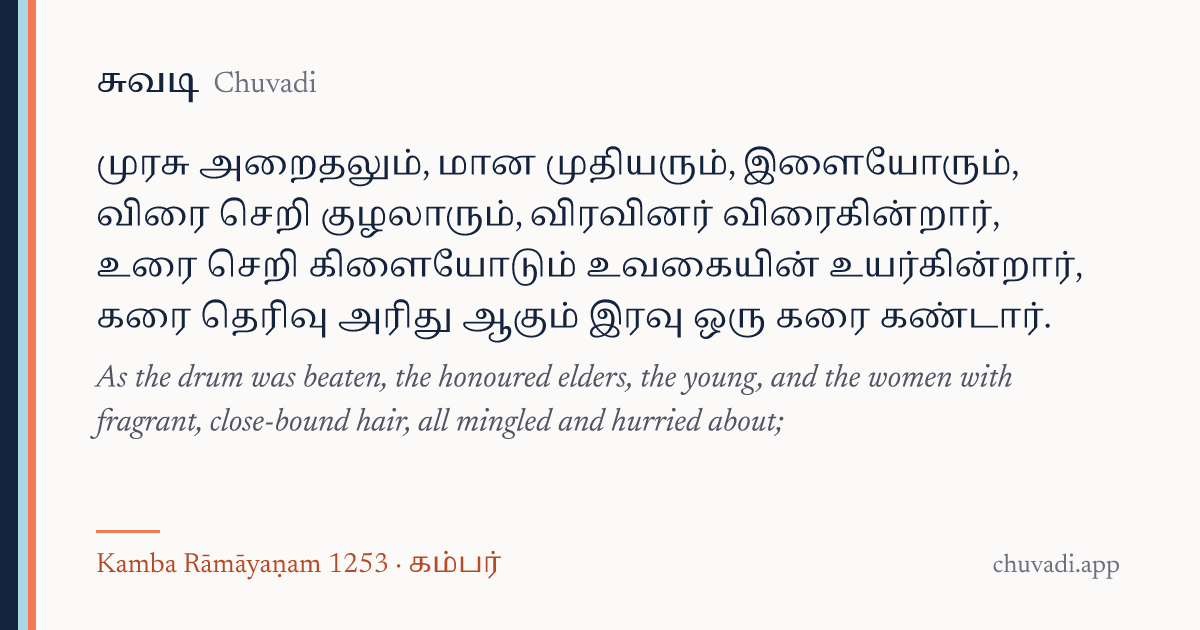
பாடல் · The poem
Tap a word to see its gloss in the commentary and where else it occurs.
பொருள் · Meaning in Tamil
முரசு அறைதலும் - (கட்டளைப்படியே) முரசு அறிவித்தவுடன்; மான முதியரும் இளையோரும் விரைசெறி குழலாரும் - பெருமைக்குரிய முதியவர்களும், இளையவர்களும், மணம்மிக்க கூந்தலையுடைய மகளிரும்; விரவினர் விரைகின்றார் - தம்மிற் கலந்தவர்களாய் (நகரை அழகு செய்ய) விரைந்தவராய்; உரைசெறி கிளையோடும் உவகையின் உயர்கின்றார் - சுற்றத்தாரோடு உரையாடிச் சீதை மணம் எண்ணி, களிப்பில் உயர்ந்தவராய்; கரைதெரிவு அரிது ஆகும் இரவு ஒருகரை கண்டார் - (என்று பொழுது விடியுமோ சீதைமணங்காண என்ற தவிப்பால்) கரைகாண இயலாததாய் நீண்டிருந்த அந்த இருட்கடலினைக் கடந்து விடியல் எனும் கரையினை அடைந்தவர் ஆயினர்.
விடியலை, ஒரு 'கரை' கண்டார் என்பதனால், இரவு கடல் ஆயிற்று. ஏகதேச உருவகம். இராமபிரானும் பிராட்டியும் விரகவேட்கையால் விடியலுக்கு ஏங்கித் தவித்தது போலவே, இவர் மணங்காணத் துடிக்கும் காட்சி வேட்கையில், மிதிலையிலிருந்து மக்களும் விடியலுக்கு ஏங்கியிருந்தனர் என்பதனை “கரை தெரிவு அரிதாகும் விடிவு ஒரு கரை கண்டார்” என்பதனால் உணர்த்தியதிறம் காண்க.
ஆங்கிலம் · English translationAI
Translation
- As the drum was beaten, the honoured elders, the young,
- and the women with fragrant, close-bound hair, all mingled and hurried about;
- with their talkative kin they rose higher and higher in joy,
- and reached at last a shore of the night, whose shore had seemed impossible to find.
What the poem says
At the sound of the drum the whole city, old and young, men and women, pours out to get ready, chattering with their families and swept up in joy.
Like Irāmaṉ and Cītai, the people of Mitilai can hardly wait for morning, eager to see the wedding. The night seems like a shoreless sea, and dawn is the shore they finally reach. The night is never named a sea outright; the image is implied by the word 'shore'.