



கம்பராமாயணம் 1255 · பால 21.22
பாடல் · The poem
Tap a word to see its gloss in the commentary and where else it occurs.
பொருள் · Meaning in Tamil
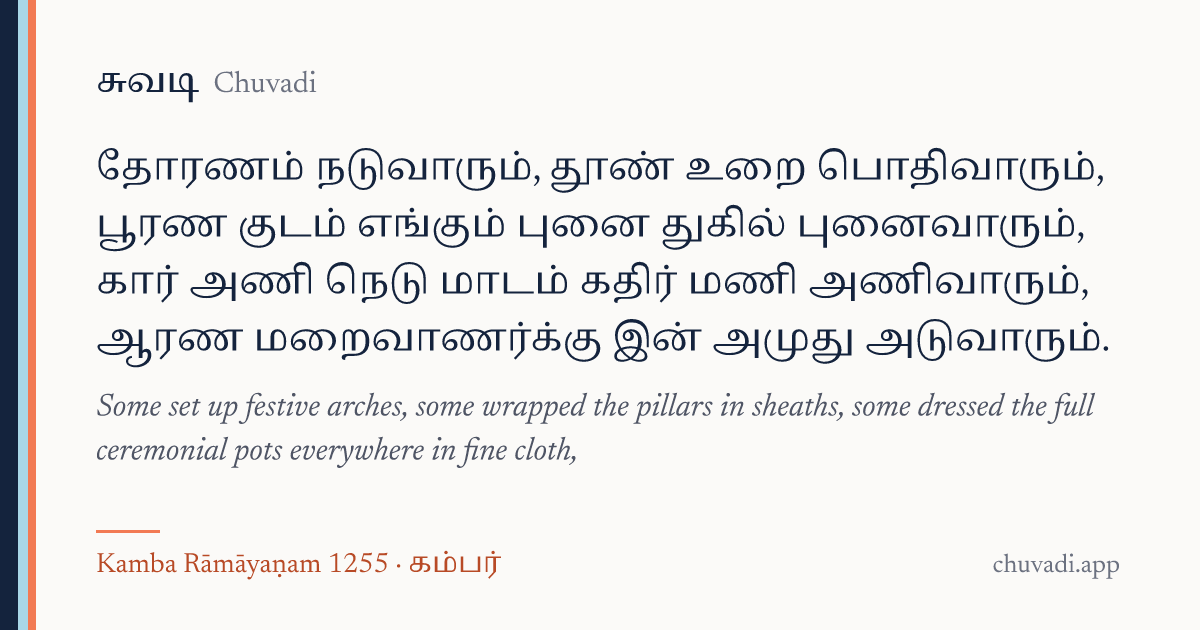
தோரணம் நடுவாரும் தூண்உறை பொதிவாரும் - (அந்நகரத்து மக்கள், அப்போது) தோரணங்களை வீதிகளில் நடுவார்களும், தூண்களுக்கெல்லாம் (பட்டு) உறைகளைப் பொத்துவார்களும்; பூரண குடம் எங்கும் புனைதுகில் புனைவாரும் - பூரண குடங்களை எங்கும் வைத்து, (அவற்றின்மேல்) அழகிய ஆடைகளை அணிவாரும்; காரணி நெடு மாடம் கதிர் மணி அணிவாரும் - மேகங்கள் (உச்சியில்) அணிந்திருக்கிற உயர்ந்த மாட வீடுகளில், ஒளியுடைய மணிகளைப் பதித்து அழகு செய்வாரும்; ஆரணமறை வாணர்க்கு இன் அமுது அடுவாரும் - வேதங்களில் உள்ள மறை பொருள்களை விளக்கும் திறமுடைய வேதியருக்கு இட இனிய உணவுகளைச் சமைப்பவர்களும் (ஆயினர்).
இது முதற் பதினாறு பாடல்களுக்கும் 'ஆயினர்' எனும் ஒருசொல் வருவித்து வினைமுடிவு செய்க. இப்பதினாறு கவிகளிலும், அக்காலத்து அரச குடும்ப மணவிழாக்களுக்கு நகரும், மாந்தரும் அழகு செய்யும் வகை, முறை முழுதும் தொகுத்துரைக்கப்பட்டிருத்தல் காண்க.
ஆங்கிலம் · English translationAI
Translation
- Some set up festive arches, some wrapped the pillars in sheaths,
- some dressed the full ceremonial pots everywhere in fine cloth,
- some hung bright gems on the tall cloud-crowned mansions,
- some cooked sweet food for the masters of the Vedas.
What the poem says
A long run of stanzas now describes Mitilai preparing for the wedding, each one a list of what different people were doing. In this one, people put up decorated arches in the streets, cover the pillars with silk sheaths, set out ceremonial pots of plenty dressed in fine cloth, stud the cloud-high mansions with gleaming jewels, and cook delicious food for the Vedic Brahmins.
The verb is supplied only at the end of the sequence: in effect, 'there were those who did this, and those who did that'. Together the stanzas give a full picture of how a city decked itself for a royal wedding.