



கம்பராமாயணம் 13 · பால 1.13
பாடல் · The poem
Tap a word to see its gloss in the commentary and where else it occurs.
பொருள் · Meaning in Tamil
கொடிச்சியர் இடித்த சுண்ணம் - குறிஞ்சி நிலத்துப் பெண்கள் இடித்த மணப் பொடியினையும்; குங்குமம், கோட்டம், ஏலம் - குங்குமப்பூ, கோட்டம், ஏலக்காய்; நடுக்குறு சந்தம் - தன் குளிர்ச்சியால் உடலை நடுங்கச் செய்கின்ற சந்தனம்; சிந்தூரத்தொடு, நரந்தம், நாகம் - வெட்சிப் பூ, நரந்தம், புல், சுரபுன்னைப்; கடுக்கை, ஆர் வேங்கை, கோங்கு - கொன்றை, ஆத்தி, வேங்கை, கோங்கம்; பச்சிலை, கண்டில் வெண்ணெய் - பல்வகைப் பச்சிலைகள், கண்டில் வெண்ணெய் என்னும் பூண்டு; அடுக்கலின் அடுத்த தீந்தேன் - மலையில் கட்டப்பட்ட இனிய தேன்கூடு; அகிலொடு - அகில் - அகில் கட்டை ஆகியவற்றையும் இழுத்து வருவதால்; நாறும் - சரயுவின் வெள்ள நீர் மேற்குறித்த பொருள்களின் மணத்தைக் கொண்டு இயங்கும்.
சரயுவின் வெள்ள நீர் என்ற எழுவாய் வருவித்து உரைக்கப்பட்டது. அன்று, ஏ அசைகள்.
ஆங்கிலம் · English translationAI
Translation
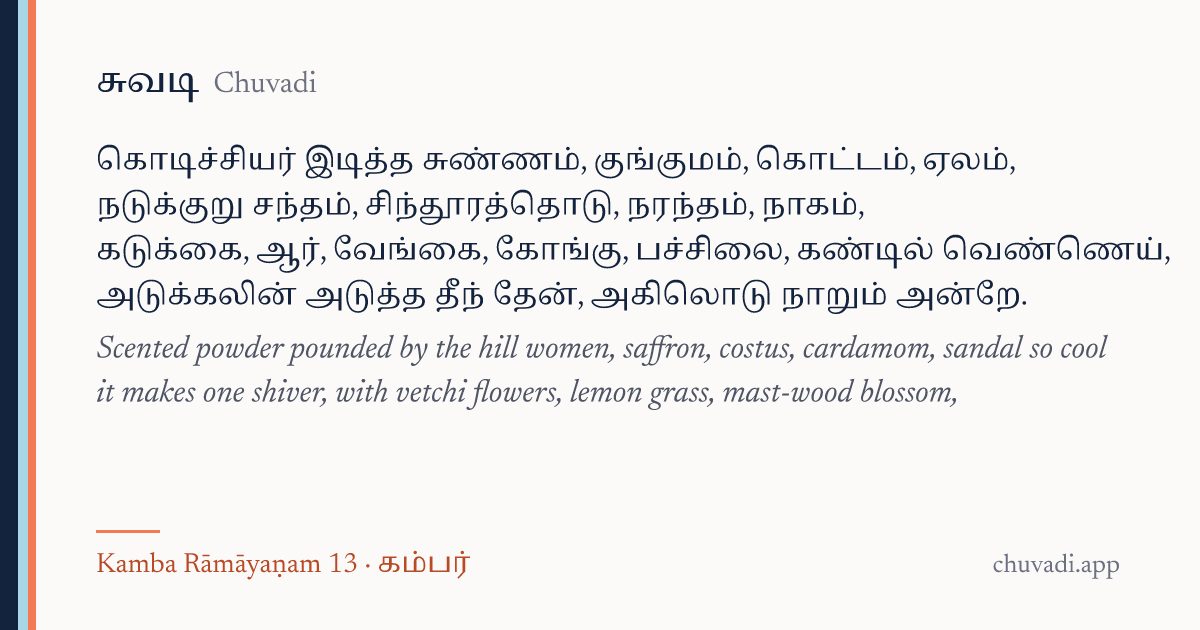
- Scented powder pounded by the hill women, saffron, costus, cardamom,
- sandal so cool it makes one shiver, with vetchi flowers, lemon grass, mast-wood blossom,
- koṉṟai, ātti, vēṅkai, kōṅku, green herbs, the kaṇṭil-veṇṇey plant,
- sweet honey from the combs on the mountain slopes, and aloe wood: with these it is fragrant.
What the poem says
With this verse the metre changes to a longer six-foot line, and the poet lists the fragrant things the Sarayū gathers as it comes down from the hills. They include powders ground by the women of the mountain country, saffron, costus, cardamom and cooling sandalwood. There are also the flowers of many hill trees, herbs, wild honey from combs on the cliffs, and aloe wood. Carrying all these, the flood water itself becomes fragrant.