



கம்பராமாயணம் 14 · பால 1.14
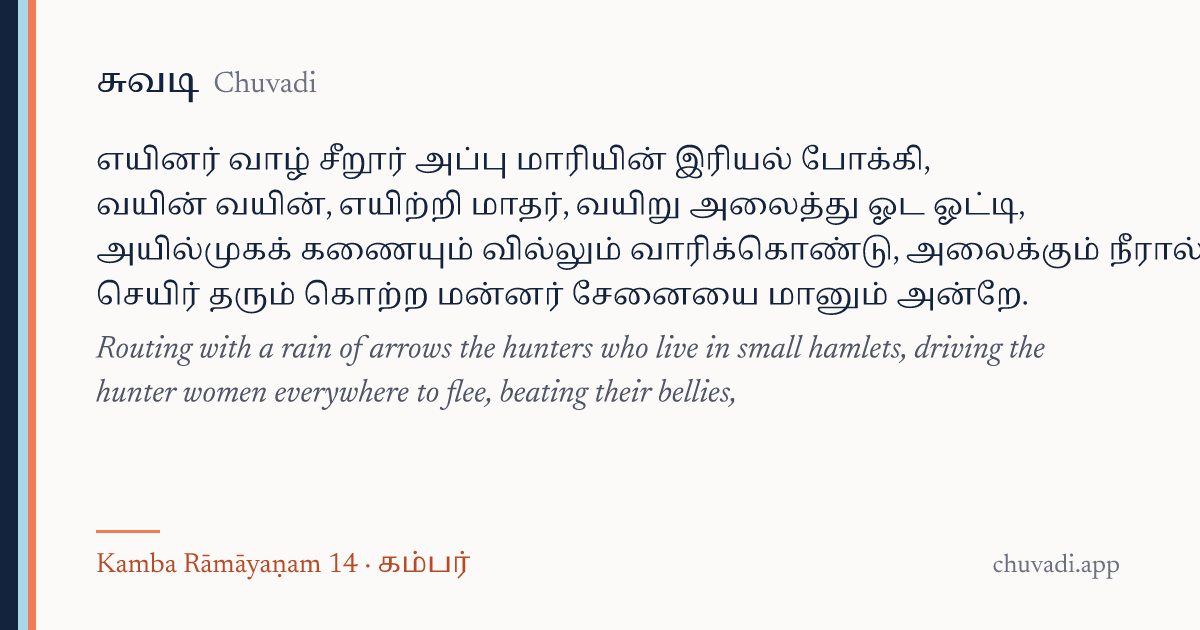
பாடல் · The poem
Tap a word to see its gloss in the commentary and where else it occurs.
பாட வேறுபாடு · Project Madurai reads
பொருள் · Meaning in Tamil
எயினர் வாழ் சீறூர் - (சிறிய) ஊரில் வாழ்கின்ற வேடர்களை (மக்களை); அப்பு மாரியின் - அம்பு மழையால்; இரியல் போக்கி - ஓடச் செய்தும்; வயின் வயின் - எல்லா இடங்களிலும்; எயிற்றி மாதர் - வேடுவப் பெண்கள்; வயிறு அலைத்து ஓட ஓட்டி - வயிற்றில் அடித்துக் கொண்டு ஓடும்படி விரட்டியும், அயில்முகக் கணையும் - கூர்மையான முனை கொண்ட அம்புகளையும்; வில்லும் - விற்களையும்; வாரிக்கொண்டு - வாரி வந்து; அலைக்கும் நீரால் - அலையச் செய்கின்ற தன்மையால்; (சரயுவின் வெள்ளம்) செயிர் தரும் கொற்ற மன்னர் - போர் செய்து வெற்றி பெற்ற உரிய மன்னர்களின்; சேனையை மானும் - படையைப் போன்றது. அப்பு மாரி; அம்பு மழை என்னும் போது அப்பு வலித்தல் விகாரம்; வெள்ளத்தைக் குறிக்கும்போது அப்பு: நீர் (வட சொல்). அப்பு மாரி; உருவகம். சிலேடை செயிர் அறும் கொற்றம் என்னும் பாடம்; குற்றமற்ற வெற்றி என்று பொருள். அன்று, ஏ அசைகள்.
ஆங்கிலம் · English translationAI
Translation
- Routing with a rain of arrows the hunters who live in small hamlets,
- driving the hunter women everywhere to flee, beating their bellies,
- sweeping up sharp-tipped arrows and bows, harrying them with its waters,
- it was like the army of conquering kings who bring destruction.
What the poem says
The flood strikes the villages of the hill hunters, and the poet likens it to an invading army. The pun turns on appu, which can mean both "arrow" and "water". An army drives out the villagers with a rain of arrows and seizes their bows and arrows as spoil. The flood drives them out with a rain of water and carries their weapons away. The hunter women flee in every direction, beating their bellies in grief.
One reading has "conquering kings of faultless victory" in the last line instead of "kings who bring destruction".