



கம்பராமாயணம் 1301 · பால 21.68
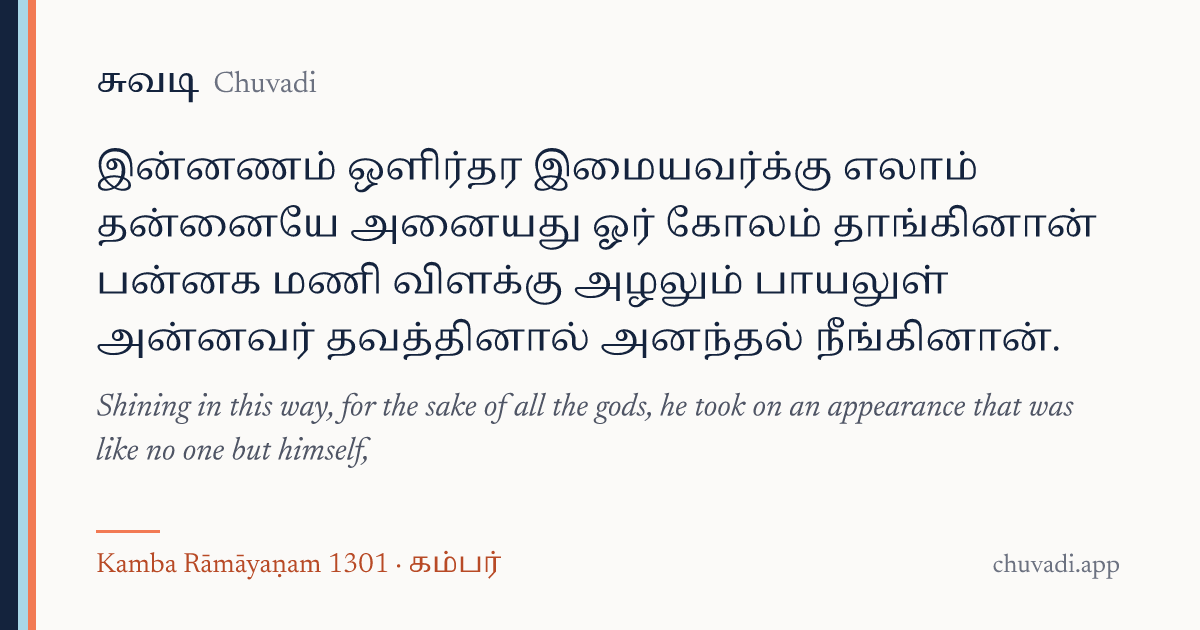
பாடல் · The poem
Tap a word to see its gloss in the commentary and where else it occurs.
பொருள் · Meaning in Tamil
மணி விளக்கு அழலும் பன்னகப் பாயலுள் அனந்தல் - தனது மாணிக்கங்களாகிய ஒளி விளக்குகள் ஒளிர்கின்ற ஆதிசேடனாகிய படுக்கையிடத்தே அறிதுயில் கொள்ளுதலை; அன்னவர் தவத்தினால் நீங்கினான் - அந்தத் தேவர்கள் செய்த தவத்தின் பயனால் நீத்து அயோத்தியில் உதித்தவனாகிய இராமபிரான்; இன்னணம் ஒளிர்தர இமையவர்க்கு எலாம் - இவ்வாறு விளங்குமாறு தேவ காரியம் காரணமாய்; தன்னையே அனையது ஓர் கோலம் தாங்கினான் - (வேறு ஒப்புக் கூற உவமை இல்லாமையால்) தன்னையே தான் ஒப்பதான ஓர் அழகுக் கோலம் பூண்டு நின்றான்.
இமையவர்க்கு: இமையவர் பொருட்டு. நான்கன் உருபு பொருட்டு எனும் பொருளில் வந்தது. சீதை மணம் இராவண வதத்திற்கு அடிகோலி, தேவர்துயர் நீக்கத்திற்கும் வழியமைத்தலின் இமையவர் அறிதுயில் நீங்கினான், இமையவர்க்காகத் தன்னையே அனையதோர் கோலம் தாங்கினான் என்றார். இறைவனின் அவதாரமான இராமன் இறைவனைப் போன்றே ஒப்பிலியப்பன் ஆவான் ஆதலின், “தன்னையே அனையதோர் கோலம் தாங்கினான்” என்றார். “தனக்குவமையில்லாதான்” (திருக். 7) என்பார் வள்ளுவனாரும். “தன் ஒப்பார் இல்லப்பன்” (திருவாய். 6:3:9) என்பார் நம்மாழ்வாரும். “மணி விளக்காம்..... திருமாற்கு அரவு” (இயற். முதல் திருவந். 53) என்பர் ஆதலின் “பன்னக மணி விளக்கு ஒளிரும் பாயல்” என்று ஆதிசேடப் படுக்கையைக் குறித்தார்.
ஆங்கிலம் · English translationAI
Translation
- Shining in this way, for the sake of all the gods,
- he took on an appearance that was like no one but himself,
- he who, through the penance of those very gods, had left his sleep
- on the serpent couch where jewel-lamps blaze.
What the poem says
A summing up. Irāmaṉ, now fully dressed, has an appearance that can be compared only to himself; as Tirukkuṟaḷ says of God, he has no equal.
He is Viṣṇu, who used to lie in yogic sleep on the serpent Ādiśeṣa, whose hood-jewels serve as lamps around his couch. Moved by the long penance of the gods, he left that sleep and was born on earth. This wedding is for the gods' sake too, since it sets in motion the events that will lead to Irāvaṇaṉ's death and end their suffering.